





The Deadly Charm of Wyoming’s Mink: Elusive Predators of the Waterways
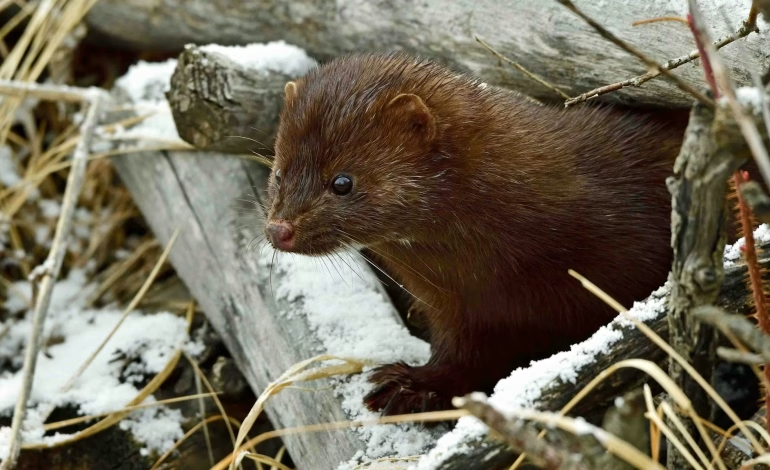

They might look like cute, curious creatures in a photograph, but the mink of Wyoming are among the state’s most effective and vicious predators. Seldom seen even by seasoned wildlife watchers, these sleek members of the weasel family stick close to rivers and streams, where they hunt with remarkable speed and ferocity.
“They will eat anything they can catch. They are true carnivores,” said retired wildlife biologist Franz Camenzind. Their diet is extensive, including muskrats, fish, frogs, snakes, and young birds. Camenzind noted that muskrats are likely a favorite prey, and he has witnessed a mink kill and consume an entire clutch of baby mallard ducks. Their hunting prowess is shared with relatives like the black-footed ferret, which takes down prairie dogs larger than itself. “It’s a tough family,” Camenzind observed.
Mink are built for stealth. With short legs and long, thin bodies, they move rapidly through dense vegetation and burrows. Wildlife photographer Stacy O’Nell described a fleeting encounter in Yellowstone National Park: “He stared at me for a brief moment. Then, ‘boom,’ it was over, he was gone.” John Koprowski, a zoology professor at the University of Wyoming, confirms they are most often found near water, like around Jenny Lake in Grand Teton National Park, though they will occasionally travel cross-country between water sources.
Their impact on other wildlife leads some, like John Eckman of the Wyoming Trappers’ Association, to advocate for population control. He warns that unchecked mink can heavily impact young game birds, including waterfowl, turkeys, and pheasants. For most people, however, the mink remains a rare and brief glimpse of wild Wyoming—a deceptively adorable flash of brown fur vanishing into the reeds along a riverbank.



The latest news in your social feeds
Subscribe to our social media platforms to stay tuned