

The Trump administration has imposed sanctions on two political figures from Pacific island nations, accusing them of corruption and linking their alleged actions to China’s expanding influence in the region.
On Tuesday, the US Department of State announced sanctions against Hokkons Baules, president of Palau’s Senate, and Anderson Jibas, a former mayor in the Marshall Islands. Both men were accused of engaging in what the department described as “significant corruption.” Under the sanctions, neither they nor their immediate family members will be permitted to enter the United States.
“The Trump Administration will not allow foreign public officials to steal from U.S. taxpayers or threaten U.S. interests,” State Department spokesperson Tommy Pigott wrote on social media. The State Department’s Bureau of International Narcotics and Law Enforcement echoed the message, stating, “Corruption that hurts U.S. interests will be met with significant consequences.”
In both cases, Washington tied the alleged misconduct to broader strategic concerns, particularly China’s growing presence in the Pacific, a region increasingly viewed as a geopolitical fault line between Beijing and Washington.
The State Department alleged that Baules accepted bribes in exchange for supporting Chinese interests in Palau, a Micronesian island nation and one of the world’s smallest countries.
“His actions constituted significant corruption and adversely affected U.S. interests in Palau,” the department said.
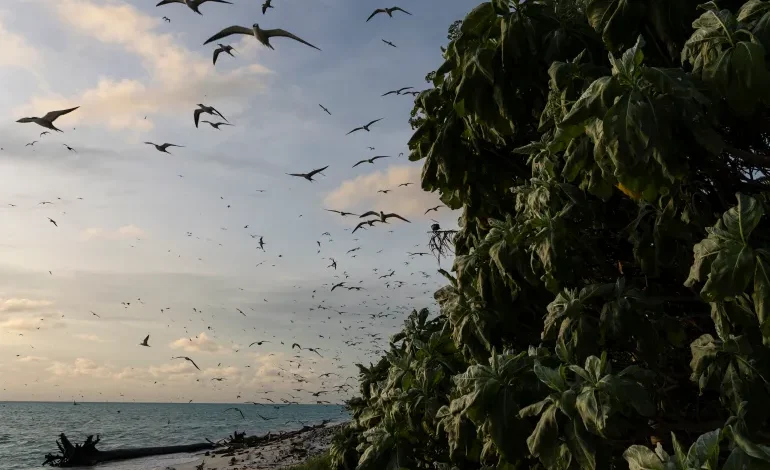
Jibas, meanwhile, was accused of “orchestrating and financially benefitting from” schemes involving the Bikini Resettlement Trust. The trust, backed by US funding, was created to compensate residents affected by US nuclear testing on Bikini Atoll in the mid-20th century.
In 2017, during Trump’s first term, the administration transferred control of the primary resettlement fund to local authorities and gave up its audit authority. At the time, the trust was valued at nearly $59 million. By February 2023, it had reportedly dwindled to approximately $100,000, and payments to survivors and their descendants had stopped.
Jibas, elected in 2016 to lead the Kili, Bikini and Ejit islands as mayor, had campaigned on increasing local control over the fund. However, reports in The Wall Street Journal and other outlets alleged that trust funds were misused for personal expenses, including vacations, travel and the purchase of a new pickup truck.
In its announcement, the State Department framed the alleged mismanagement not only as financial misconduct but as a vulnerability with geopolitical consequences. “The theft, misuse, and abuse of the U.S.-provided money for the fund wasted U.S. taxpayer money and contributed to a loss of jobs, food insecurity, migration to the United States,” it said.
“The lack of accountability for Jibas’ acts of corruption has eroded public trust in the government of the Marshall Islands, creating an opportunity for malign foreign influence from China and others.”
Both Palau and the Marshall Islands were under US administration following World War II before gaining independence in the late 20th century. Today, they maintain close ties with Washington under Compacts of Free Association.

The latest news in your social feeds
Subscribe to our social media platforms to stay tuned