
Venezuela Signals No Immediate Presidential Vote as Government Pushes “Re-institutionalisation”
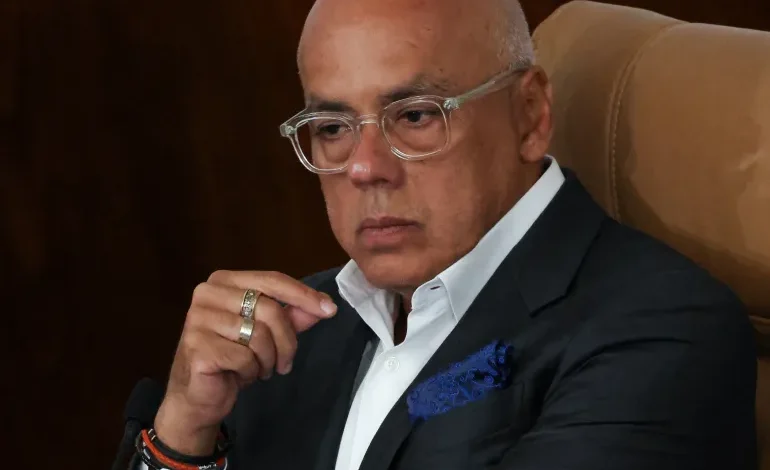

Venezuela’s National Assembly President Jorge Rodriguez has made it clear: the country is not heading into a new presidential election anytime soon.
Speaking in an interview published late Monday with the US conservative outlet Newsmax, Rodriguez said the government’s priority is stabilising the country rather than setting an electoral timetable. Presidential terms in Venezuela last six years, and the most recent election, held in 2024, was mired in controversy.
When Newsmax host Rob Schmitt asked whether that meant no election would be held for another five years, Rodriguez did not commit to a fixed timeline.
“The only thing I could say is that there will not be an election in this immediate period of time where the stabilisation has to be achieved,” he replied.
Rodriguez framed the pause in electoral planning as part of a broader institutional reset.
“What we’re working on at the moment is what we call the re-institutionalisation of the country, so that every single institution of the country can again be brought to full power and full recognition by everybody,” he said.
His remarks come in the aftermath of the dramatic January 3 abduction of President Nicolas Maduro by US forces in a military operation. In the weeks that followed, Venezuela’s Supreme Court appointed Vice President Delcy Rodriguez, Jorge Rodriguez’s sister, as acting president. She was sworn in on January 5 with backing from the military, the ruling party, and the United States.
Rodriguez argued that Venezuelans are seeking normalcy after months of upheaval.
“The government of Delcy Rodriguez is actually looking for that, to stabilise the country completely and to make it all good and reconcile everybody, all the population of Venezuela,” he said.
Maduro’s removal initially raised expectations among some opposition supporters that a fresh election could quickly follow, especially given the fallout from the 2024 vote. In that race, Maduro claimed a third consecutive term despite opposition-published tallies suggesting its candidate had won. Protests erupted, and the government responded with a crackdown that the US State Department said left an estimated 25 people dead.
In his interview, Rodriguez rejected claims that the 2024 election lacked legitimacy. Instead, he emphasised unity. “We have been divided for a very long time,” he said.
Central to that message is a proposed mass amnesty law that would release political prisoners and forgive crimes tied to political dissent dating back to 1999. The bill passed unanimously in its first of two required votes last Thursday and is expected to be approved this week.
Yet the amnesty proposal has raised doubts among critics, who fear repression could simply take different forms after detainees are freed.
Pressed on whether opposition leader Maria Corina Machado would be allowed to return and campaign freely under the new framework, Rodriguez declined to focus on one figure. “So, allow me not to speak about only one single name, because there are many, many actors abroad that have to be included in this discussion,” he said.
“There is an amnesty law that is being done at the moment that contemplates working with people, but there are sectors of the opposition abroad which have promoted violence.”
He suggested the amnesty would not extend to leaders accused of violent crimes.
“Through this amnesty law, we are promoting for all the sections of the opposition who are abroad to comply with the law, so they can come back to the country,” Rodriguez said.
Opposition leaders have long argued that such accusations are politically motivated and used to justify arrests. Machado, for example, was accused in 2014 of conspiring to assassinate Maduro and was subsequently expelled from the National Assembly.
Rodriguez’s remarks also coincide with renewed legal developments involving former lawmaker Juan Pablo Guanipa, underscoring that while talk of reconciliation is growing louder, the political landscape remains tense.
The latest news in your social feeds
Subscribe to our social media platforms to stay tuned