





Wyoming Ranchers Sound Alarm Over Trump Order Allowing More Argentine Beef Imports
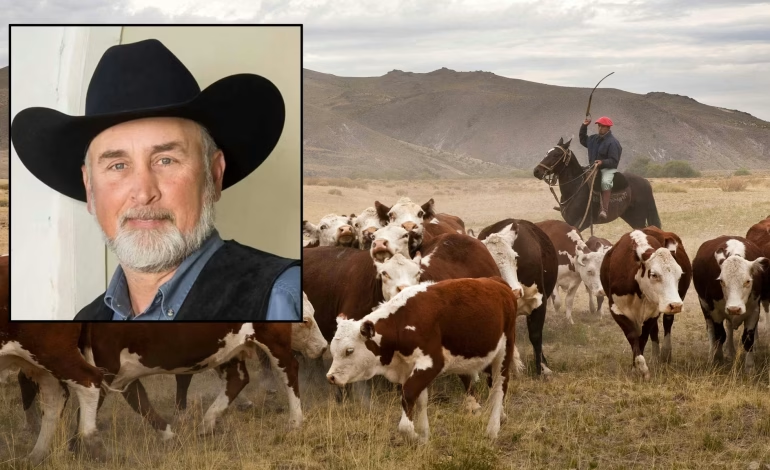

Wyoming cattle producers are pushing back against President Trump’s recent executive order expanding beef trimmings imports from Argentina, warning the move risks introducing foreign animal diseases and will do little to lower grocery store prices. The order, signed last week, allows an additional 80,000 metric tons of Argentine beef trimmings into the United States for 2026, a measure the administration says will boost supply and make ground beef more affordable.
Ranchers are deeply skeptical. Mark Eisele, a Cheyenne cattleman and past president of the National Cattlemen’s Beef Association, pointed to Argentina’s troubled history with disease reporting. “Argentina has huge issues with foreign animal disease and their reporting,” Eisele said. “It’s always late or non-existent. I think this puts consumers at risk, and I also think it puts our national cattle herd at risk.” He and others are calling for stricter USDA inspection protocols before any expanded imports are allowed.
The concern extends beyond food safety to market economics. Tyler Lindholm, a Crook County rancher and former state legislator, argued the influx of cheaper, lower-quality Argentine trim will flood the market and depress the “live beef price” that producers actually receive. Meanwhile, he and others predict packers and grocery stores will pocket the savings. “The packers are still going to make their buck,” Lindholm said. “This just improves packer margins. I doubt consumers will ever see any cost savings.”
Jim Magagna of the Wyoming Stockgrowers Association echoed the need for strict inspection parity. Both he and Eisele suggested the administration focus instead on reopening the U.S.-Mexico border to cattle imports, which has been closed due to screwworm concerns. Eisele noted Mexico has met all USDA requirements and that reopening the border would provide a more meaningful boost to overall beef supplies. The ranchers remain united in their opposition, viewing the Argentine import expansion as a threat to herd health, producer livelihoods, and food safety.



The latest news in your social feeds
Subscribe to our social media platforms to stay tuned