



With input from Business Insider, Vox, and Fortune.
An essay from an AI CEO went nuclear on social media this week. Matt Shumer, CEO of Hyperwrite and cofounder of OthersideAI, published a long post titled “Something Big Is Happening” that lays out a blunt message: AI isn’t just getting better — it’s already replacing real technical work, and that kind of disruption won’t stop with engineers.
By Wednesday morning Shumer’s post had exploded — roughly 40 million views and 18,000 retweets — as people inside and outside tech tried to figure out how worried they should be. The tone is personal and urgent. “I’m writing this for the people in my life who don’t… my family, my friends, the people I care about who keep asking me ‘so what’s the deal with AI?’ and getting an answer that doesn’t do justice to what’s actually happening,” he writes.
The core claim is simple and stark: the kind of AI tools now being released — “agentic” systems that can take a project brief, run tasks, iterate, and deliver finished work — are a fundamentally different animal from chatbots that only respond to one-off prompts. Shumer says he can hand an AI an objective, walk away, and return hours later to find the job done — “done well.” That experience, he argues, is what people in tech have already lived through and what everyone else should expect next.
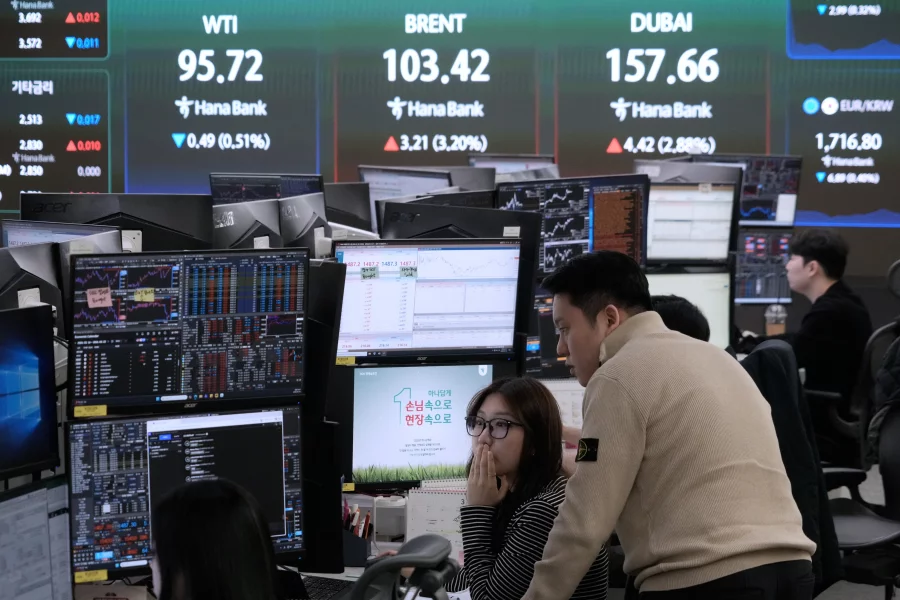
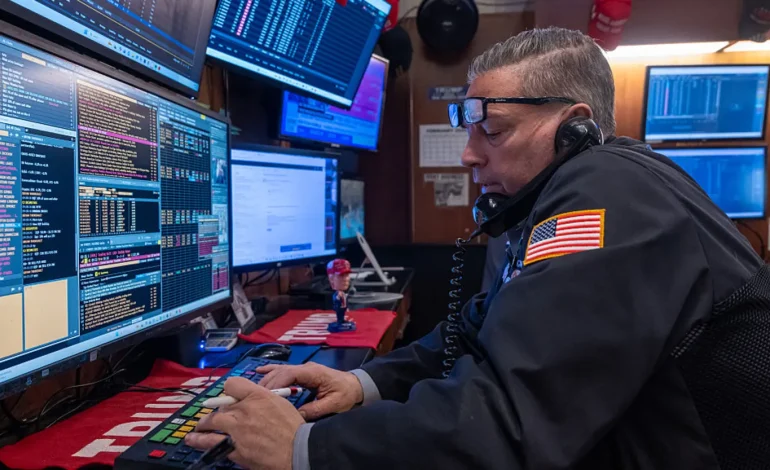
What changed, in Shumer’s telling, was the leap from assistants to agents. Where older models required constant human prompting, these newer systems can sequence actions, call tools, test results, and course-correct without human babysitting. For Shumer and others, that’s a productivity jump that looks like a short-cut to replacing entire roles — not just automating tasks but doing end-to-end projects. And the ripple effects are already visible: traders have punished software and consulting stocks that look vulnerable to agentic disruption, and venture types are scrambling to re-price companies that once seemed safe.
The post didn’t arrive in a vacuum. Prominent figures across tech have been sounding similar notes lately: Anthropic’s Dario Amodei has warned that many white-collar jobs may be at risk in the coming years; Elon Musk has repeatedly said if your job doesn’t require physical labor, AI could take it sooner than you think. Shumer’s essay simply packages that constellation of anxieties into a personal, viral narrative — and it landed with force.
Reaction from the tech community has been a mix of “yep, that tracks” and “don’t panic.” Reddit cofounder Alexis Ohanian and others applauded the clarity, while venture and engineering circles pointed to current AI limitations — hallucinations, brittle reasoning, security gaps — as reasons to be cautious about claiming wholesale substitution is imminent.
Shumer himself tries to steer readers away from doom-mongering. He’s not saying everyone should panic or that there’s no room for humans. His pitch is tactical: learn the tools, use them quickly, and demonstrate their value at work.
“The person who walks into a meeting and says ‘I used AI to do this analysis in an hour instead of three days’ is going to be the most valuable person in the room,” he writes.
In other words: adapt or be disrupted.
There’s also the deeper, scarier technical possibility Shumer touches on: AI systems building better AI. Some lab releases and trade analyses suggest models are increasingly capable of generating their own successors or more complex systems, which could produce rapid compounding of capability — the “chain reaction” scenario that makes exponential progress feasible. If that acceleration continues, the economic and political effects could accelerate alongside it.
Still, major caveats remain. Critics point out that agentic systems still make mistakes in unpredictable ways; that institutional adoption is slow; and that regulated fields like medicine, law, and finance will proceed cautiously. And real-world companies will balance the ROI of replacing teams versus the risks of handing mission-critical decisions to imperfect systems.
Even with those qualifications, Shumer’s post captured a mood shift. Where last year some called AI a hype cycle or bubble, this month a growing slice of tech insiders are saying the experiments have matured into something usable and—crucially—scalable. For people who write code, design products, manage projects or write reports, that’s not academic; it’s a signal to learn the tools now or risk being left behind later.
If you want a short takeaway from the viral essay: the era of “AI helps me do my job faster” may be giving way to “AI does my job.” For Shumer and many others in tech, that’s not theoretical. It’s already happening — and he wanted his family, friends and everyone else to hear it straight from someone inside the engine room.
Whether you think that’s thrilling or terrifying probably depends on how fast you can pick up the tools — and how comfortable you are with the idea that work, as we know it, could look very different a few years from now.



The latest news in your social feeds
Subscribe to our social media platforms to stay tuned