




The Congressional Budget Office has delivered a sobering update on America’s fiscal trajectory, projecting widening federal deficits and steadily rising debt over the next decade — even as policymakers argue about growth, tariffs and tax policy.
In its 10-year outlook released Wednesday, the nonpartisan agency said long-term deficits are expected to worsen, driven largely by higher spending on Social Security, Medicare and interest payments on existing debt. Compared with the CBO’s projection this time last year, the fiscal picture has deteriorated modestly.
For fiscal year 2026 — President Donald Trump’s first full fiscal year in office — the deficit is projected at 5.8 percent of gross domestic product, roughly in line with fiscal 2025, when the shortfall reached $1.775 trillion. But over the next decade, the deficit-to-GDP ratio is expected to average 6.1 percent, climbing to 6.7 percent by fiscal 2036.
That trajectory stands well above Treasury Secretary Scott Bessent’s stated goal of reducing the deficit to about 3 percent of economic output.
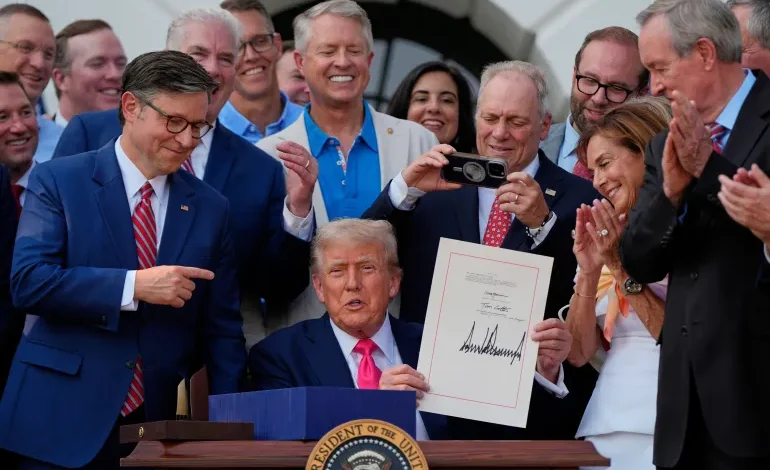
The updated outlook reflects major policy shifts over the past year. The CBO incorporated Republicans’ sweeping tax-and-spending package, the “One Big Beautiful Bill Act,” as well as higher tariffs and the Trump administration’s immigration crackdown, including plans to deport millions of immigrants.
Taken together, those changes push the projected 2026 deficit about $100bn higher than previously forecast. Over the 2026–2035 period, total deficits are now expected to be $1.4 trillion larger than earlier estimates. Debt held by the public is projected to rise from 101 percent of GDP to 120 percent, surpassing historical highs.
Higher tariffs provide partial relief on paper. The CBO estimates they would generate about $3 trillion in additional federal revenue. But that revenue comes with trade-offs, including higher inflation between 2026 and 2029.
Rising debt levels matter not just for headline figures but for long-term priorities. As interest payments consume a growing share of the budget, less room remains for infrastructure, education and other investments seen as essential for future economic growth. In practical terms, more money goes to bondholders, less to roads and research.
Inflation, meanwhile, is projected to remain above the Federal Reserve’s 2 percent target until 2030.
One key gap between Washington’s competing narratives lies in growth expectations. The CBO forecasts real GDP growth of 2.2 percent in 2026 on a fourth-quarter basis, then an average of about 1.8 percent for the rest of the decade. That is significantly lower than the Trump administration’s recent projections of 3 to 4 percent growth in 2026, with some officials suggesting first-quarter growth could exceed 6 percent amid factory investment and artificial intelligence data centre expansion.



The latest news in your social feeds
Subscribe to our social media platforms to stay tuned