


Hunters Fought for Public Lands. Now Lawmakers Must Finish the Fight
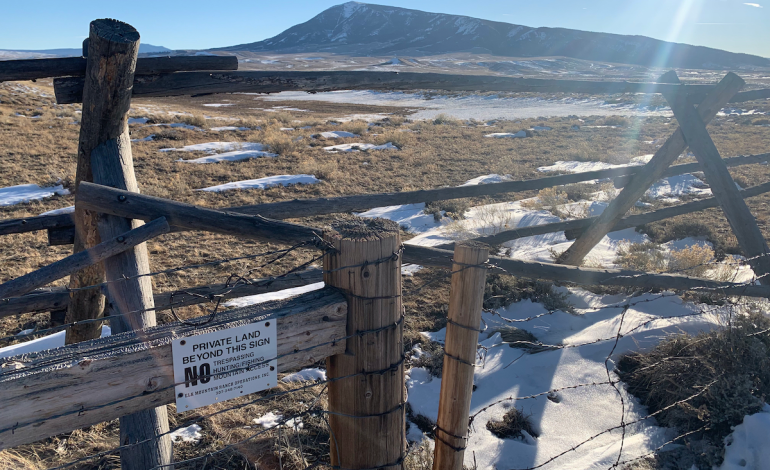

Last summer, hunters and anglers across the West helped beat back a proposal by Utah Senator Mike Lee to sell off millions of acres of public land. Faced with an avalanche of grassroots opposition, Lee withdrew his amendment. It was a victory—but a temporary one. The underlying threat remains, and access to public land continues to shrink.
In Wyoming, four elk hunters showed what real action looks like. Confronted with a massive expanse of prime elk country blocked by a billionaire’s ranch, they built a ladder. They climbed from one corner of public land to another, crossing at a “checkerboard” corner where public and private land meet. They never touched private property. They also shot some nice bulls. More importantly, they set in motion a legal battle that ultimately freed up millions of acres of public land across six states.
Last October, the U.S. Supreme Court declined to hear a challenge to a lower court ruling that allows corner crossing—stepping from one public parcel to another at a four-corner intersection—so long as no private land is touched. That means corner crossing remains legal in Wyoming, Colorado, Utah, Oklahoma, Kansas, and New Mexico. But in Montana and elsewhere, the law remains a grey area. Governor Greg Gianforte’s administration has declared corner crossing unlawful under state law, effectively siding with wealthy landowners who can afford to lock up access.
This is not a niche issue. For working families in Wyoming and Montana, public land access is not a luxury. It is how people fill freezers as grocery prices climb. It is how parents take kids outdoors without paying fees. It is how rural communities hold onto traditions that are slipping out of reach.
We are state legislators—one from Wyoming, one from Montana—and we believe the choice is simple. We can defend public land as a public right for our children and grandchildren, or we can allow the West to slide toward a two-tiered system: one for those who can afford exclusive access, and a diminished version for everyone else.
That is why we are supporting legislation in both states to clarify corner crossing in state law. This is not radical. It is a straightforward affirmation that land owned by the public ought to be accessible to the public. Hunters, anglers, hikers, and working families span every political stripe. Fair access is a shared value. Lawmakers need to act like it.


The latest news in your social feeds
Subscribe to our social media platforms to stay tuned