




CNBC, Reuters, CNN, the New York Times, Axios contributed to this report.
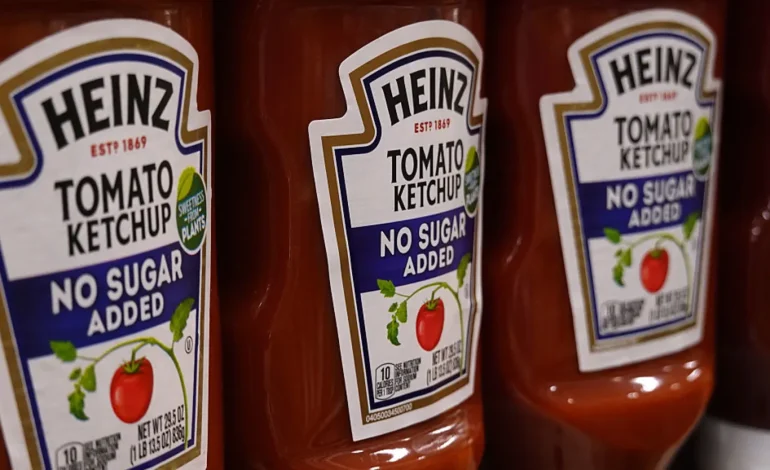
Kraft Mac & Cheese and Heinz Ketchup are not getting divorced after all. Kraft Heinz’s new CEO, Steve Cahillane, has hit pause on the company’s previously announced plan to split into two businesses and instead is plowing cash into a turnaround.
Cahillane, who only took the reins in January after running Kellogg and shepherding its split, told investors Wednesday the company needs to steady the ship before it can break itself in half.
“Consumer sentiment has worsened, industry trends have softened, and there is increasing volatility in the geopolitical landscape,” he said.
Translation: the market has gotten harder to read, sales have slid even more since the breakup was announced, and a spinoff that once looked neat now looks risky.
So what’s changing? For starters, Kraft Heinz is putting $600 million toward marketing, sales and R&D in the U.S. to try to revive growth. The money will go into product innovation, “product superiority,” selective pricing and promotions — basically, the stuff the company hasn’t done enough of for years. Cahillane made the tactical case plainly: fix the business first, then decide whether a split makes sense later. There’s no deadline for the pause; he said the company will revisit the idea once growth returns.
A reversal like this is rare. The plan to split — announced last September — was meant to separate faster-growing condiments and sauces (think Heinz) from older grocery names that have struggled (think Kraft Singles and Lunchables). Back in 2015, Warren Buffett’s Berkshire Hathaway and 3G Capital stitched Kraft and Heinz together in a blockbuster deal. The honeymoon faded as many of the merged company’s US brands underperformed and the business failed to innovate. Now Buffett’s Berkshire has signaled its support for Cahillane’s new play, though it also quietly moved to trim its stake earlier this year, signaling disappointment with how the merger played out.
Why the about-face? Because the numbers got worse. After the split was announced, the sales slump accelerated. Consumers, squeezed by inflation and swayed by healthier, fresher options — plus the rising use of GLP-1 weight-loss drugs that are reshaping eating habits — drifted away from processed staples. Store-brand competition tightened. Political and policy shifts, including cuts to food assistance programs, also cloud the macro outlook.
Investors didn’t love the news at first. Kraft Heinz shares dropped as much as 5% on the announcement before settling near flat. Analysts are split. Bernstein’s Alexia Howard called the $600 million push “the reboot the company needs,” while TD Cowen’s Robert Moskow warned investors might see the pause as a sign the brands aren’t strong enough to go it alone.
Cahillane framed the move as pragmatic. He said Kraft Heinz “busted through four or five levels of price points in a very accelerated fashion” during inflation, and consumers were left feeling they didn’t get extra value. The plan now includes selective price relief in some categories, more marketing to reconnect with shoppers, and a roughly 20% bump in R&D spend in the US for 2026. The goal: better-tasting, more relevant products at price points people are actually willing to pay.
There’s also the mechanics: pausing the split saves the company about $300 million in separation costs this year. That’s not nothing. It frees up cash and attention to reset operations rather than pour resources into carving the business in two.
But make no mistake — the turnaround isn’t small. Kraft Heinz’s latest quarter beat earnings estimates but missed on revenue, and the company warned that sales could slip again this year. The firm has struggled with underinvestment for years; big brands like Oscar Mayer, Maxwell House and others haven’t kept pace with changing tastes. Cahillane says those problems are “fixable and within our control,” but they’ll take time and discipline — and the market can be impatient.
What does this mean for shoppers? Expect some promotional activity and maybe lower prices in a few high-traffic items, at least temporarily. For brand fans, there’s a chance beloved names get refreshed. For investors, the story is murkier: the company is placing a big bet that marketing and product fixes can rekindle growth faster than the market expects.
And the split? It’s not dead forever. Cahillane didn’t rule it out — he just wants the company to be healthier before executing such a big move. That’s a reasonable ask; spinoffs tend to perform better when the underlying businesses are robust. But the longer Kraft Heinz delays, the more its options shift. A future split might require different assets, different timing, and a different market appetite.
Bottom line: Kraft Heinz decided the grass isn’t greener on the other side — at least not right now. The company will try to win back customers with product and price investments rather than hand over its brands to two separate management teams. If the $600 million plan works, the firm could be in a stronger spot to reconsider a split later. If it doesn’t, shareholders may again push for more radical change.
Either way, for now, the mac and cheese and the ketchup are sticking together.



The latest news in your social feeds
Subscribe to our social media platforms to stay tuned