




AP and CBS contributed to this report.
Activists took their fight to Target on Wednesday, staging protests at more than two dozen of the retailer’s stores around the country to pressure the Minneapolis-based company to publicly oppose the federal immigration crackdown in Minnesota.
The demonstrations — organized by ICE Out Minnesota, a coalition of community groups, faith leaders, labor unions and other critics of the operation — weren’t meant to be a one-off. Organizers called for sit-ins and other actions to continue at Target locations for a full week, aiming to turn a local flashpoint into a national story. Target’s name is woven through Minneapolis: its headquarters sit there, and the company’s brand is plastered on a major league ballpark and a downtown arena.
“They claim to be part of the community, but they are not standing up to ICE,” said Elan Axelbank of the Minnesota chapter of Socialist Alternative, who coordinated a protest outside the Target in Dinkytown.
Axelbank and other organizers say Target should bar federal immigration agents from entering stores unless they have judicial warrants.
Similar actions were planned in St. Paul, Boston, Chicago, Honolulu, Philadelphia, Pittsburgh, Raleigh, San Diego, Seattle and a string of suburbs in Minnesota, California and Massachusetts. Target declined to comment on the protests.
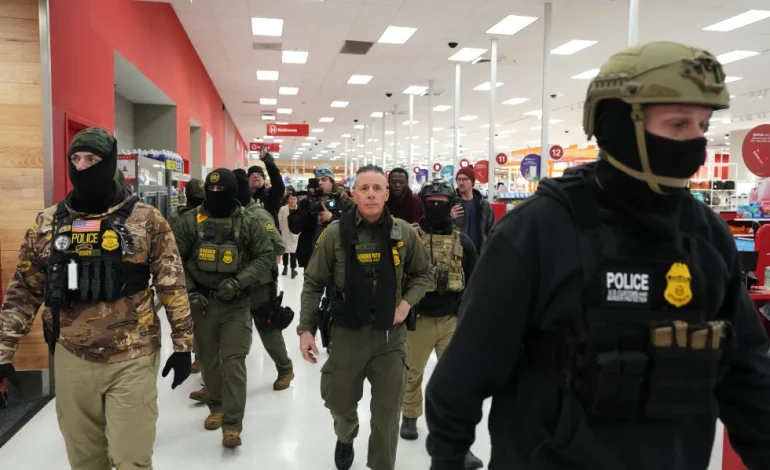
Why Target? The retailer became a focal point after video circulated last month of federal agents detaining two employees at a Richfield Target. That clip, and the broader federal surge in enforcement, have stoked anger locally — especially after two Minneapolis residents who had participated in anti-ICE actions were fatally shot by federal officers in late January. Those deaths added urgency for activists calling on corporate allies to step in.
The coalition’s asks go beyond symbolic gestures. Protesters pressed Target to refuse entry to agents who lack judicial warrants and to use its influence to push back against the federal operation. But legal experts note limits: public areas of businesses — parking lots, store aisles, dining areas — generally are accessible to federal officers without a private warrant; back offices and private spaces are a different matter.
“Target can’t just say ICE is not allowed in stores because legally they are,” said Neil Saunders, a retail analyst at GlobalData, pointing to the legal tightrope companies face.
Target’s new CEO, Michael Fiddelke, who started earlier this month, did address employees in a video after the January shootings, calling the violence “incredibly painful,” but he didn’t mention the immigration crackdown or the specific killings. Two days after the second shooting, Fiddelke joined roughly 60 other Minnesota CEOs in signing an open letter urging de-escalation and cooperation among officials — a move that signaled corporate concern but stopped short of demands organizers are now making.
Faith groups have stepped into the action, too. A national coalition of Mennonite congregations staged a series of demonstrations — some vocal, some musical — at Targets across the country, singing hymns like “This Little Light of Mine” and urging the chain to call Congress to defund Immigration and Customs Enforcement. The Mennonite actions weren’t formally part of ICE Out Minnesota, but organizers said they were following the Minneapolis lead and projecting a moral case for protecting immigrants.
Target’s recent history in Minneapolis makes it a particularly charged target. Last year the chain found itself in the crosshairs over rolling back diversity, equity and inclusion initiatives — prompting protests and boycotts — and activists say the company’s silence now looks consistent with a retreat from civic leadership.
Retail analysts flagged another practical pressure point: Target is still wrestling with sluggish sales and store upkeep complaints. Distractions from protests are unwelcome at a company with nearly 2,000 stores nationwide.
“This is another reputational headache for them,” Saunders said.
On the ground, protesters said they weren’t aiming to cripple Target’s business — they want the company to use its clout locally and nationally to push for an end to the aggressive enforcement actions in Minnesota. For many who turned out Wednesday, it was personal and concrete: neighbors, faith communities and coworkers are scared and, they say, deserve protection from what they see as an overreach by federal agencies.
Whether the weeklong campaign will force Target into a public showdown with federal authorities is unclear. What’s already obvious is that this controversy has pushed the Minneapolis retailer into the political spotlight again — only this time the stakes are not a product or a policy change at headquarters, but the safety and future of people who live and work in its hometown.

The latest news in your social feeds
Subscribe to our social media platforms to stay tuned