




The New York Times and the Financial Times contributed to this report.
President Trump’s big housing headline came with a twist: his new executive order aims to block big investors from scooping up single-family homes — but it expressly lets those same investors build entire subdivisions of houses to rent out.
Trump’s message has been simple and blunt:
“Homes are built for people, not for corporations,” he said in Davos. “America will not become a nation of renters.”
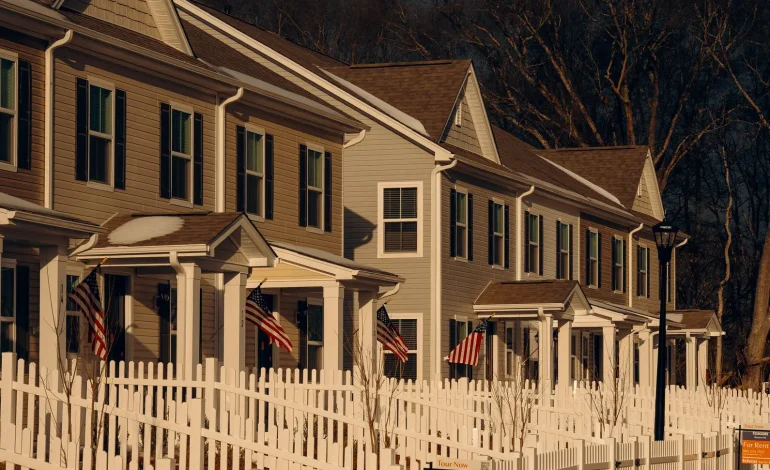
Problem is, tucked inside the policy that would curb institutional buying is a carve-out for so-called build-to-rent communities — developments of brand-new single-family homes intended from day one to be rentals.
That matters because the companies Trump has been calling out — big private-equity players and Wall Street landlords — now often prefer writing contracts with homebuilders or even commissioning their own houses instead of buying distressed listings. Firms such as Invitation Homes and Blackstone (and players like Tricon) are either buying newly built rental projects or setting up shop to build them. Even major builders — Lennar and D.R. Horton among them — have clear lines of business selling homes into the investor market.
Why would the administration permit that? The short, awkward answer: build-to-rent is both a growth market and politically easier to justify. Analysts point out these communities create high-quality rental stock that many families want — young parents who aren’t ready to buy, workers who need stability but not homeownership, people priced out of purchase markets. Last year about 66,000 build-to-rent homes were finished, compared with roughly 11,000 in 2021, showing how fast the niche has grown.
Supporters say build-to-rent can actually be a steppingstone to homeownership: the homes are newer, better maintained, and often in suburbs with family amenities. Rick Palacios Jr., a housing researcher, recently described the model as “a natural steppingstone for homeownership.” Homebuilders like it, too — selling a block of rental units to a single institutional buyer reduces risk and helps finance more construction.
But critics see the loophole as contradiction on steroids. Trump’s own housing regulator Bill Pulte — who previously invested in newly built rental homes — has criticized massive corporate portfolios, saying firms owning “100,000-plus homes are not where we should be in America.” Still, the exemption leaves the door open for large landlords to keep shaping the market, just by building rather than buying existing houses.
There’s history here. After the 2008 crash, Wall Street buyers helped stabilize battered housing markets by scooping up foreclosures. Over time, though, those same buyers became lightning rods: activists and some local officials argued that institutional purchases crowded out first-time buyers in cities such as Atlanta, Phoenix and Tampa. Today, big landlords are a much smaller slice of the overall market — estimates put them at 1–3% of single-family rentals nationwide — but they’re still visible and politically charged. Invitation Homes, for example, owns about 80,000 rental houses and recently bought a build-to-rent developer shortly after the White House rolled out the executive order.
The executive order isn’t self-executing. It directs Treasury to define what counts as a “big institutional buyer” and points toward congressional action to turn restrictions into law. And that’s important: most landlords in the US are mom-and-pop owners of a few properties who wouldn’t be affected. The measure targets big operators — but how big? The answer could reshape who gets to control newly built neighborhoods.
Builders are watching closely. For them, the carve-out offers a safety valve: if selling houses to retail buyers stalls because of high mortgage rates or tight credit, institutional buyers ready to rent can keep projects moving. That built-in demand makes it easier to break ground on new developments — which, for people worried about a shortage of housing stock, is not obviously a bad thing.
Politics complicates the economics. Passing real limits on institutional buying would require Congress. Meanwhile, letting build-to-rent flourish hands a possible windfall to big developers and investors while leaving the old question unresolved: how to get more homes into the hands of ordinary buyers.
So yes — the president denounced a future full of renters. Then his order gave Wall Street and big builders a green light to keep building rental suburbs. The result is equal parts irony and policy by compromise: fight the investor purchase of single homes, but let investors build whole new ones. For anyone who wanted a clean solution to housing affordability, this probably isn’t it.


The latest news in your social feeds
Subscribe to our social media platforms to stay tuned