



Carriers and Diplomacy: Trump Signals Dual Track on Iran

US President Donald Trump has indicated that Washington may be preparing to expand its military footprint in the Middle East even as negotiations with Iran continue, a familiar mix of pressure and diplomacy that is shaping the current phase of the standoff.
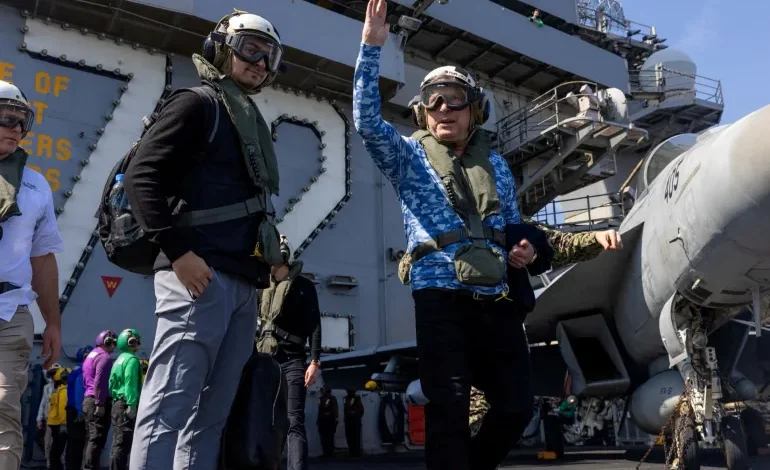
On Thursday, Trump reposted on his Truth Social platform a Wall Street Journal report titled Pentagon Prepares Second Aircraft Carrier to Deploy to the Middle East, without adding comment. The article cited US officials saying the Pentagon had ordered preparations for another carrier strike group to join the USS Abraham Lincoln, which is already in the region.
A person familiar with the plans later told The Associated Press that the USS Gerald R Ford, the world’s largest aircraft carrier, had been instructed to sail from the Caribbean to the Middle East. The individual spoke on condition of anonymity because the movements had not been publicly announced.
If completed, the deployment would place two US carrier groups and their accompanying warships in the same theatre, a significant show of force as Trump presses Tehran to reach a deal on its nuclear programme.
The military signalling came only hours after Trump hosted Israeli Prime Minister Benjamin Netanyahu at the White House. After that meeting, the US president struck a notably cautious tone.
“There was nothing definitive reached other than I insisted that negotiations with Iran continue to see whether or not a Deal can be consummated,” Trump wrote.
“If it can, I let the Prime Minister know that will be a preference. If it cannot, we will just have to see what the outcome will be.”
The parallel tracks reflect the broader context of recent diplomacy. Washington and Tehran held indirect negotiations in Oman last week, their first such engagement since the previous year. Both sides described the discussions as a step forward, but no new round has been publicly scheduled.
Iran has warned against outside interference in the process.
Trump, for his part, rejected suggestions that Netanyahu was lobbying against diplomacy.
“I’ll talk to them as long as I like, and we’ll see if we can get a deal with them,” he told reporters, adding that an agreement could be reached as early as next month and that Tehran should move “quickly”.
The gap between the two sides remains clear. Trump has said any deal must ensure Iran has “no nuclear weapons” and “no missiles”. Tehran, which denies seeking nuclear arms, has ruled out negotiations over its missile programme. Foreign Minister Abbas Araghchi has called it a defence issue that is “never negotiable”.
The current manoeuvring unfolds against the backdrop of last year’s 12-day war, when Israel launched a major offensive against Iran and the United States joined by striking three nuclear facilities. Iran responded with a large missile barrage before a ceasefire took hold.

The latest news in your social feeds
Subscribe to our social media platforms to stay tuned