





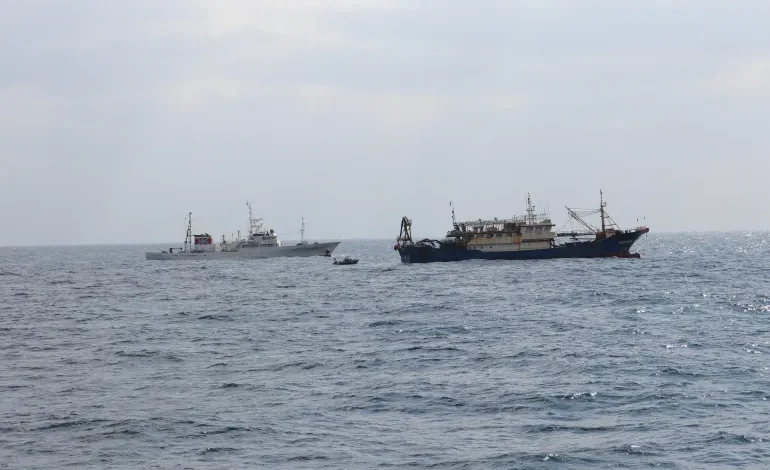

Japan’s seizure of a Chinese fishing vessel inside its exclusive economic zone is less about one boat and more about the temperature of a relationship that has been running hot for months.
Authorities say the captain, a 47-year-old Chinese national, was arrested after allegedly ignoring an order to stop for an onboard inspection in waters southwest of Nagasaki. According to Japan’s Fisheries Agency, the vessel failed to comply and attempted to flee, prompting the same-day arrest. Ten other crew members were on board.
On paper, this is a fisheries enforcement case, something Japan has also done with South Korean and Taiwanese boats in recent years. In practice, the nationality of the vessel changes the political weight. It is the first such incident involving a Chinese boat since 2022, and it lands in the middle of an already strained diplomatic climate.
Japanese officials suspect the vessel entered the country’s EEZ for illegal fishing, though they have withheld details about whether the captain has admitted to the allegations, citing the ongoing investigation. The boat itself, described by NHK as capable of hauling large quantities of species such as mackerel and horse mackerel, fits the profile of a commercial operation rather than a small coastal craft.
Tokyo’s public messaging has been measured but firm. Chief Cabinet Secretary Minoru Kihara said Japan “will continue to take resolute action in our enforcement activities to prevent and deter illegal fishing operations by foreign vessels”. The wording is standard for maritime law enforcement, but the timing gives it broader strategic resonance.
The incident comes after a particularly bitter period in Japan-China relations. Late last year, Prime Minister Sanae Takaichi triggered a diplomatic backlash by suggesting Japan could intervene militarily in the event of a Chinese move against Taiwan. Beijing responded with a mix of symbolic and practical pressure: summoning Japan’s ambassador, warning Chinese tourists away from Japan, staging joint air drills with Russia and tightening export controls on sensitive goods while suspending imports of Japanese seafood.
Against that backdrop, even routine maritime enforcement risks being read through a security lens. The East China Sea is already crowded with overlapping territorial claims, most visibly around the Senkaku Islands where coast guard patrols and aerial encounters have become a near-constant feature.
China’s foreign ministry had not commented at the time of reporting, a silence that often signals internal deliberation over whether to treat an incident as a technical matter or elevate it politically.


The latest news in your social feeds
Subscribe to our social media platforms to stay tuned