




The Guardian, the Wall Street Journal, and CNBC contributed to this report.
Investors woke up Friday rubbing their eyes after another dose of AI anxiety rattled markets. The panic this time hit trucking and logistics first — then spilled into commercial real estate and bled into parts of the software trade.
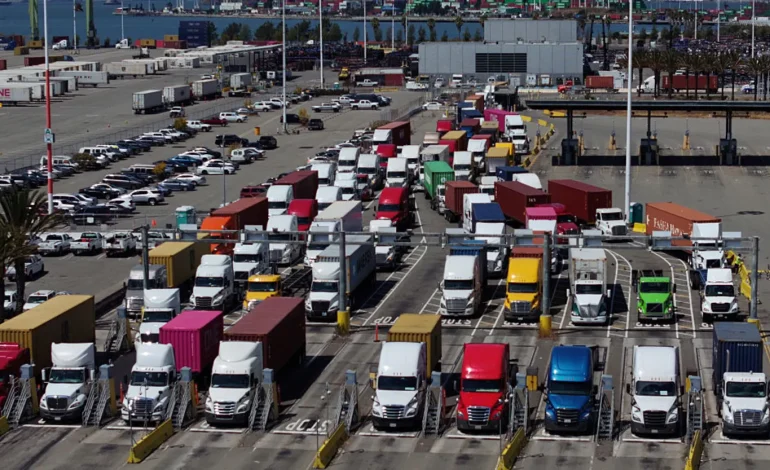
Logistics names were the headline casualties. C.H. Robinson, which took a gut punch the day before, managed a soft bounce in premarket — up about 0.7% — while RXO extended Thursday’s drop and was trading lower before the open. Expeditors International of Washington, after tumbling double digits the previous session, held roughly flat in early trade. Smaller and mid-cap carriers weren’t spared either: J.B. Hunt Transportation Services slipped again, and XPO was down as well.
The trigger: a newly touted tool from the firm named in the headline that claims to supercharge freight volumes without adding headcount. That pitch sent the tiny company’s stock surging — and traders promptly started re-pricing much bigger players on the idea that AI could replace labor or cut demand for middlemen.
Commercial property stocks were already on the ropes and the sell-off simply kept going into Friday. CBRE Group Inc dipped further in premarket trading, while Jones Lang LaSalle and Hudson Pacific Properties were either slightly down or flat after steep losses the day before. Office names that fell hard Thursday saw small mixed moves — SL Green Realty even eked out a tiny rebound.
Software, which was at the center of last week’s furious selling, didn’t get a free pass. Data and AI-adjacent plays were mixed in the morning: Palantir Technologies extended losses, while Autodesk and Salesforce were barely changed. The iShares tech-software ETF iShares Expanded Tech‑Software Sector ETF (IGV) was down a touch after a heavy Thursday, leaving it deep in the red for the year.
Even the market darlings — the handful of mega tech names everyone watches — closed Thursday lower, and most were trading softer Friday morning. Tesla led the pullback among them, while Nvidia eased after earlier strength.
Wall Street strategists had two main takes. UBS’s note framed the moves as proof that AI is already monetizable and transformative — a reason to keep AI exposure but diversify beyond U.S. tech. On TV, Wedbush Securities’s global tech research boss Dan Ives warned that while some pure-play software names may be losers, big enterprise platforms will likely be core to the AI rollout.
Others sounded a more panicked tone. Joseph Shaposhnik of Rainwater Equity called the selling “category 5” paranoia — an apt image for the speed and breadth of the move. And on the other side of the tiny firm’s trading bounce, its CEO Gary Atkinson said he never expected his company’s announcement to trigger that kind of market reaction.
The fallout wasn’t limited to the US — drug distributors and European logistics names also slid. McKesson Corp and Cardinal Health were knocked lower, and overseas shippers such as DHL Group, DSV A/S and Kuehne+Nagel International AG all saw meaningful declines in late trading.
Analysts pointed to a broader AI fear trade that’s sweeping through any sector investors think could be automated. Neil Wilson of Saxo UK described the phenomenon as the main narrative of recent sessions, while Daniel Moore flagged open-source automation tools that could level the playing field for smaller players as another pressure point.
Bottom line: the market’s mood is fragile and AI headlines now move more than just chip stocks. Traders are punishing perceived losers and rewarding potential winners — sometimes in the same breath — and that whipsaw is what’s left investors queasy heading into the week’s final session.



The latest news in your social feeds
Subscribe to our social media platforms to stay tuned