Cyclone Gezani has torn through Madagascar’s main eastern port, leaving a rising death toll, tens of thousands without shelter and a humanitarian response struggling against damaged infrastructure, while the storm regathers strength on its path toward Mozambique.
Authorities said on Thursday that at least 38 people had been killed, six were still missing and more than 12,000 displaced after the cyclone made landfall in Toamasina with winds of up to 250km/h. The city of roughly half a million people, Madagascar’s second largest and a critical commercial hub, absorbed the full force of the storm, which the government says “ravaged up to 75 percent of Toamasina and surrounds”.
The scale of the destruction is reflected in the housing losses. More than 18,000 homes were destroyed and at least 50,000 damaged or flooded, according to the National Office for Risk and Disaster Management. Many of the fatalities were linked to collapsing buildings, underscoring the structural vulnerability that repeatedly turns powerful storms into mass-casualty events across the island.
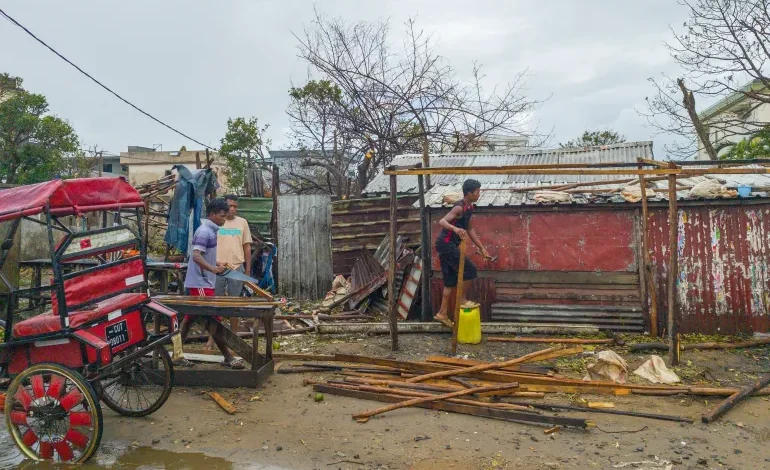
Images from the city show residents digging through twisted sheets of metal and broken timber to rebuild improvised shelters, while key transport links remain severed. The main road to the capital, Antananarivo, has been cut in several places, “blocking humanitarian convoys”, and telecommunications are unstable, slowing relief efforts and damage assessments.
The disaster prompted Madagascar’s new leader, Colonel Michael Randrianirina, to declare a national emergency and appeal for “international solidarity”. France has already sent food aid and rescue teams from nearby Reunion Island, and the International Organization for Migration described the situation as “widespread destruction and disruption”.
Meteorologists say the cyclone’s landfall ranks among the strongest recorded in the region in the satellite era, comparable to the 1994 storm Geralda, which killed at least 200 people. Gezani weakened as it crossed Madagascar but is expected to intensify again over the Mozambique Channel, with southern Mozambique now under warning for violent winds and waves reaching 10 metres.
For Mozambique, the threat comes on top of months of flooding that have already killed nearly 140 people since October, compounding the pressure on disaster-response systems. For Madagascar, the cyclone is the second major storm in a matter of weeks, after Cyclone Fytia struck the northwest last month.






The latest news in your social feeds
Subscribe to our social media platforms to stay tuned