


Chinese Cars Could Land at United States Dealers within a Decade

The Financial Times and CNN contributed to this report.
Don’t be shocked if a Chinese badge shows up at your local dealer sooner than you think — and for most American buyers, that’s probably good news.
For years Chinese automakers have been the world’s production and export juggernaut, but a mix of steep tariffs and frosty US–China relations kept them off American lots. That’s changing. Industry veterans and analysts say Chinese models could be on US showrooms in the next five to ten years — especially if the companies build plants on American soil instead of trying to ship cars in from overseas.
“The ambition is there,” says Lei Xing, a longtime China-watch reporter and former editor of China Automotive Review. He’s seen multiple Chinese makers signal they’re ready “to come to the US, to build in the US”
Why should you care? More competition typically means more choices and lower prices — particularly in EVs, where Chinese firms already lead on cost and features. That pressure would squeeze margins for incumbents and could shift market share — which matters for the roughly one million American jobs tied to domestic automakers.
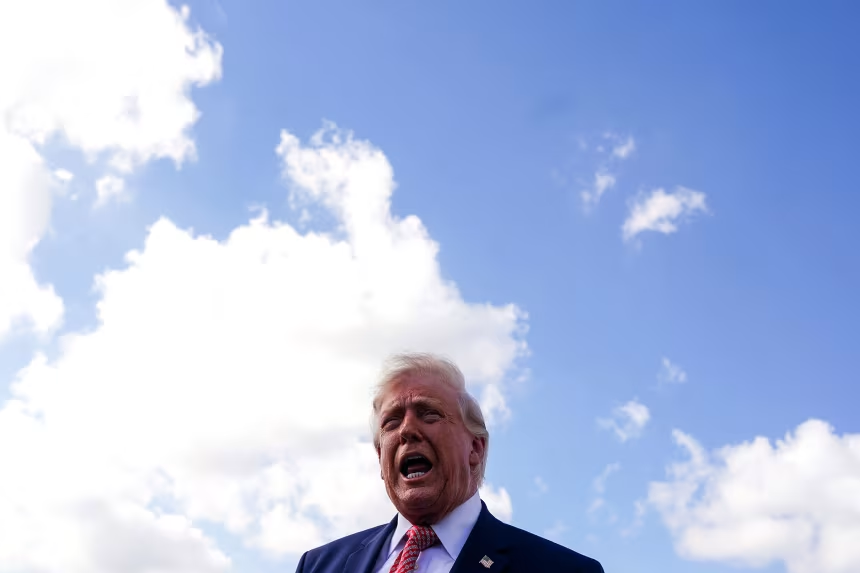
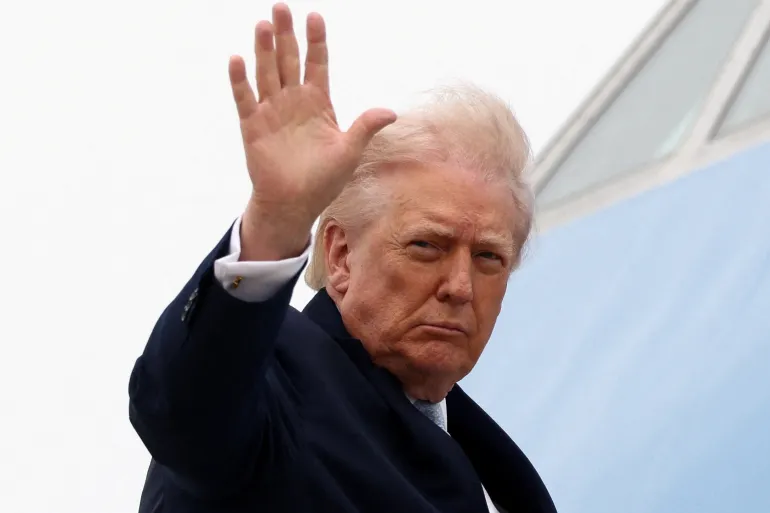
A big barrier has been a crushing 100% tariff on Chinese-built cars. But even that is getting rethought: President Donald Trump has publicly said he’d welcome Chinese automakers if they build plants and hire U.S. workers. A White House official also told CNN:
“[The administration] supports all investment into the United States as long as our national and economic security is not compromised.”
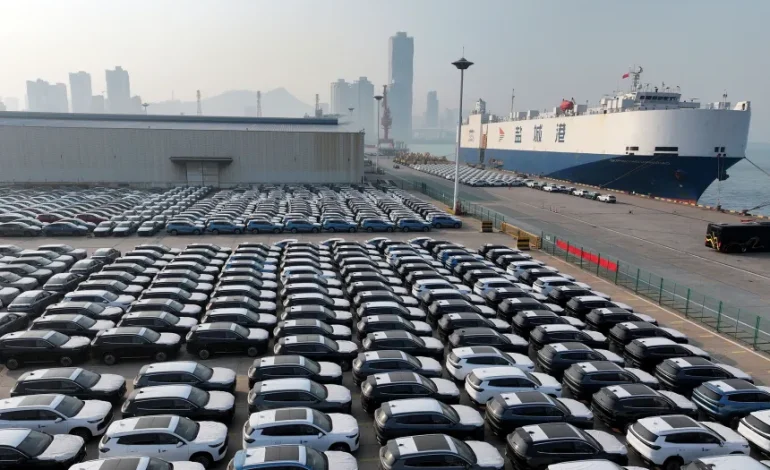
China’s auto industry is massive. China churned out roughly a third of world production last year and exported more than 8 million vehicles — a jump of about 30% versus 2024, according to the country’s main trade body, the China Association of Automobile Manufacturers. And when it comes to electric cars, Chinese firms are already top dogs: BYD passed rivals to become the biggest EV seller globally last year.
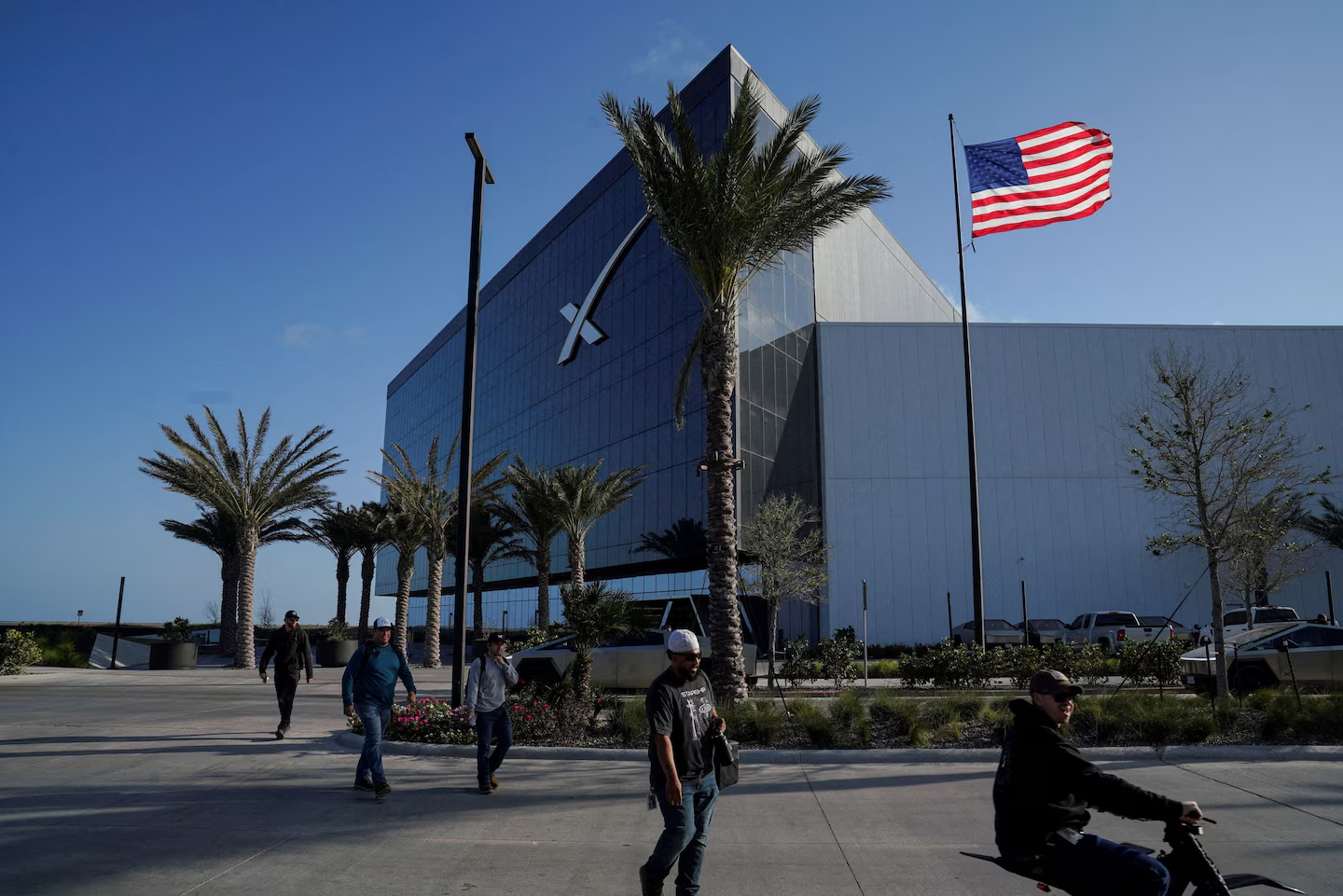
Getting a factory up and running in America takes time, but signs point to real movement. Geely — which already owns stakes in foreign brands — has footholds in the U.S. market through Volvo, which opened a plant in South Carolina in 2015 and is now expanding. That facility could be a launchpad for Geely-owned brands like Zeekr and Lynk & Co; Geely even supplies a small number of Zeekr vehicles to Waymo for its tests.
“It’s no secret that every automaker in the world looks at the US market as the ultimate arena for triumph,” says Michael Dunne.
And he’s right: US buyers typically pay more for bigger, pricier vehicles, so cracking this market is lucrative. For context: the average car exported from China last year was priced around $19,000, while the average new-car transaction price in the US is roughly $50,000.
For consumers, the upside is obvious: more models, more EV options, and downward pressure on prices — a trend already visible in Europe after Chinese brands moved in. But it’s not just price: Chinese cars have won customers by offering strong tech and value, not just cheap stickers.
“They just made better cars, and they made better technologies at affordable price points,” says Bill Russo.
Still, the road ahead isn’t free of potholes. The US market is brand-loyal and cautious; new names need time to earn trust. Domestic makers like Ford and American EV players such as Tesla will feel the pinch as price competition ramps up.
Bottom line: Chinese automakers aren’t coming to the US to play small. They’ve got scale, EV know-how and, increasingly, a willingness to invest locally. If tariffs get worked out and factories go up, American dealers — and buyers — could be facing a lot more choices before the decade is out.



The latest news in your social feeds
Subscribe to our social media platforms to stay tuned