





Japan Squeaks out of Recession — Q4 Growth Barely Registers, and the Victory Feels Fragile

CNBC, the Wall Street Journal, Bloomberg, the Financial Times, Reuters, and the Guardian contributed to this report.
Japan’s economy eked out a 0.1% expansion in the fourth quarter of 2025 compared with the prior three months — the same tiny 0.1% gain when measured year-on-year — enough to avoid the textbook definition of a technical recession (two straight quarters of decline) but a clear miss versus what economists were banking on.
Analysts had been looking for roughly a 0.4% quarterly bounce; instead, the headline numbers were anemic, leaving policymakers with a win that hardly feels like one. Private consumption was the engine this time — households still spending just enough to nudge GDP forward — but weak exports and softer public spending pulled back on the wheels of recovery, according to official figures.
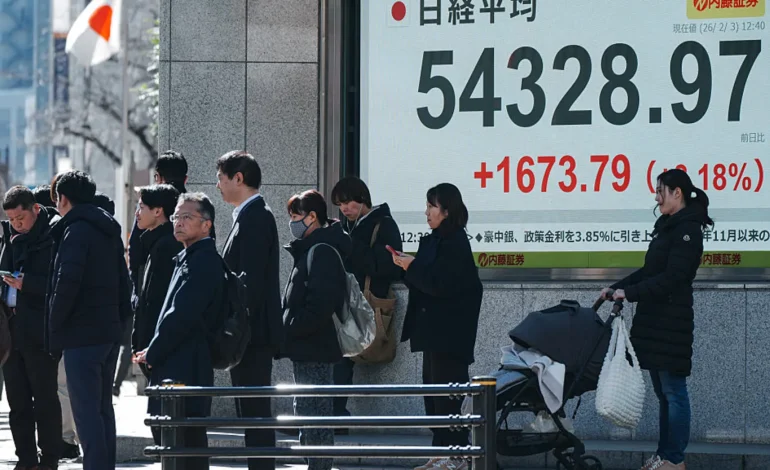
Markets reacted muted. The Nikkei 225 opened up a hair after the release, while the yen slid, trading around JPY 153 to the dollar — a signal that investors are still parsing whether the data changes the Bank of Japan’s policy calculus.
On the policy side, the central bank has already been nudging its outlook. The Bank of Japan in January lifted its growth forecasts for the fiscal year that ends March 2026, nudging the number higher on the assumption of a moderate pickup overseas and a virtuous cycle of wages and prices. But those upgrades look a little optimistic against today’s weak quarter: headlines show growth returned, yet the momentum is fragile and narrow.
That fragility is political too. Prime Minister Sanae Takaichi’s administration — freshly empowered after a big electoral win — has been pitching aggressive fiscal moves to spark stronger expansion. Takaichi has floated proactive spending plans and vowed to back households battling cost-of-living pressures. With GDP slipping far below the forecasts, pressure will mount in Tokyo to shift from rhetoric to actual follow-through (read: faster, bigger stimulus).
Economists are cautious.
“Personal consumption showed resilience,” said Shinichiro Kobayashi, “but whether that resilience sticks will depend on whether price relief measures have real impact and whether real wages start going up.”
In plain terms: people are spending now, but rising prices and stagnant take-home pay could crater demand again unless policy addresses household incomes.
A few other facts matter for the backdrop. Japan’s inflation has cooled to about 2.1% recently — still above the BOJ’s 2% target, but the slowdown raises questions about the durability of consumer strength. And Japan’s export outlook is being tested by slower demand from key markets; with trade flows wobbling, any domestic spending gains can be fragile.
What does this mean going forward?
- Short term: expect volatility. Markets will parse incoming data and policy signals from both the BOJ and Tokyo. If policymakers push a visible fiscal package — faster approvals, targeted household relief or corporate incentives — sentiment could rally. If they sit tight, growth could stay soft and the yen could slip further.
- Medium term: the call is on jobs and wages. A sustained lift in real wages would make this 0.1% feel more durable. Without it, consumer resilience could fade and the risk of another negative quarter would re-emerge.
- Political pressure: the weak print strengthens the hand of those arguing for a speedy supplementary budget or more aggressive fiscal measures. Takaichi campaigned on investment and spending; now she has the policy cover to move faster if she chooses.
Japan dodged a recession, technically speaking, but the celebration should be subdued. A 0.1% print is a patch, not a recovery; it puts the onus squarely on Tokyo and the BOJ to turn that tiny uptick into something more meaningful. Until consumers show sustained strength and exports pick up, the economy looks like it’s treading water — and policymakers will need to act decisively if they want the next quarter to read anything better than “barely.”



The latest news in your social feeds
Subscribe to our social media platforms to stay tuned