


US moves thousands of ISIL detainees from Syria to Iraq as control of prisons shifts

The United States says it has completed a large-scale operation to transfer more than 5,700 suspected ISIL fighters from detention facilities in northeastern Syria to Iraqi custody, a move driven by growing uncertainty over who controls the prisons where they had been held for years.
“The 23-day transfer mission began on Jan 21 and resulted in US forces successfully transporting more than 5,700 adult male ISIS fighters from detention facilities in Syria to Iraqi custody,” US Central Command (CENTCOM) said in a statement on X.
The final stage of the operation was a night flight on February 12. CENTCOM said the relocation was intended “to help ensure ISIS detainees remain secure in detention facilities”, reflecting longstanding fears that instability in the area could lead to prison breaks and a renewed security threat.
The detainees, drawn from roughly 60 countries, had been held by Kurdish-led Syrian Democratic Forces after the armed group’s territorial defeat in Syria in 2019. That arrangement became increasingly fragile when Syrian government troops pushed into large parts of the northeast last month, forcing the SDF to withdraw and raising urgent questions about the fate of thousands of prisoners.
Iraq’s National Centre for International Judicial Cooperation said 5,704 detainees had arrived in the country. The largest group is Syrian nationals, numbering 3,543, followed by 467 Iraqis and 710 citizens of other Arab states. The transfer also includes more than 980 foreign nationals from Europe, Asia, Australia and the United States. Iraqi authorities say the judiciary will interrogate the detainees before deciding on legal proceedings.
For Washington, the operation is framed as a security measure tied to the wider campaign against ISIL. “We appreciate Iraq’s leadership and recognition that transferring the detainees is essential to regional security,” CENTCOM commander Admiral Brad Cooper said, adding, “Job well done to the entire Joint Force team who executed this exceptionally challenging mission on the ground and in the air.”
The background to the transfer stretches back more than a decade. ISIL seized large parts of Syria and Iraq in 2014, carrying out mass killings and enslaving women and girls. Iraq declared victory over the group in 2017, and US-backed Kurdish forces defeated it in Syria two years later. The aftermath left the SDF guarding thousands of suspected fighters and tens of thousands of relatives in camps and prisons.
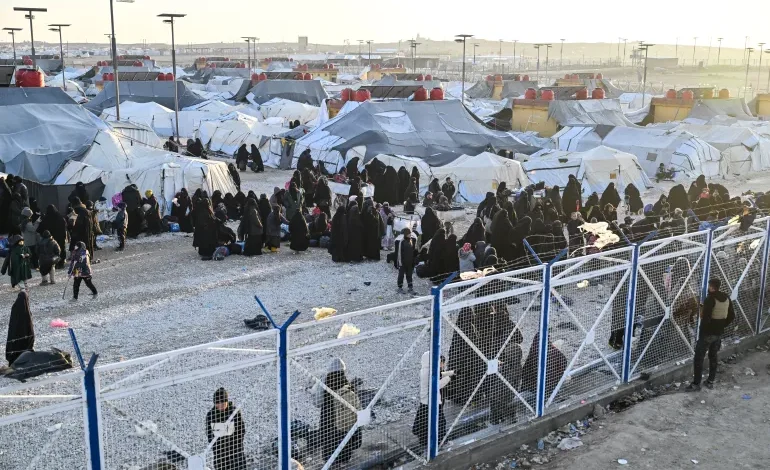
Among those sites, al-Hol became the most prominent and the most controversial. Established in 2019, it held tens of thousands of women and children linked to suspected fighters and developed what aid workers and security officials described as a reputation for violence, clandestine enforcement networks and radicalisation risks.
With the SDF now gone from the camp and Syrian authorities moving into the area, the United Nations is expected to take over humanitarian management. At the same time, most foreign families have reportedly left al-Hol since the Kurdish withdrawal, according to humanitarian sources.
The transfer to Iraq also highlights a problem that has lingered since the territorial defeat of ISIL: the reluctance of countries to repatriate their own nationals. Baghdad has repeatedly called on foreign governments to take back their citizens, echoing years of similar appeals from the SDF. In practice, those efforts have produced only limited returns, largely involving women and children.



The latest news in your social feeds
Subscribe to our social media platforms to stay tuned