
US strikes ISIL targets in Syria as military footprint shifts and detainees moved to Iraq

The United States has carried out a new wave of air strikes against ISIL positions in Syria, presenting the campaign as both a direct response to last year’s deadly attack on its personnel and part of a broader effort to keep pressure on what remains of the armed group.
US Central Command said it hit more than 30 targets between February 3 and 12, using “precision munitions” against infrastructure and weapons storage sites. The stated objective was to “sustain relentless military pressure on remnants from the terrorist network”.
The operation is tied to an incident in December near Palmyra, when an ISIL attack killed two US soldiers, Sergeant Edgar Brian Torres-Tovar and Sergeant William Nathaniel Howard, along with Ayad Mansoor Sakat, an American civilian interpreter. The strikes fall under Operation Hawkeye, which CENTCOM says has, over the past two months, killed or captured more than 50 fighters and struck roughly 100 ISIL infrastructure targets.
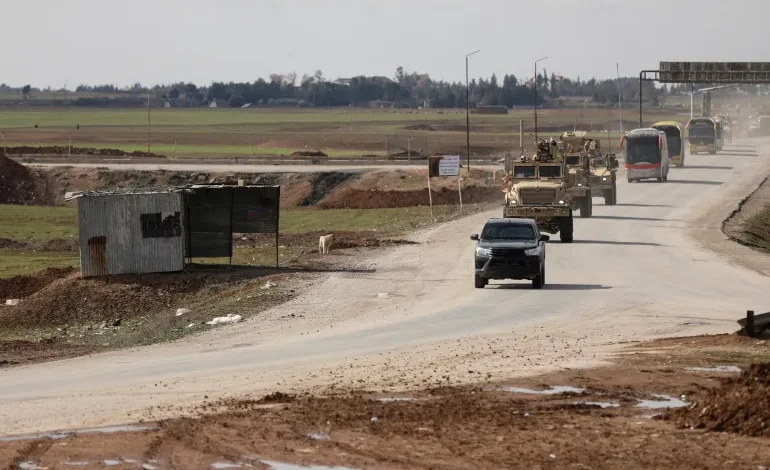
These attacks come at a moment when the US role on the ground in Syria is visibly changing. Just a day earlier, Washington completed the transfer of thousands of ISIL detainees to Iraq for prosecution, a move requested by Baghdad and welcomed by the US-led coalition that spent years fighting the group. The relocation was driven in part by concerns over the security of detention sites as control of territory in the northeast shifts.
At the same time, Syria’s Ministry of Defence says government forces have taken over the al-Tanf base in the east of the country, a facility long operated by US troops as a hub for operations against ISIL. The development underscores a wider repositioning: Washington has recently signalled that the core rationale for its partnership with the Kurdish-led Syrian Democratic Forces, the territorial defeat of ISIL, has largely been achieved.
The current dynamic is therefore a mix of drawdown and distance. The US is reducing its physical presence at key sites while continuing to rely on air power and targeted operations to contain ISIL cells that remain active in the Syrian desert and central regions.
That approach reflects the unresolved nature of the post-2019 landscape. The armed group no longer holds territory, but it retains the capacity to mount lethal attacks, as the Palmyra incident showed. At the same time, Damascus is moving to reassert control across the country, reshaping the operational environment in which US forces have been working for years.

The latest news in your social feeds
Subscribe to our social media platforms to stay tuned