




Ex Karabakh Official Ruben Vardanyan Gets 20 Years in Baku
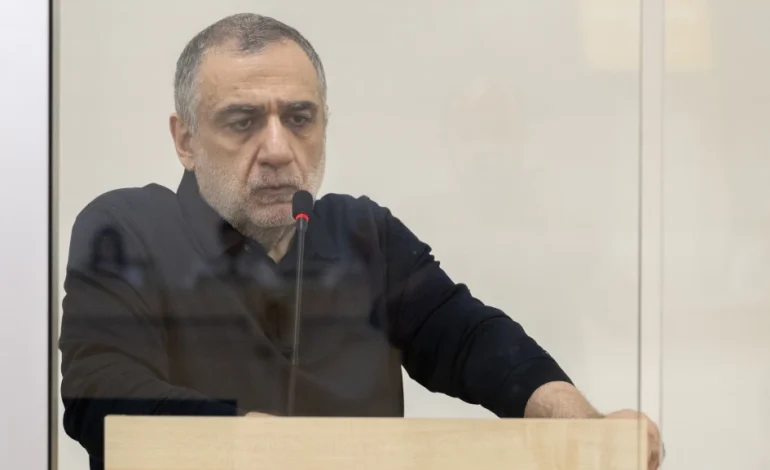

Baku just handed down a heavy sentence. Ruben Vardanyan – the former Karabakh official and one-time billionaire banker – was convicted by a military court and given 20 years behind bars.
A senior official in the ethnic Armenian administration of Nagorno-Karabakh before Azerbaijan retook the region in 2023, was convicted on charges tied to terrorism financing and illegal armed formations, according to Azerbaijani media. Prosecutors portrayed him as a key political and financial pillar of what Baku calls an illegal separatist regime.
The reaction in Yerevan and among Armenian campaigners was immediate and angry. Vardanyan’s family blasted the process as politically driven and riddled with due-process problems; his legal team has repeatedly said the trial was neither free nor fair. He’d been detained trying to cross into Armenia during the mass departures from the region, according to reporting, and has staged hunger strikes while in custody.
This isn’t just a courtroom drama. It’s a message from the Azerbaijani state. President Ilham Aliyev has taken a firm stance against leaders of the former Karabakh administration since Baku regained control of the territory in 2023. Officials in Baku made clear they would press hard on prosecutions – and on public punishment – for anyone they say helped run the separatist enclave. Reuters and Bloomberg have both described the sentence as part of a wider crackdown on ex-leaders.
For Armenia and the many families still searching for answers, the timing could not be worse. Just weeks earlier, officials celebrated the handover of a handful of prisoners from Baku to Yerevan – a small concession framed as progress in a fragile peace process. Paris even issued a statement welcoming the transfer. But the Vardanyan verdict cuts against that grain: it risks chilling negotiations and undercuts whatever goodwill those handovers built.
Look at the practical consequences. When a high-profile figure tied to the Karabakh administration receives a two-decade sentence, public opinion hardens. Armenian families – and Armenian politicians – see punishment, not reconciliation. Baku knows this; it also knows the optics at home reward toughness. The result is a policy problem: how do you run a peace process while you’re locking up a rival’s elite? Short answer: uneasily.
There’s also a humanitarian ledger to tally. Human rights groups and activists say dozens of ethnic Armenians remain detained in Azerbaijani facilities under a variety of labels: alleged militants, collaborators, or simply civilians swept up after the 2023 operation. Campaign sites tracking “the Baku prisoners” argue many cases deserve independent review and, where appropriate, release. Those groups say Vardanyan’s sentence will only harden public pressure on Armenia to demand full returns – and harden Baku’s public mood against making larger concessions.
Legalists will argue Baku is applying its criminal code to crimes it says were committed on its territory. That’s technically true. But law does not operate in a vacuum. Trials of this scale are political theatre, and military courts trying former state ministers send a signal that reconciliation might be subordinated to retribution. Analysts who track the region warn that such rulings can feed cycles of grievance – the very cycles the peace process was supposed to break.
There are diplomatic echoes too. Western capitals and international mediators have pushed for confidence-building measures: prisoner exchanges, clearer rules for movement, economic ties. Those steps are supposed to lower the temperature. A headline about a 20-year prison term, splashed across the region, reverses that calming effect. It hands skeptics in both capitals fodder to claim the other side can’t be trusted. The narrow transfers of prisoners that France and others welcomed look like isolated gestures rather than the start of a durable pattern.
If peace is to stick, both sides have to accept uncomfortable compromises. For now, this verdict looks like a step away from compromise. Tough prosecutions may win political points in the short term, but they can also lock in mistrust for years. The fragile work of converting ceasefire lines on a map into functioning normal relations requires gestures that lower stakes, not raise them.
Vardanyan’s fate is sealed for now. The larger question is about the many smaller cases that follow. Will those be handled with transparency and an eye toward reconciliation? Or will they become bargaining chips, points of punishment that freeze diplomacy?


The latest news in your social feeds
Subscribe to our social media platforms to stay tuned