

Roy Rogers Was a Big Fan of Plastic Saddles Made in Lusk, Wyoming
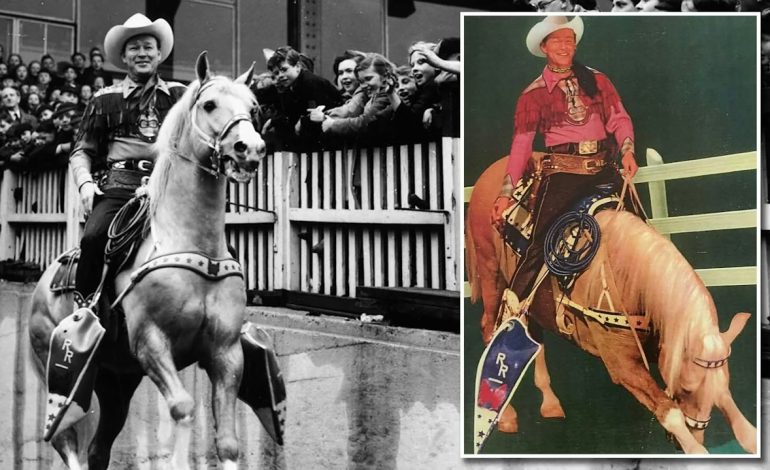

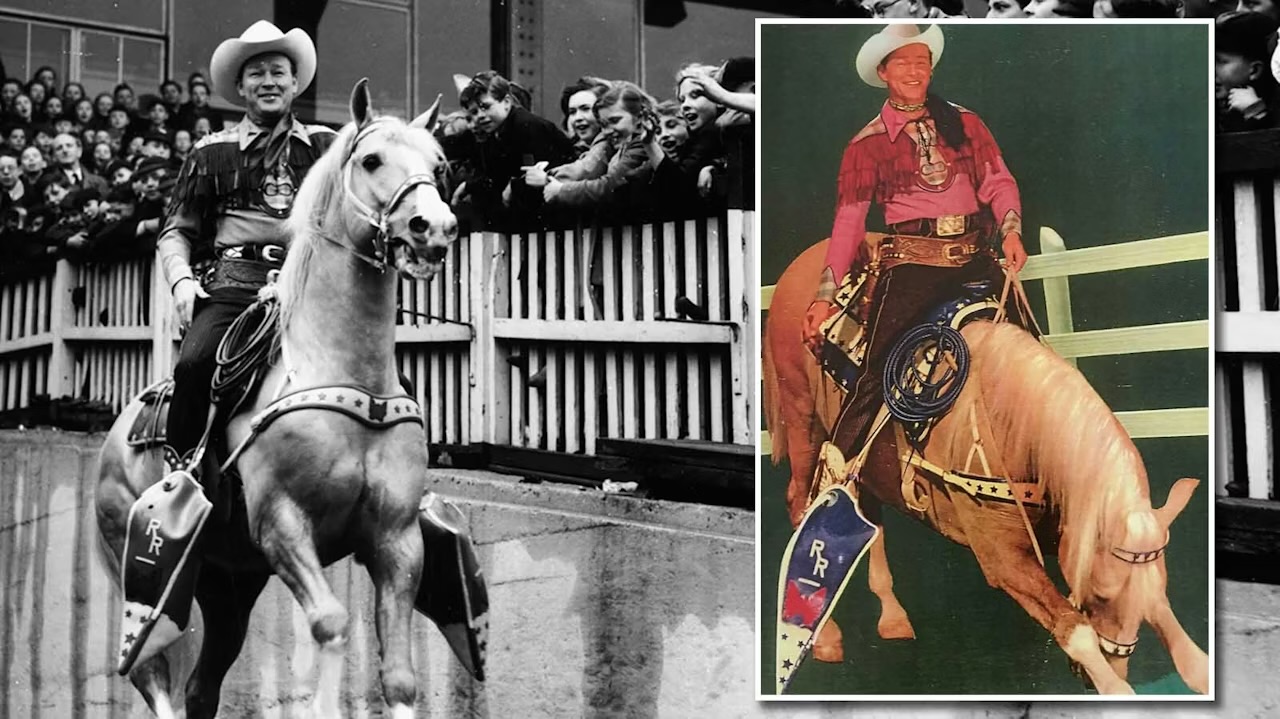
Roy Rogers’ iconic red, white and blue saddle—the one fans remember from parades and photos—wasn’t made of leather. It was plastic, crafted in the tiny Wyoming town of Lusk, and the King of the Cowboys loved them so much he bought five and became a spokesman for the fledgling company.
The story begins in 1945, when William B. Vandergrift had an idea. With materials scarce after World War II, he experimented with petroleum-based plastic produced by BF Goodrich. The first plastic saddle was molded in a Colorado saddle maker’s kitchen oven—heated in his wife’s coal range.
Vandergrift took the saddle to a New York plastics exposition, displaying it on his paint horse, Chief. The saddle was a hit. When he returned west, he met Tommy Nielson, a Lusk saddle maker swamped with 175 back-orders he couldn’t fill for lack of leather. They formed the All-Western Plastic Company.
It took six attempts and two months to make a saleable plastic saddle. Then came a stroke of luck: Roy Rogers and Dale Evans ordered a pair, cream-colored with patriotic red and blue trim. Rogers was so taken with them that he became the company’s spokesman.
By October 1946, the Lusk company had 40 orders. Saddles were made in Wyoming; bridles and accessories in Nebraska. But the plastic had issues—slick and brittle when cold, sticky when hot. A complete rig cost nearly $500, while a leather saddle averaged $125. They were great for parades, not for working cattle.
The company moved to Scotts Bluff in 1949, switching to injection-molded items like Rogers’ trademark yo-yo. By 1951, it closed.
Tom Harrower, a Kemmerer rancher and collector, has spent four decades tracking down the surviving saddles. Of the 65 produced, he’s located 54. His prized possession: the Roy Rogers Presentation saddle in its vibrant red, white and blue.
Harrower travels Wyoming with his collection, displaying them on fiberglass horses, hoping to gather more stories. “It’s really important to preserve this history because it was a really unique idea that took place in Lusk,” he said. “The plastic saddles are part of our cowboy culture.”



The latest news in your social feeds
Subscribe to our social media platforms to stay tuned