


EXCLUSIVE: Operation Epstein Fury Part 2. Economic Fallout.

The war between Iran, Israel, and the United States began with a rapid escalation of covert operations and airstrikes that soon spilled into a regional conflict. Israeli and US forces launched a coordinated campaign – often referred to as Operation Lion’s Roar (Israel) / Operation Epic Fury (USA) – targeting Iranian military infrastructure, nuclear facilities, and command centers across the country. The strikes were designed to cripple Iran’s strategic capabilities quickly, with early messaging from Washington suggesting a short, decisive campaign.
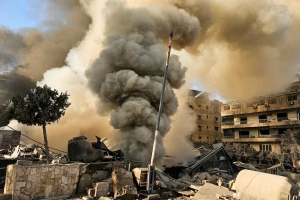
The reality unfolded differently. Within days, Iran responded with missile attacks across the region, targeting US military assets and allied infrastructure in the Gulf while escalating confrontation with Israel. Explosions struck cities including Tehran and Beirut, while Iranian missiles reached Gulf installations and shipping lanes. One attack even hit near a US diplomatic facility in Dubai, a sign that the conflict had expanded beyond the immediate battlefield.
Casualties mounted quickly. Iranian authorities and independent monitors reported that more than 1,000 people were killed in the first phase of strikes, many of them civilians caught in attacks on infrastructure and urban areas. American forces also took losses. US officials confirmed at least 6 service members were killed during Iranian retaliatory strikes on bases in the region.
Israel simultaneously widened the conflict northward. Ground operations and artillery strikes in southern Lebanon intensified, pushing Israeli troops several kilometers across the border near the town of Khiam. The escalation triggered mass displacement in Lebanon, with tens of thousands fleeing the southern regions amid fears of a wider confrontation with Hezbollah.
Iran also escalated tension by striking its South Caucasus neighbor. The building of the airport in the Nakhchivan Autonomous Republic was reportedly attacked by Iranian drones. Iran denies its involvement. Iran’s Deputy Foreign Minister Kazem Gharibabadi stated:
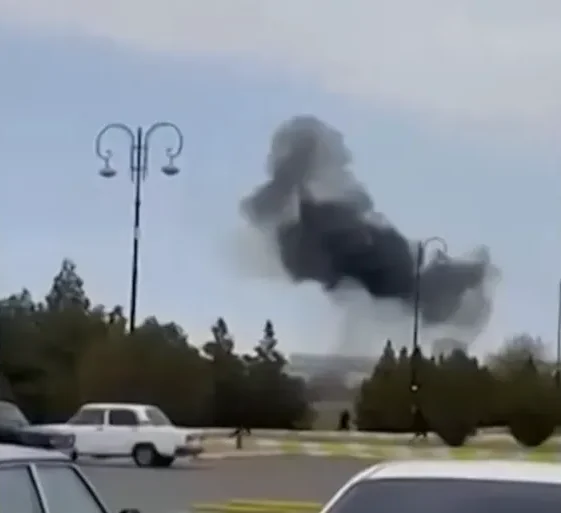
“The Islamic Republic of Iran has not targeted the Republic of Azerbaijan… We do not target our neighboring countries… Iran’s policy is only to strike the military bases of its enemies.”
These developments revealed how quickly the war had expanded beyond the initial plan. Analysts noted that the strategic assumptions underpinning the early strikes – particularly the expectation that Iran’s leadership might collapse following targeted assassinations – proved incorrect.
Trita Parsi, writer, analyst, Co-Founder and Executive Vice President of the Quincy Institute for Responsible Statecraft, argued that the Trump administration’s strategy unraveled almost immediately:
“The administration’s plan – based on an exaggerated view of Iran’s relative weakness – was that the theocracy in Iran would implode shortly after the assassination of the Supreme Leader. By Monday morning, before the markets opened, the war was supposed to be over, and Trump would be basking in yet another glorious victory, proving all his skeptics wrong. But no such implosion has occurred. Nor are we seeing signs that it is likely to occur in the short term.
As a result, it is increasingly Iran that is defining the geography of this war, its intensity, and most crucially, its length in time. This does not mean that Iran is winning the war – there is no evidence of that at all. But Iran’s prospects of getting Trump to lose the war or cut it short are increasing precisely because Trump is scrambling for a Plan B… Trump started shifting his messaging. Knowing that the Iranians thought Trump could not sustain the war for long, Trump suddenly started saying that the war may go on for four weeks – seeking to disabuse the Iranians from the idea that time is on their side.
Rather than declaring victory (having killed the Supreme Leader), Trump has decided to throw good money after bad, but now with an even more shocking plan: Arming Kurdish separatists in Iran and, most likely, also sending US troops into Iran through the Kurdish areas together with Israeli special forces. What was supposed to be a 48-hour air campaign is fast deteriorating into a land invasion with US troops on the ground.
Neither the Iranians nor Trump will back down in the next few days. Trump thinks he can turn the tables on Iran with his Kurdish plan, and Tehran believes a land invasion will help unify the population against invaders and separatists. Both believe they can absorb and sustain the casualties, which likely will be massive. Yet, not a single death in this unnecessary war can be justified.”
The war’s trajectory shifted again as Washington considered expanding operations. Drop Site News reporting suggested the US was preparing to arm Kurdish groups in Iran and potentially deploy troops through Kurdish regions alongside Israeli special forces. What began as an air campaign now risked evolving into a land war.
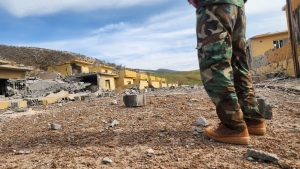
The military escalation immediately triggered global economic consequences.
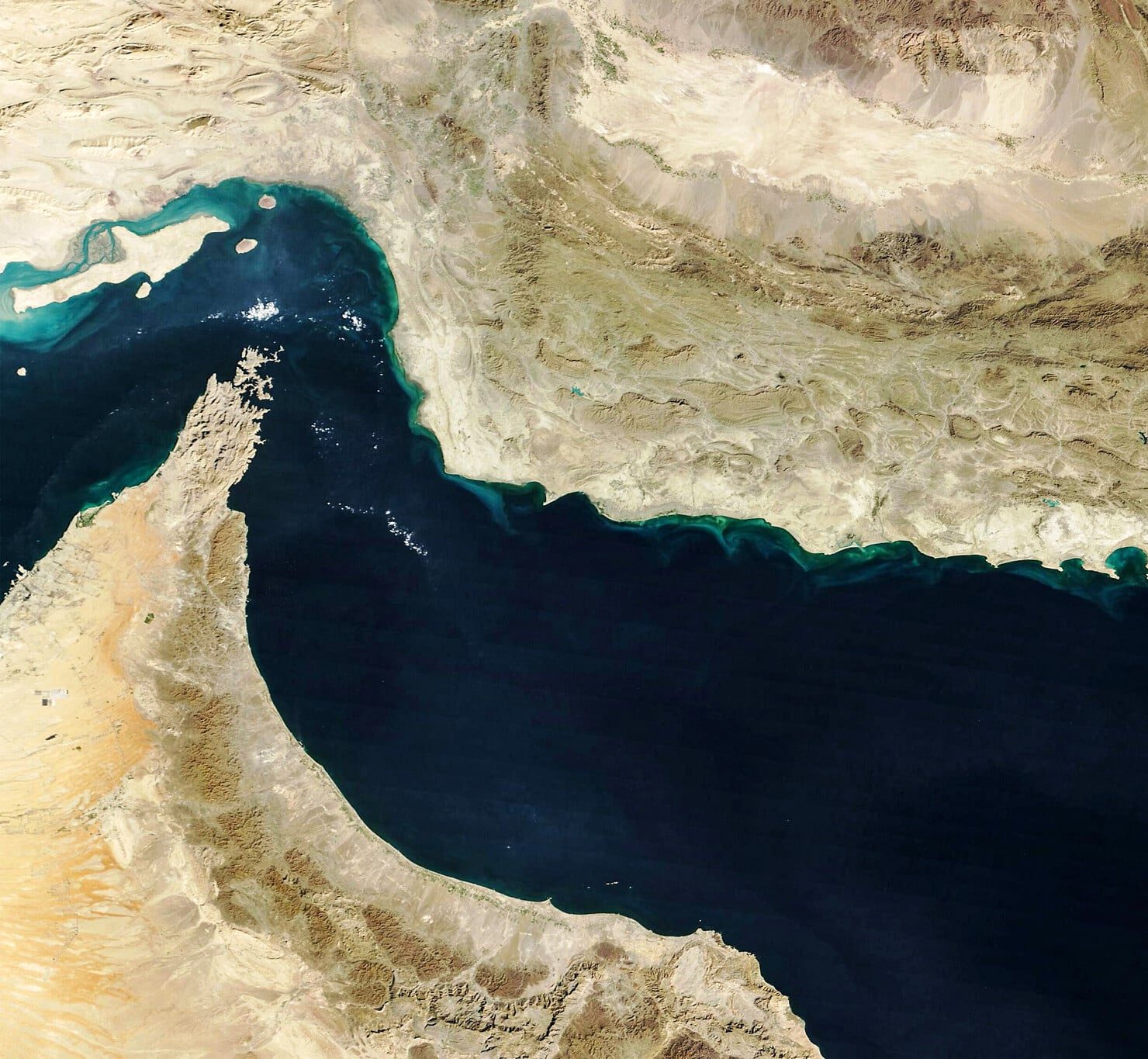
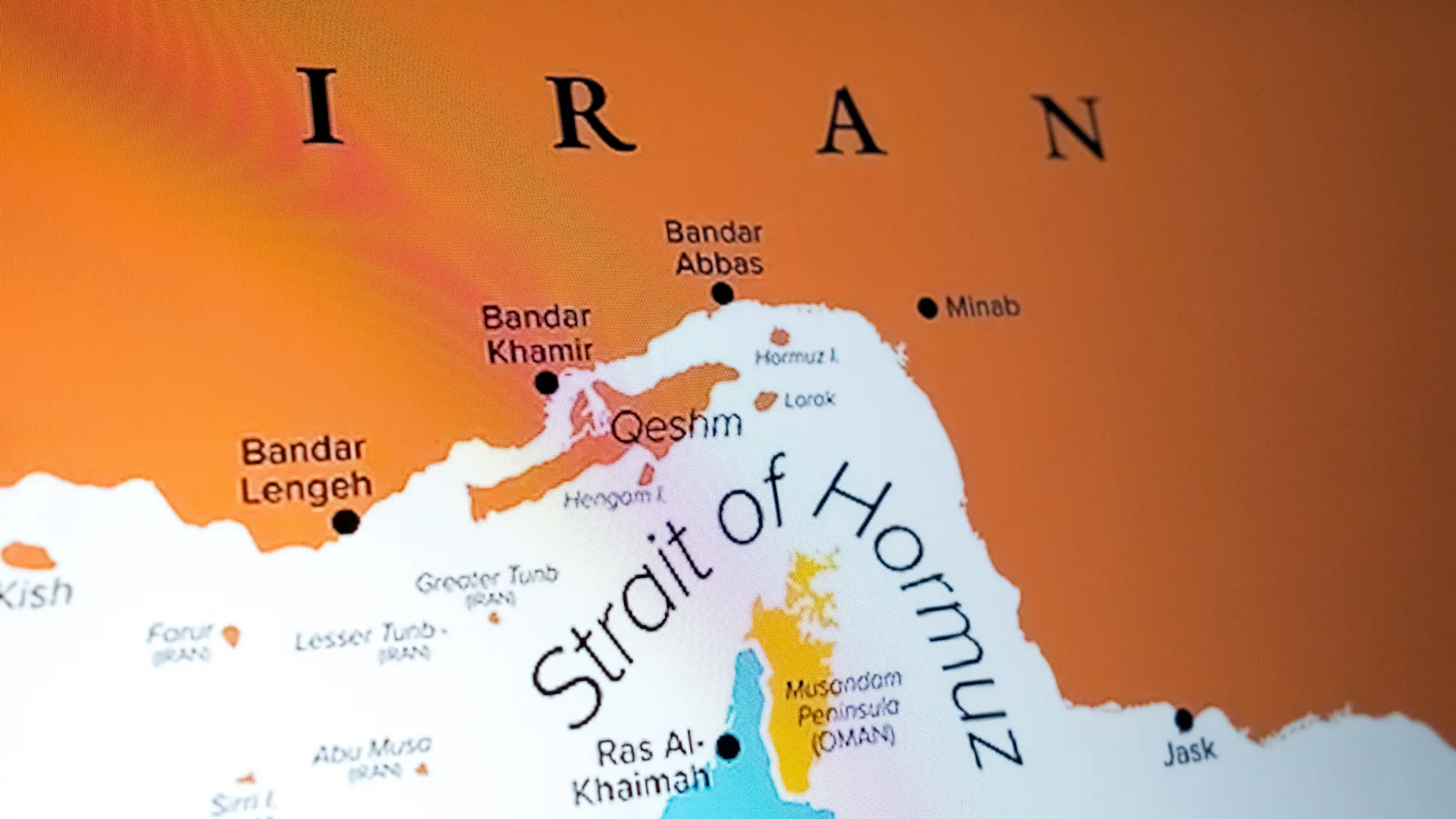
Iran’s primary strategic advantage lies not only in missiles and regional allies but in geography. The country sits astride one of the world’s most critical energy chokepoints: the Strait of Hormuz.
Roughly one-fifth of global oil consumption flows through this narrow waterway between Iran and Oman. The strait also handles a large share of liquefied natural gas shipments from Gulf producers, making it one of the most economically sensitive maritime corridors in the world.
Iranian officials quickly signaled their willingness to disrupt traffic through the passage. Iran’s Revolutionary Guard claimed the country had “complete control” of the strait as tensions escalated. Even the possibility of interference was enough to shake global markets.
The strategy has historical precedent. During the Iran-Iraq War in the 1980s, both sides attacked oil tankers in the Gulf in what became known as the Tanker War. Those attacks caused sharp spikes in insurance costs, disrupted shipping routes, and drew foreign navies into the region to protect commercial vessels.
Today’s conflict is unfolding under similar dynamics.
Economists warn that Iran does not need to physically block the strait to cause disruption. Harassment of vessels, drone attacks, or mining operations can make insurers declare the route unsafe, forcing ships to delay or reroute.
Jean-Paul Rodrigue, Department of Maritime Business Administration Professor and Hagler Institute for Advanced Study Distinguished Fellow at Texas A&M University, argues that insurance markets are already driving the slowdown in shipping:
“The Strait of Hormuz is not closed; it is being interdicted… The main factor behind the slowdown in transit volume is insurance. Given the escalated conflict, major insurance companies are updating their premiums to reflect the increased risk. This means several ships must wait for their owners to obtain updated insurance policies before transiting. There is also more GPS spoofing, implying that ships may not have an accurate location, which can impair navigation. Further, shipping lines make their ships wait with the hope that the conflict will be short-lived. So, the slowdown at Hormuz is more a reaction to risk than to a specific risk. Still, many ports have announced temporary closure (Jebel Ali), and shipping lines are diverting through the Cape route.
Concerning air travel, Dubai and Abu Dhabi are major air hubs connecting Europe, the Middle East, South Asia, and East Asia. Their temporary closure is highly disruptive for international air travel and has left many stranded.
From an energy perspective, the US is likely not to be significantly impacted since we have significant domestic production, and the main external sources are Canada, Mexico, and now Venezuela. We may even gain additional exports. The country most likely to be adversely affected is China, as it is the main purchaser of Iranian oil.”
Those disruptions ripple outward. Cargo shipments slow. Energy markets tighten. Trade flows adjust.
Iran’s broader economic influence also extends beyond the strait. The country sits at the center of a network of regional actors and trade routes that intersect with global supply chains. Research on the economic consequences of the Iran-Israel proxy conflict shows that even limited clashes have historically pushed energy prices higher and destabilized regional trade patterns.
This time, the scale of confrontation is far larger.
Global economic institutions had already warned that an expanded war with Iran could trigger major financial shocks, particularly through energy markets and shipping disruptions. Morgan Stanley analysts cautioned that a prolonged conflict could push oil prices sharply higher while fueling inflation and market volatility.
The United States itself faces risks. Rising oil prices could erase many of the economic gains achieved in recent years, particularly if energy costs drive up consumer prices.
Still, the economic impact may vary across regions. Rodrigue notes that the United States – now a major oil producer – may weather the shock better than many import-dependent economies. China, by contrast, relies heavily on Iranian and Gulf energy shipments and would face significant exposure if the strait’s traffic slows.
The war therefore sits at the intersection of geopolitics and global trade.
Financial markets respond to war with a mixture of panic and calculation. The Iran conflict has produced both.

In the first days after the strikes, global stock markets experienced sharp swings as investors tried to gauge the scale of the crisis. Historically, wars trigger short bursts of volatility followed by stabilization once markets digest the likely economic impact.
Yet energy conflicts behave differently. When oil supply appears threatened, inflation expectations rise, government bond yields increase, and equities tied to transportation or manufacturing often decline.
That pattern began emerging almost immediately. US borrowing costs ticked upward as investors demanded higher yields amid rising geopolitical uncertainty.
Currency markets also reacted. The US dollar climbed to a five-week high as traders sought safe-haven assets during the conflict.
Commodities displayed more complex movements. Gold and silver prices dropped unexpectedly at one point as inflation concerns strengthened the dollar, illustrating how geopolitical shocks can produce contradictory financial signals.
Investors were also watching oil prices carefully. The mere threat of supply disruptions pushed energy benchmarks upward and rattled stock markets globally.
Economists emphasize that markets often recover after the initial shock. Historical studies show average equity returns typically stabilize within weeks after a major geopolitical crisis.
That assumption may prove optimistic if the war drags on.
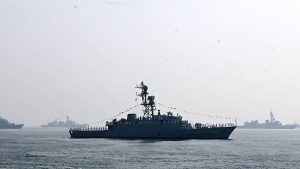
The most immediate economic consequences of the war lie in energy markets.
Oil traders began reassessing supply risks as soon as the first missiles flew. Analytics from BBC warned that even limited disruption in the Gulf could reshape global energy flows.
Energy shipments from the Middle East already account for a significant share of global supply. If tankers avoid the Strait of Hormuz due to security threats, the impact would cascade across the energy system.
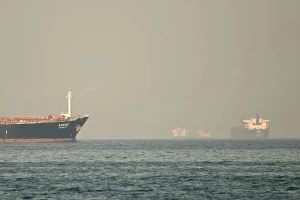
Shipping delays are already appearing. Reports indicate that more than 150 vessels have paused in Gulf waters rather than risk transit through the strait, waiting for military escorts or lower insurance premiums.
Ellen R. Wald, President of Transversal Consulting and Senior Fellow at the Atlantic Council’s Global Energy Center, an energy analyst and president of Transversal Consulting, argues that the immediate problem is not physical shortages but uncertainty:
“Economic impact really depends on the length of the war and the extent of the damage. Primary economic impacts will be felt in the immediate area, especially the UAE and Israel, due to damage from Iranian missiles and drones.
When it comes to oil markets and the global economy, the extent of the impact is unclear at this point. What we know is that there is an imminent threat to ships traversing the Strait of Hormuz. Military operations are ongoing. Insurance rates have skyrocketed… This is already creating a backlog that will take time to iron out even if the military operations conclude swiftly. Oil prices will be most impacted in Asia – particularly Japan – which gets a large portion of its oil from the Middle East and does not buy Russian oil. Europe will also be impacted. The price increase will occur even if shortages aren’t expected, simply because the threat of potential shortages in the future remains…
In the short term, consumers in the US should expect to see higher gasoline prices this week due to the price increase in global oil benchmarks. Do not expect any gasoline shortages related to this geopolitical incident, though if prices get too high for comfort, an SPR release can be arranged.”
Europe also faces exposure, though its energy diversification since the Ukraine war has reduced dependence on Gulf oil.
The broader geopolitical ripple effects are also significant. France24 reports that disruptions in Middle Eastern energy markets could affect the dynamics of Russia’s war in Ukraine by altering global supply patterns and energy prices.
Markets remain tense. Traders watch tanker traffic, satellite imagery, and naval deployments in the Gulf almost hour by hour.
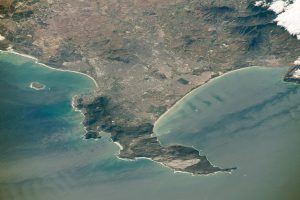
Wars often reshape economies long after the fighting stops. The Israel-Iran conflict is unlikely to be different.
Early estimates already suggest the war is imposing enormous financial costs. Israeli officials reported that economic damage could exceed $29 billion within a week due to infrastructure destruction, lost production, and military spending.
The long-term costs may be far greater. Analysts at Forbes warn that wars involving major regional powers tend to generate decades of financial burdens through reconstruction, defense spending, and economic disruption.
Global shipping networks have already begun adjusting. Some carriers are diverting around Africa’s Cape of Good Hope rather than risk Gulf routes, adding time and expense to international trade.
Air travel faces similar disruption. Major aviation hubs such as Dubai and Abu Dhabi have temporarily halted operations, leaving thousands of travelers stranded and forcing airlines to redesign flight paths.
Tourism across the Middle East has also collapsed almost overnight.
Paul Rivlin, an economist and Senior Research Fellow at the Moshe Dayan Center for Middle Eastern and African Studies at Tel Aviv University, spoke of regional reverberations and estimated losses if the instability continues:
“The war in the Middle East is causing massive damage to the already very weak Iranian economy. Iran is now blockading the Straits of Hormuz, which allow 20% of world oil consumption through. That includes 40% of China’s oil imports and 30% of its LNG sources.
Billions of dollars of damage have been inflicted by Iranian attacks on the Gulf States and Israel. In Israel, the use of fuel, the call-up of manpower, and other military spending as well as the disruption of production are additional costs. Shipping to and from the Gulf will decline, reducing Egyptian revenues from Suez Canal tolls.
International air transport has been disrupted. This affects economic activities worldwide. The international insurance market has suffered a serious blow because of the reductions in sea and air traffic. Tourism into the Middle East is already being affected, and the annual losses have been calculated at over $35 billion. International financial markets are suffering uncertainty with potential effects on investment, especially in the Gulf, which was considered a safe as well as prosperous market.
Oil-importing countries in the Middle East, most notably China, will be hit by the reduction in the oil and gas they can buy, thus increasing prices. The exporters in the Gulf are threatened by the closure of Hormuz and the loss of revenues.”
The economic fallout also spreads through global insurance markets. Insurers face rising claims and must price new policies to account for the risk of war in one of the world’s busiest trade corridors.
Eckart Woertz, GIGA Institute for Middle East Studies Director and Professor for Contemporary History and Politics of the Middle East at the University of Hamburg, notes that Iran itself would suffer enormous economic consequences:
“It is doubtful that Iran can sustainably close the Strait of Hormuz militarily. They also would be massively affected by it, as they completely rely on it for oil exports but also for crucial imports such as food. However, threats could lead to temporary closures and increased insurance premiums for shipping.”
That paradox defines the conflict’s economic dimension. Iran can threaten global energy markets – but doing so would damage its own fragile economy.
The economic trajectory of the war ultimately depends on one factor: duration.
If the fighting ends quickly, global markets may absorb the shock and recover. Oil prices would stabilize, shipping routes reopen, and the financial system gradually reset.
But if the war expands – particularly if ground forces enter Iran – the economic damage could multiply rapidly.
Dr. Trita Parsi argues that the conflict has already moved beyond its original strategic design. The early plan for a short air campaign collapsed within days, and both sides now appear committed to continuing the fight.
That dynamic raises the possibility of a prolonged war with unpredictable consequences.



The latest news in your social feeds
Subscribe to our social media platforms to stay tuned