

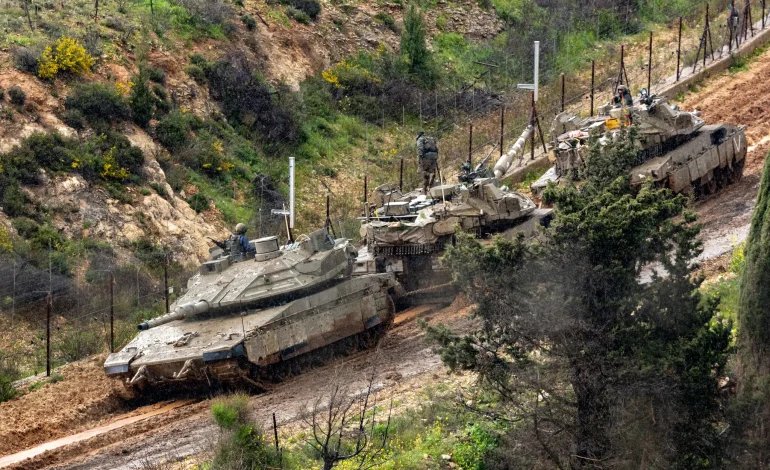


The war against Iran was never going to stay inside Iran. That much was obvious from the opening strikes – precision bombardments framed as limited, leadership decapitations marketed as strategic clarity, and diplomacy that looked increasingly like theater. What was less obvious, at least to policymakers publicly insisting on containment, was just how quickly the conflict would metastasize. Not through a single dramatic escalation, but through a series of smaller, overlapping fronts – Lebanon, Syria, Iraq, Yemen, and Palestine – each carrying its own logic, each feeding the others.
In our early reporting we framed the war as a hybrid of Iraq 2003 and the air wars of Libya and Yugoslavia: shock strikes, rapid degradation, and political collapse to follow. That expectation hasn’t held. Instead, the campaign has settled into a grinding exchange. Israeli and US strikes hit infrastructure, IRGC facilities, and command nodes; Iran responds with missiles, drones, and regional proxies. Casualty figures remain contested, but humanitarian and economic fallout is no longer in dispute.
The diplomatic track has become increasingly surreal. Washington speaks of negotiations while simultaneously escalating pressure – troop deployments, threats against oil infrastructure, and even discussions about seizing Kharg Island. Tehran rejects US claims of “direct talks,” calling them market manipulation and psychological warfare. Live coverage from Al Jazeera and CNN reflects this contradiction in real time: announcements of possible pauses, followed by fresh strikes hours later.
The presence of US forces – initially framed as defensive – has expanded. Bloomberg and Axios report troop movements consistent with preparation for a potential ground contingency. That possibility, even if unrealized, reshapes the war’s logic.
Stephen Zunes, Professor of Politics and International Studies at the University of San Francisco and longtime analyst of US policy and nonviolent movements, captures the structural reality:
“Given that Iran is three times bigger than Iraq in both size and population and with the recognition of the political repercussions of high American casualties, we will not see an occupation and counterinsurgency war as we did in Iraq. The humanitarian, economic, and environmental consequences of the US/Israeli bombing, however, are already horrendous and will only get worse. Secretary of Defense Hegseth’s dismissal of international law and rules of engagement underscores that further war crimes are likely.
Ayatollah Khamenei was 86 years old and in declining health. His death will not likely change much except that this widely reviled cleric has now been made a martyr. More salient is the fact that Iran was already as much a militarized authoritarian state as a theocracy, with the Revolutionary Guard exerting at least as much power as the clergy. Even killing a few of their commanders as well will not weaken their control over the country. The authoritarian regime in Iran is not a typical one-man dictatorship in which the government can be toppled by a single leader’s elimination. Rather, the Iranian regime comprises a complex system of powerful overlapping institutions that have a stake in maintaining the system. As a result, the killing of leaders, while a serious setback in some cases, will not likely constitute a fatal blow.
With Trump calling for Iran’s “unconditional surrender,” it has become an existential war for the Iranian regime. Given how they were willing to slaughter thousands of Iranians themselves during the recent pro-democracy protests, they are not likely to have much compunctions about many thousands more being killed in a war at the hands of foreign powers, particularly since many in leadership see their mandate as coming from God.”
That “existential war” framing explains the spread. Once survival is on the line, restraint becomes optional.
Lebanon is no longer a side theater. It is where the war’s territorial implications are most visible.
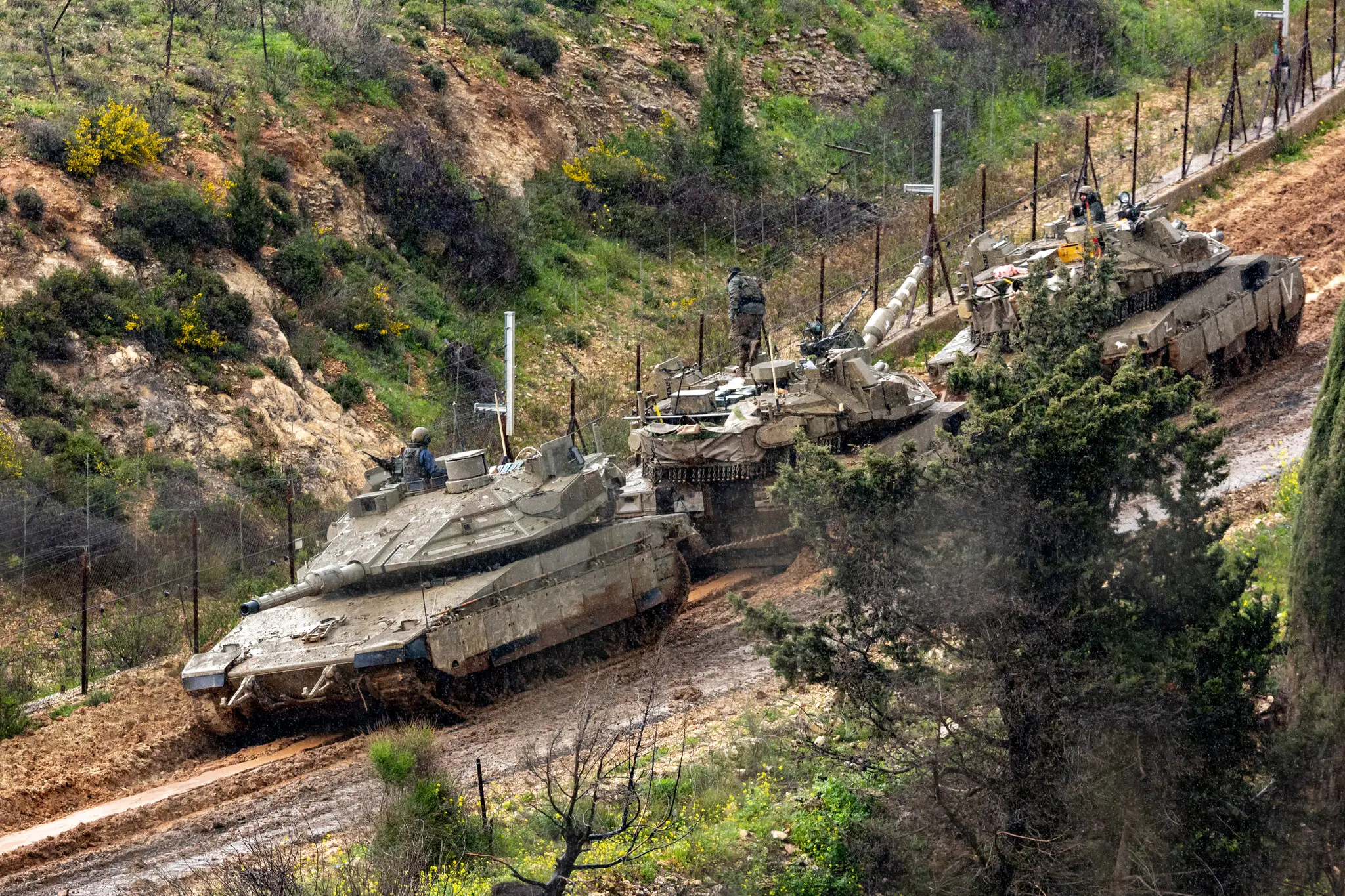
Israeli operations in the south have expanded beyond targeting Hezbollah positions into systematic destruction of infrastructure and civilian areas. Reports from the UN, UNICEF, and other human rights organizations describe mass displacement – over a million people – and a rising civilian death toll exceeding 1,000. Entire towns have been leveled.
There is also a political shift underway. Israeli officials openly discuss annexation or long-term occupation of southern Lebanon up to the Litani River. That language echoes earlier eras, but the current context – Gaza devastation, Iran war cover – gives it new weight.
Prof. Zunes again:
“The carnage from the attacks on Iran has been so extreme that Israel’s war on Lebanon – which has gone well beyond Hezbollah military targets – has been largely overlooked, but the civilian death toll is rising there as well. Over one million Lebanese of all religious and ideological orientations have been forced to flee. Israel is destroying entire apartment blocks in Beirut and other cities despite having no military function or armed groups in the vicinity. Several historic towns in southern Lebanon have been leveled. Over 1000 Lebanese have been killed, including 118 children and 40 healthcare workers. Even anti-Hezbollah Lebanese leaders have been appealing for the slaughter to end. The Trump administration has continued to support the onslaught, however.”
Hezbollah’s response has followed a clear pattern: expand, disperse, persist.
Imad Salamey, Professor and Chairperson at the Department of Political and International Studies of the Lebanese American University, the author of ‘The government and politics of Lebanon’, explains:
“Hezbollah is likely to intensify its engagement both inside Lebanon and, to a more limited extent, in Syria. The group’s strategy is precisely to expand the battlefield and divert pressure away from Iran by forcing Israel into multiple, dispersed fronts. This expansion has proven to be among the most effective strategies in building pressure against Israel, keeping its costly missile interception systems constantly engaged, and thereby helping clear the way for Iranian ballistic missiles to reach their intended targets. We can expect increased localized attacks, use of drones and anti-tank systems, and possible reactivation of networks in Syria to harass Israeli positions and supply lines.
At the same time, Israel can still achieve many of its objectives in Lebanon without a full-scale invasion if the outcome of negotiations with Iran is favorable. Through sustained airpower, limited ground incursions, destruction of infrastructure, and pressure on the Lebanese state – already moving to restrict Hezbollah’s role – Israel can weaken Hezbollah’s operational space and push toward a political-security arrangement that sidelines the group. This would allow Israel to avoid the high costs of occupation. However, if the Iran track fails or produces an unfavorable outcome and Tehran continues to back Hezbollah, Israel would likely shift to a more decisive military path – expanding ground operations, occupying territory, and forcing a broader surrender dynamic on both Hezbollah and the Lebanese state despite the heavy costs such a strategy entails.”
For Lebanon the story is about cost distribution.
Randa Slim, Middle East program Lead at the Stimson Center, adds:
“While most attention is focused on the Iran–US/Israel war, another conflict in Lebanon is likely to escalate into an Israeli ground invasion of southern Lebanon. More than a million Lebanese are now internally displaced, and over 1,000 have been killed. Hezbollah, a non-state, pro-Iranian Lebanese proxy, made the unilateral decision on March 2 to join the war against Israel, seeking to avenge the killing of Iran’s supreme leader, whom Hezbollah’s leaders and followers regard as their religious authority. The Lebanese government opposed Hezbollah’s decision.
Israel has invaded Lebanon in the past, including as recently as 2023, under the pretext of degrading or eliminating Hezbollah, but it has never fully achieved that objective. There is little indication that this time will be different. Although Hezbollah has been weakened by numerous attacks in 2023–2024 targeting its leadership, culminating in the assassination of its former Secretary-General, Hassan Nasrallah, the organization remains capable of waging war. Among non-state armed actors in the Middle East, it possesses some of the most advanced drone capabilities, largely due to technology transfers from Iran. While an Israeli invasion of southern Lebanon may achieve tactical success, Hezbollah is likely to impose significant costs in blood and resources, undermining Israel’s ability to secure a lasting strategic victory.”
Sami Hermez, a professor at Northwestern University in Qatar, the author of ‘My Brother, My Land: A Story from Palestine’ (2024), ‘War is Coming: Between Past and Future Violence in Lebanon’ (2017), and most recently ‘After Liberation: Time Travel in the Levant and Doing Ethnography in the Future in Social Text’ (2025), pushes the argument further:
“The war on Lebanon is not a footnote to what is going on in the Middle East today, it is central to Israel’s settler colonial project. You might even say that the war on Iran and removing that regime is, in fact, the sideshow, because Iran is the obstacle against Israel’s expansion. Israel has always had ambitions of expanding, only held back by policy and security considerations, as Israeli opposition leader Yair Lapid recently stated. The lack of accountability for Israel’s genocide in Gaza has given Israel the opportunity and power to take parts of Lebanon, which it has always had eyes on. The impunity also allows Israel to implement a policy of ethnic cleansing in South Lebanon with the international community not batting an eye.
I do not think Syria will get involved as it has its own problems right now, and while some in Syria are strongly against Hezbollah for its role in the Syrian conflict, many of these people stand with the group in its resistance to Israel. So any Syrian engagement with Hezbollah right now would not be very popular in Syria.
The Lebanese military withdrew from the South of Lebanon shortly after the Israelis began their attacks on March 2nd. It is an army that is underfunded and underequipped because the US government never provided it with any arms to resist Israel, only weapons to try and contain local Lebanese groups. Add to this that the Lebanese government, essentially acting on orders from the US, has banned Hezbollah as an armed group and ordered the military to enforce this ban. The Lebanese military has so far refused these orders and does not want to engage Hezbollah in any direct way for fear that this would lead to internal conflict.
All this means that Hezbollah is the main actor, along with smaller Lebanese armed groups, repelling the Israeli invasion. For the time being, we are seeing Hezbollah rise to the occasion and powerfully fight back, with most recent news suggesting they have destroyed at least 20 Merkava tanks. Thus far, although the Israelis have entered Lebanon, they have not been able to hold new territory, and it remains to be seen if they will be able to actually occupy southern Lebanon as they plan to. The hope for many is that the conclusion of the war on Lebanon will be tied to the US-Israeli war on Iran. So far, Iran has insisted that any end to the war with the US must include a full withdrawal of Israel to the pre-2023 status quo. At the same time, Israel has insisted that the two fronts are not connected. It remains to be seen what will happen, but it is hard to see how Iran could spin a victory if it leaves Hezbollah to fight on its own.”
Lebanon is where impunity created by the Gaza Genocide is being applied geographically.
Syria sits in an uneasy position – geographically central, politically constrained, militarily vulnerable.
Israeli incursions into the Golan and Quneitra continue. Drone alerts, cross-border fire, and troop movements signal a front that is active but not yet fully ignited. Damascus insists it is trying to stay out of the war.
Aymenn Jawad Al-Tamimi, a British-Iraqi researcher and analyst who specializes in the Syrian Civil War, the War in Iraq (2013–2017), and ISIS, warns
“We’ve already had some limited spillover into Syria with a recent attempted attack on remnants of US forces within Syria. So far the Syrian government has indicated it does not intend to undertake any military intervention as part of the conflict (there were rumors that the Syrian army would enter Lebanon to fight Hezbollah, but nothing confirms that). If the Syrian government does get involved in a way that is seen as aiding the US and Israel, then we can expect some cross-border attacks from pro-Iranian militia groups in Iraq.”
Amr Al-Azm, professor of Middle East History and Anthropology at the Department of Social Sciences of the Shawnee State University, sharpens the warning:
“With regard to Syria and the ongoing US/Israeli-Iran conflict, the greatest concern is not the possible resumption of Israeli operations against the southern part of the country but getting the Syrian forces involved in Lebanon fighting against Hezbollah. There have been numerous reports recently (Reuters and elsewhere) suggesting that the Israelis via the Americans were trying to encourage Al Shara’a (Syria’s president) to join the fight against Hizbulla in Lebanon. So far Al Sharaa has wisely rejected such proposals.
If Syria were to become involved in Lebanon, carrying out military operations against Hezbollah, they would be totally vulnerable to Iranian missile and drone retaliation. Unlike all the other neighboring states that have advanced air defense systems to protect themselves, Syria has nothing to counter such an attack. Its cities and civilian population are totally vulnerable, and the cost to them is prohibitive.
Aside from the long and painful history of Syrian intervention in Lebanon dating back to the 1970s, which only finally ended following the outcry over the assassination of the Lebanese Prime Minister Rafik Hariri in 2005 on the orders of Bashar Al Assad (Syria’s now deposed president).”
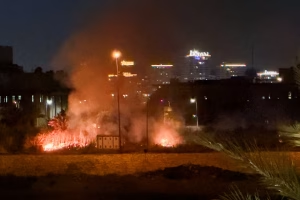
Syria’s weakness is its defining feature. No meaningful air defense. Fragmented control. War fatigue. Any deeper involvement risks turning it into an open battlefield again. Meanwhile, analysts warn that ISIS remnants could exploit the chaos.
If Lebanon is the most visible front, Iraq is the most structurally unstable one.
Pro-Iran militias – many formally integrated into state structures – have launched repeated attacks on US facilities. The US embassy in Baghdad has been targeted multiple times. Protests, missile strikes, and diplomatic confrontations overlap.
The Iraqi government is trying to maintain neutrality while hosting both sides of the conflict. That balancing act is failing.
Dr. Al-Tamimi explains the mechanism:
“It’s clear already that pro-Iranian militias – some of them integrated as brigades into Iraq’s ‘Popular Mobilsation Commission’ (PMC) forces (e.g. Kata’ib Hezbollah, Ansar Allah al-Awfiya’ and Harakat al-Nujaba’) – have been launching attacks against US forces as part of a means to inflict costs on the US in its campaign against Iran. The groups that are within the PMC don’t claim the attacks in their own name but rather use front groups like the ‘Islamic Resistance in Iraq’ moniker because within the PMC they are technically considered part of Iraq’s official armed forces. I don’t think these attacks fundamentally influence the US calculations in the war with Iran: Iran’s leverage over the Strait of Hormuz is far more important, I think, in whether the US seeks to reach an accommodation with Iran.”
This dual identity – state and non-state at once – creates a legal and military gray zone. Retaliation risks escalation. Inaction invites further attacks.
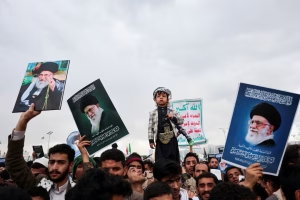
The Kurdish dimension adds another layer. US officials encourage Kurdish cooperation, while analysts warn against turning Kurdish groups into proxies against Iran. That path has been tried before, always ending badly for the Kurds themselves. Kurdish leaders deny any preparations to enter the conflict.
Yemen hasn’t fully entered the war. That may be temporary.
The Houthis have signaled readiness without committing. Their leverage lies in geography: the Red Sea and Bab al-Mandab, critical arteries for global trade already disrupted during the 2024–2025 crisis.
Shipping risks are rising again. Insurance premiums follow quickly.
Nicholas Hopton, a writer, commentator, and a former British ambassador to Yemen (2012-2013), Qatar (2013-2015), Iran (2016-2018), and Libya (2019-2021), outlines the ambiguity:
“US threats to deploy troops to seize Kharg Island or elsewhere could pull the Houthis into the war, as Tehran may ask them to strike shipping in the Red Sea, through which about $1tn (£750bn) worth of goods passed each year before the war.
But so far, Abdul-Malik al-Houthi, the Houthis’ leader, has not said whether his group would fight alongside Iran if asked to join the conflict.
Al-Houthi just gave his annual speech on the anniversary of the 2015 war. He signalled readiness to join the war without saying he would. He also repeated calls to Saudi Arabia to fulfill its promises to compensate Yemen for their war.
So it’s not at all clear what Al-Houthi’s intentions are. Either he’s waiting for a signal from Iran, which could be a sign that the war will extend much longer. Or he’s balancing internal factions: those who want to focus on improving relations with Saudi and those – other more ideological factions – who support Iran to the detriment of Yemen.”
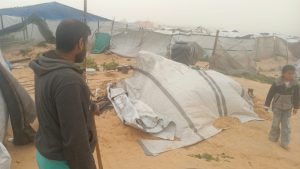
Saudi Arabia, for its part, is trying to keep Yemen out of the war. A wider escalation would reopen wounds Riyadh has spent years trying to close. For now, Yemen remains a threat rather than a battlefield. That status can change quickly.
While attention shifts to Iran, Gaza and the West Bank continue along a trajectory that has become grimly familiar.
Aid restrictions, border closures, and infrastructure destruction persist. Humanitarian reports describe worsening conditions, with reduced aid flows and rising food insecurity.
In the West Bank, settler violence and land confiscation are accelerating. The war provides distraction – and justification.
As Dr. Zunes put it:
“While Iran has had long-standing close ties with Hezbollah, their links with Hamas and their military and economic support are far more limited, despite Trump’s claims to the contrary. Unlike Hezbollah, Hamas has not attacked Israel in solidarity with the Iranians. This hasn’t stopped Israel from punishing Palestinians in the Gaza Strip, however. Israel has once again broken the ceasefire agreement by closing the border of Gaza, limiting access of Palestinians to food and medicine, and preventing those needing medical attention from leaving the territory. Meanwhile, also largely below the radar, Israel has been accelerating its confiscation of land, destruction of crops, bulldozing of homes, and extrajudicial killings in the occupied West Bank. Israel knows that, with a blank check from the United States, it can assert its will
in Lebanon, Gaza, the West Bank, or anywhere else.”
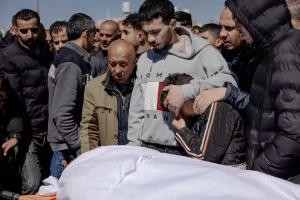
The war only intensified Palestinian reality.
So with this multitude of fronts, what comes next? The war has no clear endpoint. Analysts outline several possibilities: prolonged stalemate, negotiated ceasefire, or broader escalation.
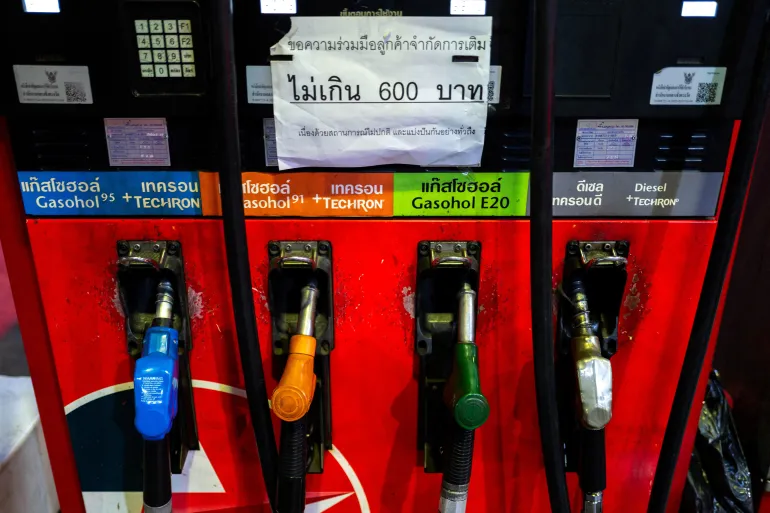
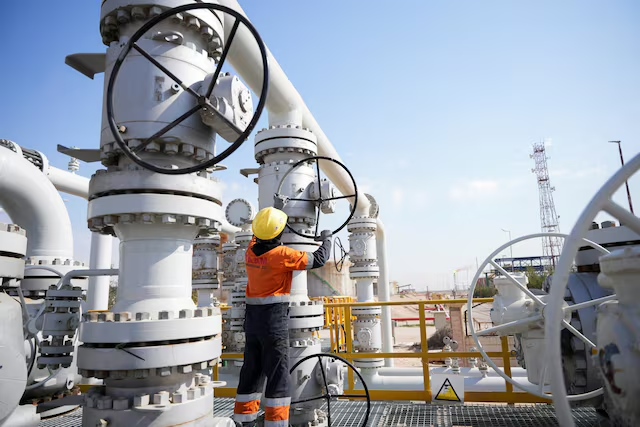
Economic forecasts are already shifting. Energy markets remain volatile. Public opinion in the US is unusually negative from the outset. European analysts warn of long-term geopolitical consequences.
Dr. Zunes highlights the domestic angle:
“Historically, even with controversial wars like Iraq, the American public has rallied around the flag once the war actually broke out. This is the first major war where the majority of Americans are opposed from the outset.
Trump won over quite a number of white working-class voters who had previously voted Democratic by promising not to send their sons and daughters to fight endless wars in the Middle East. His promise to “bring the troops home” and “America First” allowed him to run to the left of Hillary Clinton and other Democrats on foreign policy, whom he claimed would get us into a disastrous war in Iran. This conflict will serve to further divide the MAGA base.”
Meanwhile, ideological currents inside Israel – particularly discussions around territorial expansion and “Greater Israel” – are resurfacing in policy debates. That discourse intersects with realities on the ground in Lebanon, Gaza, and the West Bank.
Iran has offered counterproposals. The US rejects them. Talks continue in name only.


The latest news in your social feeds
Subscribe to our social media platforms to stay tuned