





We’ve already covered the messy beginning of the war, the economic shockwave, threats in the region and beyond, the proxy capabilities, and the domestic fallout. Now a new kid is on the block.
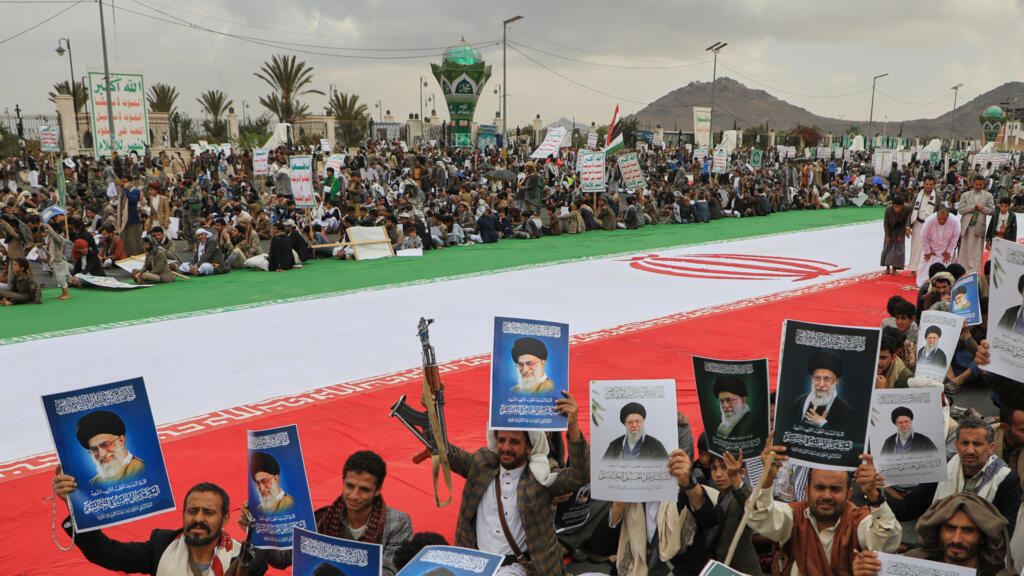
While Iran keeps controlling the Strait of Hormuz, its long-term partner in Yemen – Ansar Allah, commonly referred to as the Houthis, has now joined the conflict. Their entry threatens one of the world’s most fragile pressure points: The Red Sea corridor that links the Gulf, the Arabian Peninsula, and the Suez Canal.
This development matters because they do not need to “win” a war to make everyone else pay for it. One strike on Israel, one threat to Bab al-Mandeb, can make the wildest oil market predictions into reality.
To understand why this feels so combustible, you have to rewind to how the Iran war has been narrated over the past month. The basic outline is now familiar: US and Israeli strikes on Iran, Iranian retaliation against Israel and Gulf states, a widening civilian toll, and the creeping sense that the war has outgrown the original claims made for it. Reuters and AP have both reported that President Donald Trump is publicly talking about ending the US campaign within two to three weeks, while the Pentagon has reinforced the region with thousands of additional troops and air assets, including Marines and 82nd Airborne personnel.
That is where the diplomacy gets slippery. On paper, there have been ceasefire proposals, back-channel messages, and glossy talk of negotiated exits. In practice, the US appears to have been floating demands through intermediaries such as Pakistan, while Iran says it sees the process as a possible smokescreen for more escalation; Drop Site reported that Tehran has treated the US framework as disingenuous, and Reuters has described Pakistan-hosted diplomatic efforts that include Saudi Arabia, Egypt, and Turkey but do not yet amount to a real settlement.
Trump’s other problem is Europe. The alliance picture is fraying in plain sight. Reuters reported that France denied airspace for aircraft tied to US weapons transfers, Italy blocked US military access at Sigonella, and Spain closed its airspace to US military planes. Berlin, for its part, has kept a more cautious line, with German leaders saying this is not NATO’s war. That matters because the White House keeps asking allies to help shoulder the burden of a conflict they did not choose while simultaneously floating the idea of finally putting the transatlantic alliance out of its misery.
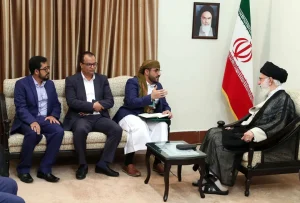
The Houthis fit into this picture because Iran has spent years building a regional network that is more distributed than centralized. The Wilson Center, CFR, and the DIA have all described the Houthis as an Iran-backed force that has received arms, training, and other support while also retaining enough operational independence to decide when and how to move. That distinction matters now. Tehran can encourage, coordinate, and supply, but it does not need to micromanage every launch from Yemen for the Houthis to become useful in a crisis.
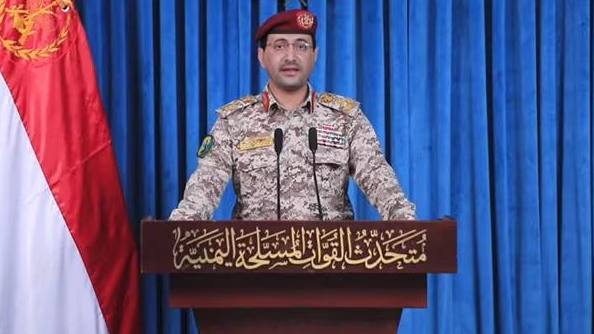
Their first missile strike on Israel during the current war was the real marker. AP, Reuters, and Al Jazeera all reported that the Houthis launched attacks in coordination with Iran and Hezbollah, with the group saying the attacks would continue until Israeli operations stop. Al Jazeera’s explainer also noted that the Houthis have not formally declared a full war entry in the same way Hezbollah has, which is why some analysts describe the early attacks as “token participation” rather than total commitment.
Fatima Abo Alasrar, a scholar specializing in Yemen’s conflict dynamics, the Houthi movement, Iranian-aligned networks, and Gulf security and founder of the Ideology Machine Project, a publication on authoritarian information systems, gives a read grounded in the politics of survival:
“Since the Houthis fired at Israel today, this might be more relevant as the Houthis have already technically entered the conflict with their recent launches, but we should view this as a political insurance policy rather than a new military front. After a month of silence following the decimation of the IRGC command structure, the Houthis faced a massive credibility crisis both at home and within the “Axis of Resistance.” They fired not because they had a new strategic advantage, but because the political cost of doing nothing was finally higher than the cost of a failed launch.
While the 2025 campaign against Eilat successfully disrupted revenue, the environment in 2026 is fundamentally different. Two major factors now constrain the Houthis: First, with the Strait of Hormuz closed, Saudi Arabia’s East-West pipeline to Yanbu is currently the world’s primary artery for oil, moving seven million barrels a day. The Houthis sit directly across from this corridor. Any major disruption here would invite a response from a global coalition far wider than they have ever faced. They are effectively “boxed in” by the geography of global energy security.
Second, my research into recent interdictions shows a movement in decline. Authorities recently seized 2,500 tons of manufacturing equipment and drone components at the Port of Aden. We are seeing interceptions of basic necessities like copper wire and electronics. A movement that cannot reliably import wiring cannot sustain a high-tech missile campaign.
As for the impact on the world economy: If the Houthis decide to act aggressively, the “devastation” may be shorter-lived than many fear. The interdiction campaign has shifted the conflict from a contest of capability to a contest of sustainability. UN data shows that over a third of Houthi missiles are currently failing before they even reach a target. They are burning through a finite stockpile that is not being replenished at the rate it is being consumed.
The real threat the world should be watching is not in the air but on the ground. While the missiles generate headlines, the Houthis are currently pushing into new territory inside Yemen to capture oil infrastructure. For that war, they don’t need Iranian imports; they only need manpower, which is the one resource they have in abundance.”
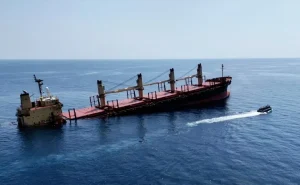
AP and Reuters have both described heavy pressure on Iran’s missile and drone capacity, while Al Jazeera reported that Bab al-Mandeb remains available for now even as Houthi officials talk openly about it as an option. In other words, the Houthis can still create noise. Whether they can sustain a long, high-end maritime campaign is a separate question entirely.
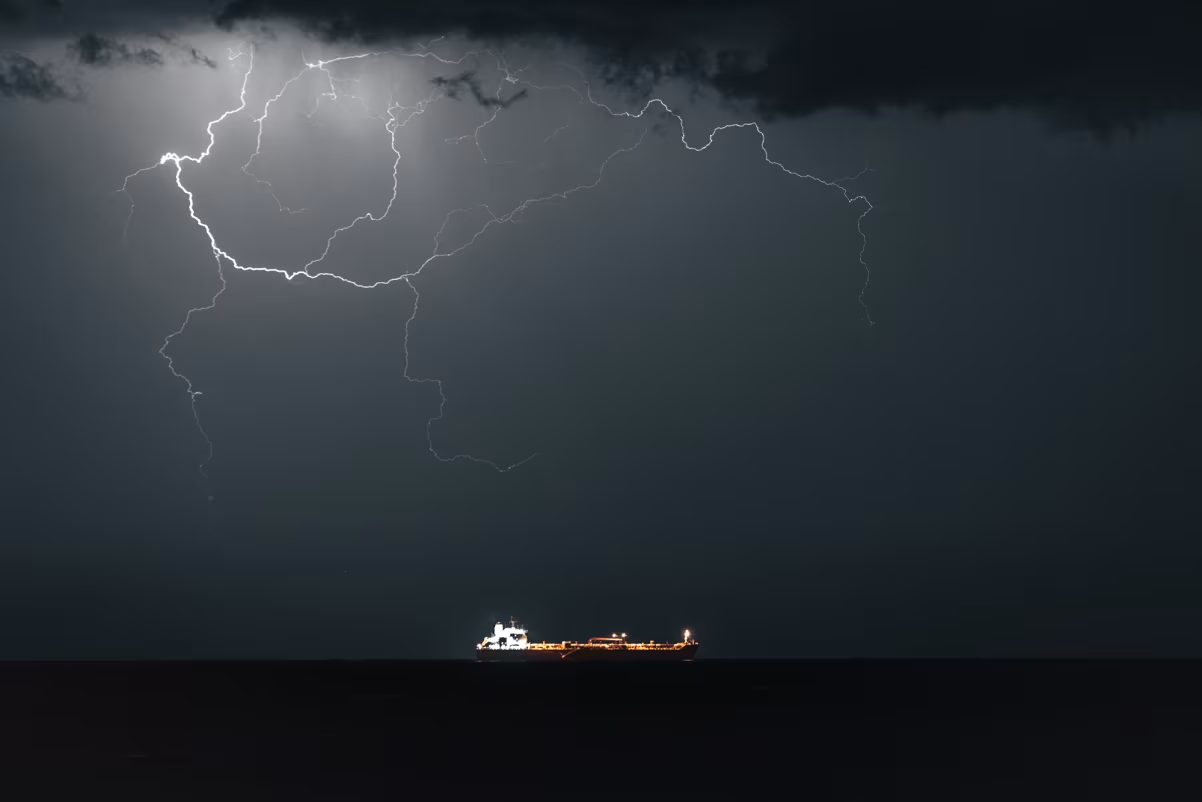
That is where the economic story gets serious. The first Red Sea crisis, during the peak of the Gaza Genocide in 2024-2025, drove shipowners to reroute around the Cape of Good Hope, added time and cost, and turned a regional conflict into a global logistics tax. A renewed Houthi campaign could do the same, only this time with the Iran war sitting behind it rather than beside it. AP said the Bab al-Mandeb gate is critical for roughly 12 percent of world trade; Al Jazeera put the route at about 10 percent of global trade and highlighted how it connects oil and commodity shipments to the Suez Canal and the Sumed pipeline.
Robert McNally, a founder and president of Rapidan Energy Group, a former White House energy advisor to President George W. Bush, an oil market analyst, and a hedge fund strategist at Tudor Investment Corporation is blunt:
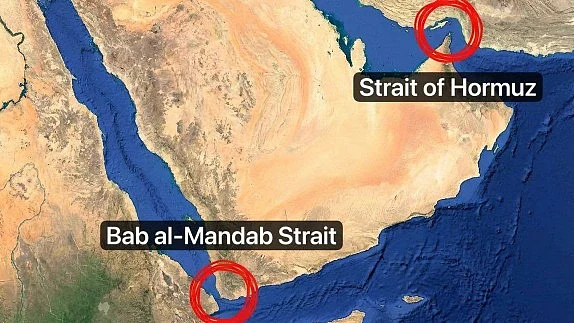
“If the Houthis successfully target tankers in the Bab-el-Mandeb and Yanbu terminal, it would threaten to sever the main alternate route for oil around the Strait of Hormuz. That would accelerate the rise in crude oil prices, followed by retail gasoline and diesel prices.”
That is the nightmare version. Reuters has already reported that oil prices jumped hard after the Houthi attack on Israel, while separate Reuters coverage showed that analysts have been hiking their oil forecasts because the Strait of Hormuz remains disrupted. Saudi Arabia’s East-West pipeline is now pumping at full capacity to Yanbu, according to Reuters and Bloomberg reporting, but that workaround only helps if the Red Sea stays open. Once Bab al-Mandeb turns hostile, the alternative route stops being an escape valve and becomes a new target.
Ragui Assaad, Professor of Planning and Public Affairs at the Humphrey School of Public Affairs at the University of Minnesota, shifts the lens from oil markets to the wider economy:
“The economic consequences of the Iran War are already multiplying as the war spreads to new fronts. The closure of the Strait of Hormuz has already sent the price of LNG skyrocketing, with severe consequences for gas-importing countries in Europe, Asia, and the Middle East. For Middle Eastern countries like Egypt, Jordan, Syria, and Lebanon, this comes on top of the interruption of gas supplies from the Leviathan gas fields in Israel sent by pipeline to Egypt and from there to Jordan, Syria, and Lebanon. If the Yemeni Houthis join the war and proceed to block or disrupt shipping traffic through the Bab el Mandeb strait at the mouth of the Red Sea, this would in turn disrupt shipping traffic through the Suez Canal, through which about 12% of the world’s total trade and 30% of the world’s container traffic flows in normal times. This would be similar to the disruptions that occurred in 2024-25 when Houthi attacks in response to the Gaza War led much of this trade to be diverted to the Cape of Good Hope route, adding substantial costs and delays to major shipping routes. These new disruptions would come at a time when shipping traffic through the Suez Canal was just beginning to recover. Egypt, in particular, which relies on Suez Canal tolls for a significant portion of its foreign exchange earnings, would suffer severe economic consequences and would see its growth substantially reduced. Currently, some of the oil that would have flowed through the Strait of Hormuz is being redirected to the Red Sea through the Saudi East-West pipeline to the port of Yanbu. Some of it is then transferred by ship to the Suez-Mediterranean (Su-Med) pipeline across Egypt to be reloaded onto ships in the Mediterranean headed for the European market. This portion of the oil trade would not be affected by the disruption of shipping through Bab-El-Mandeb, but any oil shipments from Yanbu destined to Asian markets would be adversely affected.”
Jean-Paul Rodrigue, Department of Maritime Business Administration Professor and Hagler Institute for Advanced Study Distinguished Fellow at Texas A&M University, puts the potential crisis in context:
“The renewed interdiction threats on the Red Sea are a logical outcome of the Strait of Hormuz Crisis. In some ways, the Hormuz Crisis began with the Red Sea crisis in 2023, when Iran, by proxy, attempted a campaign of disruption. These disruptions resulted in the “great rerouting,” when major shipping lines abandoned the Red Sea/Suez routes and shifted through the Cape Route. This situation was abating in 2025. We are now back full circle. However, the War in Iran provides a potentially different outcome for interdiction attempts since the Houthis have lost their supplier of interdiction equipment (missiles and drones). It remains to be seen what the effective capabilities of the Houthis are, or if this is mostly a bluff to create maximum disruption along the maritime trade routes. Further, the response to potential attacks in the Red Sea will be much more aggressive in light of the US military assets now in the region.”
Essentially, Iran now directly and indirectly controls two major routes. The more it tightens one end of the system, the more tempting the other end becomes as a pressure point. Especially on the Gulf States desperately trying to salvage their main economic sector. For one specific country with a leg in the Yemeni civil war, the recent developments are extremely concerning. And this country is Saudi Arabia.
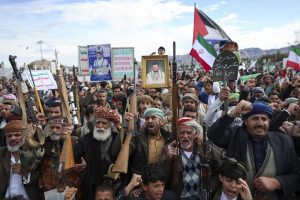
Politically, though, the Houthi move does not automatically pull it into an open war. Crisis Group and Chatham House have both argued that the Houthis are shaped by local priorities as much as Iranian alignment, and Reuters has reported that Gulf states want Iran’s missile and drone capability degraded, not merely “managed” through a ceasefire that leaves the same threat intact. That is a very different appetite from a Saudi or Emirati decision to join the bombing. The Gulf states want this fire contained; they want security guarantees, not another decade of being the closest thing the Middle East has to a front line.
Still, the politics are messy enough that even restraint can look like escalation. The Atlantic Council analysts see rising US-Gulf friction, and Reuters/Guardian coverage shows Europe splitting from Washington over access, basing, and overflight rights. That leaves Trump with a conflict he says he wants to wind down, allies who will not fully back him, and adversaries who understand that one well-timed missile or one threatened strait can bend the negotiation table more than a dozen speeches.
So the Houthis are not yet creating a brand-new war theater so much as threatening to widen an already sprawling one. They are useful to Iran because they are close enough to the Red Sea to matter, distant enough from Tehran to preserve deniability, and experienced enough to unsettle shipping without necessarily closing the sea outright. That makes them a classic pressure proxy – dangerous precisely because they can do less than a full state can do, but far more than a bystander can.
The Iran war was never going to stay contained. The question now is how far it will spread – and how much of the global system it will take with it.


The latest news in your social feeds
Subscribe to our social media platforms to stay tuned