




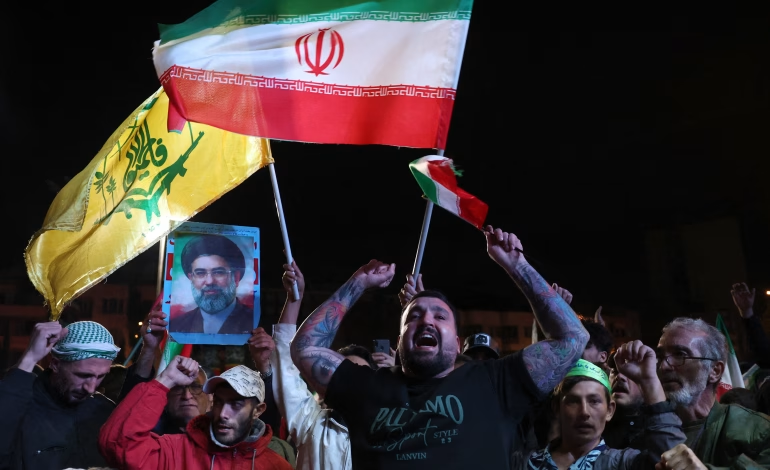


The Iran ceasefire came 88 minutes before a deadline that wasn’t supposed to be met. On Tuesday, April 7, President Trump posted that a “whole civilization will die tonight” if Iran did not fully reopen the Strait of Hormuz. Hours later, Pakistan announced a two‑week halt to the fighting. The whiplash stunned everyone, including Trump’s own national security team.
For five weeks, the United States and Israel had pummeled Iran. Operation Epic Fury, as the Pentagon called it, began with the assassination of Supreme Leader Ali Khamenei. Israeli jets struck nuclear facilities at Natanz and Isfahan. Iranian retaliation came fast: more than 150 initial US casualties, missiles hitting American bases across the Gulf, and a near‑complete shutdown of the Strait of Hormuz. By early April, over 3,500 Iranians were dead, including 1,600 civilians. Another 3.2 million were displaced.
Then, on April 7, Trump announced a truce. He called Iran’s ten‑point counterproposal a “workable basis on which to negotiate” and declared “total and complete victory. 100 percent. No question about it.“ But the ten points read like a surrender document for Washington. Iran demands: a US guarantee of non‑aggression, retention of control over the Strait of Hormuz, the right to enrich uranium, removal of all primary and secondary sanctions, withdrawal of US combat forces from the region, compensation for war damage, and a ceasefire on all fronts – including Lebanon. The United States has not signed on to all ten. Yet the mere fact that Iran’s framework will anchor the talks amounts to a significant diplomatic victory for Tehran.
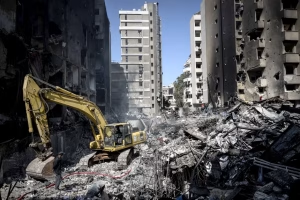
Netanyahu ignored the ceasefire before the ink dried. Within hours of the announcement, Israel launched what it called the largest coordinated strike of the war, hitting more than 100 sites across Lebanon in ten minutes. At least eight people were killed in Sidon alone. By the end of the first day, Lebanese authorities reported at least 203 dead and 1,000 wounded. Netanyahu insisted the ceasefire “does not include Lebanon.” Hezbollah, caught off guard, initially held fire but later retaliated.

(Ammar Awad / Reuters)
The fighting in Lebanon only intensified. Israeli ground forces have been operating in southern Lebanon since March 2, following a cross‑border Hezbollah attack. Lebanese authorities now report at least 1,530 killed and 4,812 injured since the Iran war began. The day after the US‑Iran ceasefire became the deadliest single day in Lebanon since the conflict expanded.
Israeli Defense Minister Israel Katz said his government remains committed to separating the Iranian conflict from the war in Lebanon. Military chief Herzi Halevi vowed to “utilize every operational opportunity to dismantle Hezbollah.” The goal, he said, is to change the reality on the ground and eliminate threats to northern Israeli residents who have faced heavy fire throughout the war.
Lebanese President Joseph Aoun condemned the surge, calling the latest attacks “a massacre.” The European Union, France, and the United Kingdom issued a joint statement calling for the truce to include Lebanon. They noted that a ceasefire could avert a severe global energy crisis and pledged to contribute to ensuring freedom of navigation in the Strait of Hormuz. But they offered no specifics on enforcement.
Iran’s UN Ambassador in Geneva, Ali Bahreini, warned that continued Israeli strikes on Lebanon would have “some consequences.“ What that means is anyone’s guess. But the threat is real. If Israel keeps bombing, Iran could pull out of the talks. The two‑week clock is already ticking.
Imad Salamey, Professor and Chairperson at the Department of Political and International Studies of the Lebanese American University, the author of ‘The government and politics of Lebanon,’ sees a calculated Israeli strategy behind the escalation:
“What we are seeing should be understood as part of a broader regional recalibration. Israel views the proposed talks with Lebanon as an opportunity not just for diplomacy, but to initiate a pathway toward Hezbollah’s disarmament.
In practical terms, the negotiations in Washington will likely start with limited security arrangements – such as reinforcing the Lebanese Army’s role in the south and introducing stricter monitoring mechanisms. However, Israel’s deeper objective is to shift the Hezbollah issue from a regional conflict into a domestic Lebanese debate, thereby building internal political pressure against the group.
This approach serves two purposes. First, it weakens Hezbollah internally by increasing Lebanese opposition to its armed role. Second, it makes Iranian support more costly and difficult to sustain, especially under growing scrutiny and pressure.
These talks are closely linked to ongoing US–Iran negotiations, including those taking place in Islamabad. Washington is effectively trying to weaken Iran’s regional leverage ahead of any broader deal, making Hezbollah a potential bargaining chip in a future agreement.”
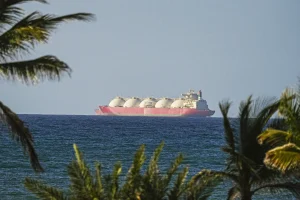
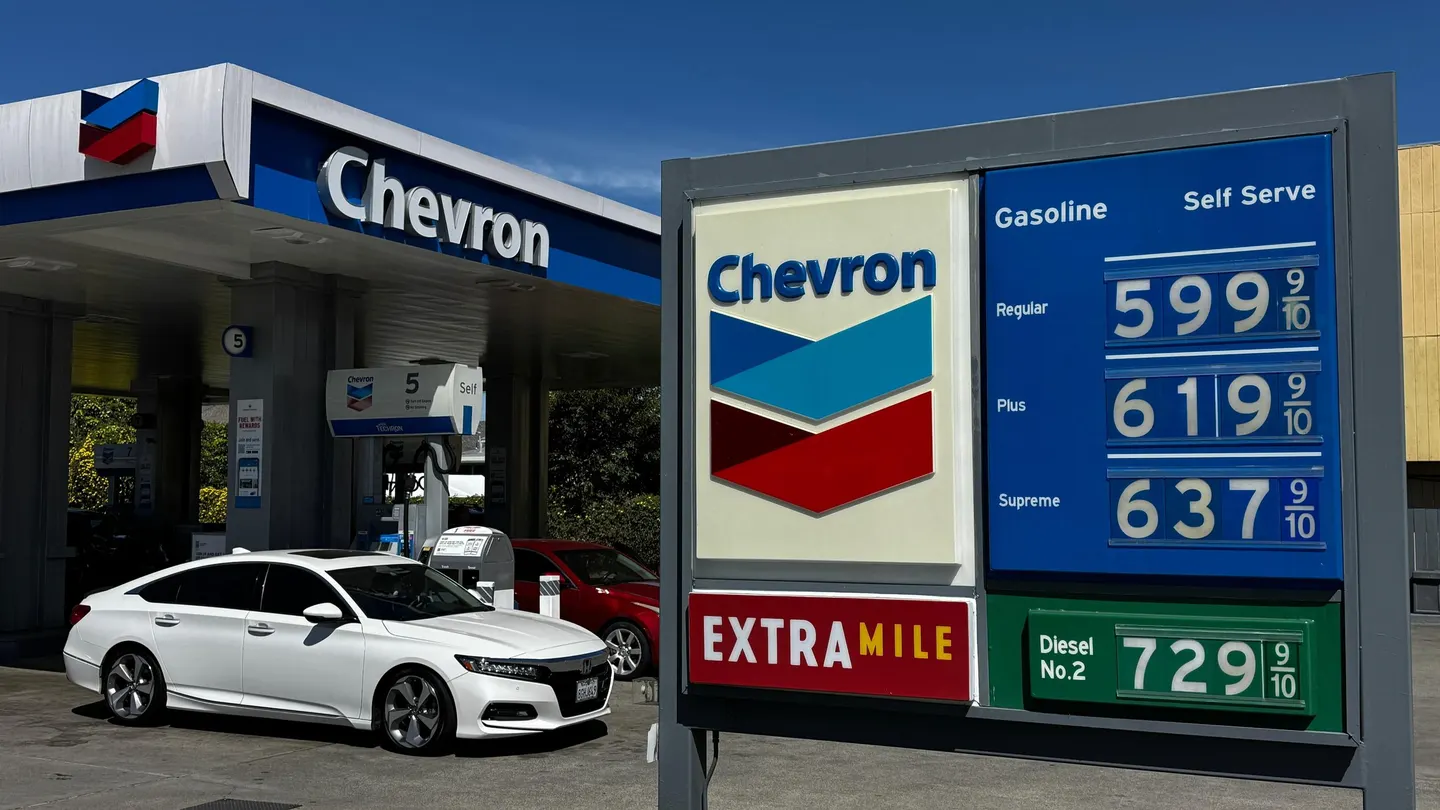
The other side of the current ceasefire was economical. It was supposed to get tankers moving again. Iran is still blocking the Strait of Hormuz in retaliation to Israeli actions in Lebanon, and the US has no plan to force it open. Oxford Economics reported that Brent crude dropped more than 13% to about $93 per barrel following the announcement, slipping below $95 but remaining significantly above pre‑war levels of around $65/bbl. Then prices started climbing back. By Friday, Brent was trading near $97, and WTI was above $98.
Tanker traffic remains constrained. Insurers and operators are cautious. Oxford Economics assumes “a two‑month Strait of Hormuz closure, followed by two more months of low‑level disruption to trade,” forecasting a 0.8% contraction in GCC GDP this year. Business surveys for March showed sharp declines across the region. Qatar’s PMI fell to 38.7 from 50.6, its lowest since 2020. Saudi Arabia’s non‑oil PMI dropped to 48.8, a more‑than‑five‑year low. Kuwait’s fell to 46.3 from 54.4. The UAE was the only major Gulf economy to remain in expansion, but new orders slowed to their weakest pace since June 2021.
Oil prices could hit $190 a barrel if flows remain at current levels, according to John Paisie, president of energy consultants Stratas Advisors. JPMorgan analysts say some 50 infrastructure assets in the Gulf have been damaged by drone and missile strikes over the nearly six weeks of conflict, and around 2.4 million bpd of oil refining capacity have been taken offline. Attacks on Saudi Arabia’s oil production capacity have cut the kingdom’s output by around 600,000 bpd and reduced throughput on its East‑West Pipeline by 700,000 bpd.
Jean-Paul Rodrigue, Department of Maritime Business Administration Professor and Hagler Institute for Advanced Study Distinguished Fellow at Texas A&M University, put it bluntly:
“The US Government knows well that Iran is not a good-faith negotiator and only understands military force, since its views are religious, and it is perfectly acceptable to lie to third parties for their ideological control of Iran to prevail. Since the US has exercised substantial military force, including the clear threat of the destruction of the Iranian economic infrastructure, Iran had to concede, or at least give the appearance of conceding. The ceasefire is on tenuous ground because you are fundamentally dealing with religious ideologues seeing its protagonists (the US and Israel) as the source of all evil.
After more than a month, the economic outcomes are substantial and have started to create domino effects across the complex web of supply chains directly and indirectly linked with energy and petrochemicals. The damage is done, and supply chains are trying to adapt and mitigate to the extent it is possible.”
At home, Trump is bleeding support. A CNN poll conducted in late March found that just 34% of Americans approve of the decision to take military action in Iran, down 7 points from the start of the war. Disapproval has risen to 66%, with strong opposition climbing 12 points to 43%. Trump’s approval rating for handling Iran sits at 33%, below his overall 35% approval and his 36% rating for foreign policy.
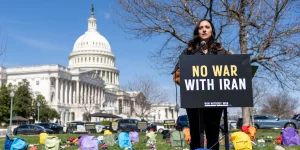
A 71% majority oppose Congress authorizing $200 billion for further military action. A similar 68% oppose sending ground troops.
The numbers got worse. By the first week of April, Trump’s overall approval rating had dropped to 39%, with 53% disapproving – his lowest of his second term. A clear majority believe he hasn’t provided accurate information about the progress of the war.
Democrats pounced. More than 60 House Democrats backed impeachment following Trump’s “whole civilization will die” threat. Ed Markey led the calls, saying on CNN:
“Congress must come back in session and impeach Donald Trump… What Donald Trump and Pete Hegseth were planning were war crimes.”
Andy Kim echoed:
“I see President Trump unfit to be Commander‑in‑Chief… He has lost the trust and faith of the American people.”
Alexandria Ocasio‑Cortez, Ilhan Omar, Rashida Tlaib, and Nancy Pelosi were among the signatories.
The 25th Amendment push gained steam. Jamie Raskin, Robert Garcia, and Zoe Lofgren argued that Trump’s “unhinged” remarks amounted to “war crimes.”
But as Jack Citrin, Department of Political Science Professor of the Graduate School, Institute of Governmental Studies Director Emeritus at the University of California, Berkeley, noted:
“There is a general reluctance to pass a War Powers Resolution Act until the deadline of sixty days draws near. As for the 25th Amendment idea, it is just a publicity stunt that everyone knows will go nowhere, but as the popularity of the President and the popularity of the war decline, then it becomes a rallying cry for the faithful. Playing it safe while the war rages and troops are in harm’s way isn’t a bad strategy.”
Mark Graber, Regents Professor, University System of Maryland Distinguished Professor at the University of Maryland Francis King Carey School of Law, agreed:
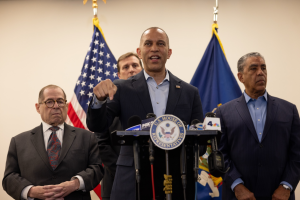
“Democrats proposed a War Powers Resolution earlier and lost. The 25th Amendment idea is one that has very strong appeal in the Democratic base but less general appeal. In the long run, MAGA has to be defeated electorally. No gadgets will work. Until Republicans learn that support for Trump is an electoral loser, we are likely to see little change in Republican behavior.”
The War Powers Resolution failed twice. On March 4, the Senate voted 53‑47 against a resolution to force Trump to seek congressional approval. The House followed with a 219‑212 rejection, largely along party lines. A last‑ditch Democratic attempt to pass a resolution by unanimous consent is set for next week. However, it’s likely to be blocked by the Republican majority. But the 60‑day clock is ticking. Under the War Powers Resolution, Congress is required to act within 60 days of the start of an unauthorized military conflict. That deadline falls near the end of April. If the ceasefire collapses, pressure on Republicans could become intense.
The core problem is simple: the two sides disagree on what they even agreed to.
Stephen Zunes, Professor of Politics and International Studies at the University of San Francisco and longtime analyst of US policy and nonviolent movements, put it sharply:
“Despite US and Israeli claims to the contrary, Pakistani mediators and others have confirmed that the agreement for a two-week halt to the fighting and the reopening of the Strait of Hormuz was contingent on a ceasefire in Lebanon. European leaders and other US allies have underscored the importance of the ceasefire applying to Lebanon as well.
Israel’s US-backed air strikes have gone well beyond Hezbollah military targets to include heavy bombing of crowded urban neighborhoods. Israeli bombing on Wednesday, the day following the cessation of hostilities in the Gulf, resulting in the deaths of 285 people – the vast majority civilians. This comes on top of Israel’s occupation and ethnic cleansing of a large swathe of southern Lebanon and the systematic destruction of entire villages.
The United States is faced with a decision to either force Israel to cease its attacks on Lebanon or accept the continued closure of the Strait of Hormuz and the likelihood of the resumption of the war.
Meanwhile, the continued support by Democratic Congressional leaders for unconditional military aid to Netanyahu raises questions regarding the sincerity of their stated opposition to Trump’s war on Iran.
Even if the two-week ceasefire holds, the United States may simply use it to rearm and resupply their depleted stocks in order to resume its war on Iran.
If it does hold, it will be hard for the Trump administration to portray it as any sort of victory. Despite the killing of prominent Iranian leaders and the enormous damage to Iran’s military and civilian infrastructure, it appears that their nuclear program and materials are still there, they are still able to launch drones and missiles, and the regime’s grip on power is as strong as ever.
At the same time, the United States may not have much of a choice. Despite the willingness of the Trump administration to accept the enormous costs of the war financially, the physical damage inflicted on US assets in the region and allied Middle Eastern states, the harm done to America’s international standing, and the impact on the global economy resulting from the closure of the Strait of Hormuz, the war appears to simply be unwinnable. Trump is under enormous pressure, not just from the American public and US allies (which he is quite willing to ignore), but international business and finance, which are reeling from the economic consequences of the war and fearful of far greater damage to come if the war resumes.”
Gregory Aftandilian, Senior Professorial Lecturer at the School of International Service at American University and adjunct faculty member at Boston University, sees a binary choice:
“The ceasefire agreement is in trouble because Israel believes that its military actions in Lebanon are not part of the bargain, whereas they are indeed included in the ceasefire text. Either Trump will have to lean hard on Netanyahu to stop attacking Lebanon, or Trump will have to find a way to exit the whole mess and say this is now Iran and Israel’s war. The problem for Trump, however, is that if Iran continues to restrict traffic through the Strait of Hormuz, the more the American public will criticize his claims of “victory” and remain angry over this war of choice.”
David Mednicoff, Associate Professor of Middle Eastern Studies and Public Policy at the University of Massachusetts-Amherst, offered a more balanced assessment:
“Both the Trump Administration and the Iranian government have an interest in an enduring cease-fire that ends hostilities. Despite the level of destruction of Iran’s military forces, most experts agree that this has been a costly, strategic failure for the Trump Administration. This is because the goals of the war were never clearly laid-out, and neither the American public nor American allies (other than Israel) supported the war, given that there was no compelling security need or international legal justification for the US to start it. President Trump included regime change initially as one of the expected outcomes, but regime change was never likely to be spurred through external bombing campaigns against a government that exercises tight control over its population. Because politically the war mostly served to accelerate a generational leadership change within Iran’s existing government and provide a short-term boost to its stability, the US looks weak and suffered financial losses and deaths to soldiers. The President, who shows little patience for long-term policy planning, would appear to want to put this unpopular war behind him and move on to the next thing on his mind.
On the Iranian side, the government wishes to take the temporary win of appearing somewhat politically stronger and being in charge of the potentially lucrative Strait of Hormuz. Given Iran’s new control of this essential waterway, it is in a stronger bargaining position than before the war, which is reflected by its ten negotiating points.
Although both the US and Iran benefit from the war ending at this point, they seem far apart over their negotiating positions. Israel’s government likely prefers the war to continue, to further degrade Iran’s military, and to stop attacks on northern Israel from Iran’s Lebanese ally, Hezbollah, once and for all, by taking more control of southern Lebanon. The war has also distracted attention from the accelerated efforts of Israel’s settler movement, together with allies in the government, to hem in geographically Palestinians in the West Bank. Given this, it probably wasn’t a coincidence that Prime Minister Netanyahu launched major attacks in Beirut that hit some Lebanese civilian buildings and civilians as the ceasefire was being announced. We’ll see whether Washington will try to stop the Israeli government from further actions that might encumber an end to this unfortunate war or be able to reach a settlement that Iran accepts and that doesn’t look like too much of a strategic loss for the White House.”
Kristin Diwan, a Senior Resident Scholar at the Arab Gulf States Institute, was pessimistic:
“It is hard to be optimistic. There are disagreements between the two signatories over what they even agreed to. Affiliated parties such as Israel and the Houthis could be instrumentalized to play the role of spoiler. And there are many parties to this war – namely Israel, the Gulf states – that were not even consulted on the terms of the ceasefire. They will use other means, both diplomatic and military, to secure their interests.
We may not have the American escalation of ground troops, but we are unlikely to have a full cessation of hostilities and a return to free and uncontested passage through the Strait of Hormuz.”
Frederic Schneider, Senior Fellow at the Middle East Council on Global Affairs, was blunt:
“I believe the ceasefire will break down soon. It is true that Trump wants an exit from the quagmire he got himself into before it completely ruins his midterm chances. Iran has demonstrated that it can absorb enormous amounts of suffering in the form of US-Israeli airstrikes, which will not bring US victory on their own. On the other hand, the US do not have the resources nor the pain threshold to open up the Strait of Hormuz by force or mount a large-scale ground offensive. Global allies are unwilling to be drawn into this mess even as Trump is putting rhetorical pressure on NATO, while regional allies need a respite from Iranian retaliation strikes.
However, there is no common ground for a compromise. Iran had made concessions before the war regarding the enriched uranium, but these are unlikely to still be on the table in Pakistan. Similarly, maintaining a ballistic missile force as a deterrent is non-negotiable, as will be the network of regional allies. A deal on this basis will be impossible to sell as a victory for Trump, and even less so to Israel. Israel remains an unrestrained rogue state, and if history is any guide, will likely sabotage negotiations again, as the government needs a distraction from Netanyahu’s court procedures and the unexpectedly heavy casualties in their Lebanon invasion.”
James M. Lindsay, Mary and David Boies Distinguished Senior Fellow in US Foreign Policy at the Council on Foreign Relations, the host of a weekly podcast The President’s Inbox, a CFR project lead of the Best and Worst Decisions in the History of US Foreign Policy, echoed the concerns:
“The two-week ceasefire with Iran that President Donald Trump announced Tuesday night barely survived its first forty-eight hours. The two sides quickly discovered that they differed on the terms they had just agreed to, most notably, whether it applies to Israel’s attacks on Lebanon. The Strait of Hormuz remains largely closed, though missile and drone exchanges in the Persian Gulf have diminished.
Attention now shifts to the negotiations planned for this weekend in Islamabad, Pakistan. Trump said on Tuesday that “almost all of the various points of past contention have been agreed to between the United States and Iran.” However, Tehran continues to insist publicly on the right to enrich uranium, the lifting of all economic sanctions, the withdrawal of US forces from the region, and recognition of Iranian control of the Strait of Hormuz. Missing from the Iranian plan is any offer to limit its missile and drone capabilities. All of these demands cross US red lines.
So the odds are stacked against a quick and easy negotiation, assuming they even take place. Iran has threatened to boycott the talks if Israel continues to attack Lebanon. Any settlement of the war will require either Washington or Tehran to make concessions they have long insisted are unacceptable. As a result, the risk of a resumed, and possibly expanded conflict, remains significant.”
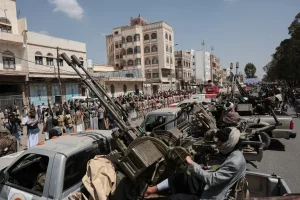
So can the ceasefire hold? Only if everyone wants it to. And they don’t. Iran wants sanctions relief and regional influence. Trump wants to declare victory and move on. The Gulf states want stability. The American public wants out. Israel wants its regional adversaries dismantled. Those are not the same things.
The talks in Islamabad started Friday. Two weeks is not a long time. Trump has already threatened to resume military force if Iran does not comply. Iran has warned it’s ready to fight if negotiations fail. The Strait remains mostly closed. Oil prices are drifting back toward $100. And Israel is still bombing Lebanon.



The latest news in your social feeds
Subscribe to our social media platforms to stay tuned