

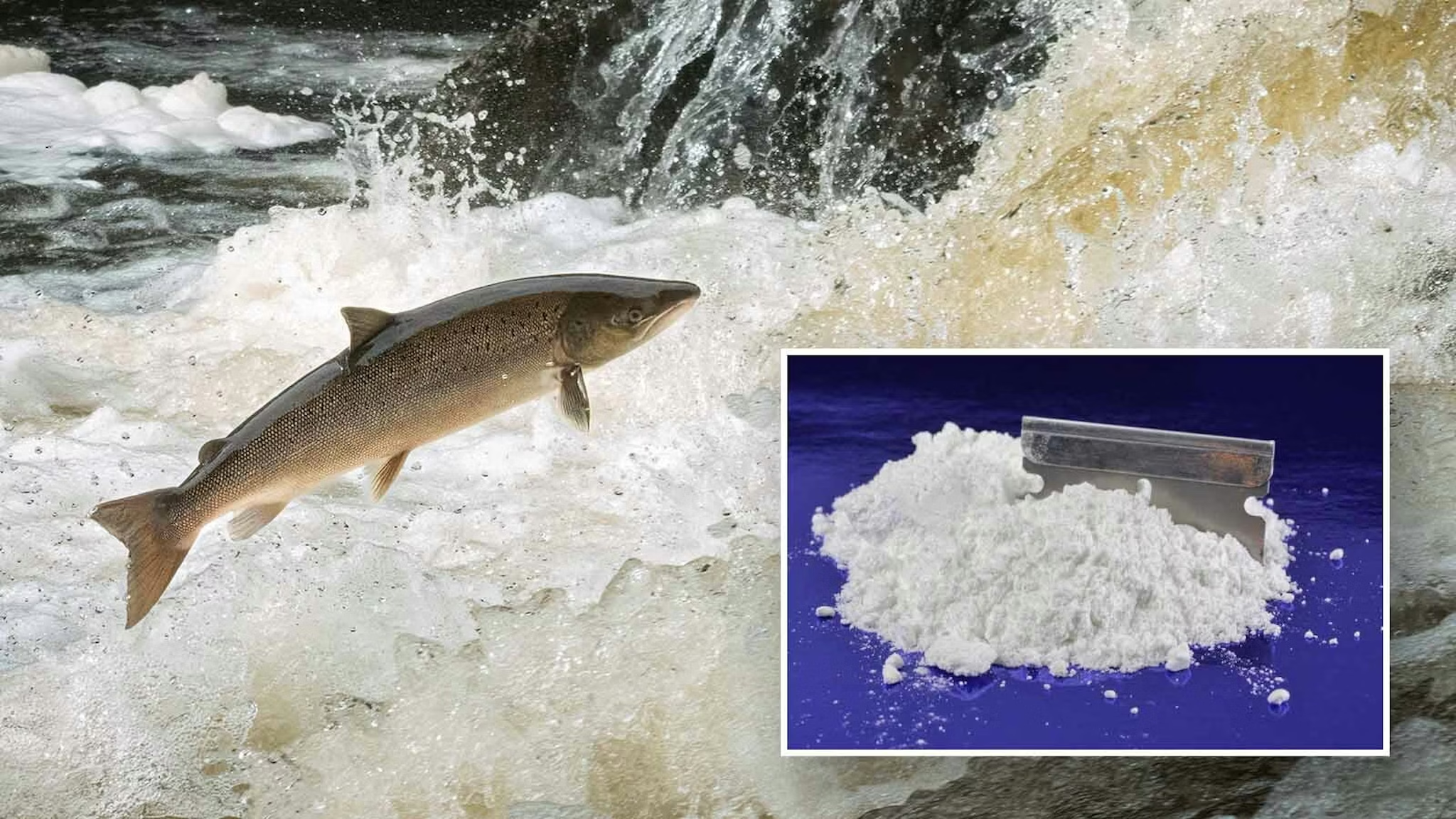



No Joke: New Study Shows Salmon Swim Faster And Farther On Cocaine


New research published in Current Biology has found that Atlantic salmon smolts given cocaine swim faster and farther—but the changes are not beneficial. The study, led by Jack Brand of the Swedish University of Agricultural Sciences, was inspired by a desire to understand how illicit drugs impact natural ecosystems. “Cocaine and its metabolites are increasingly being detected in aquatic environments around the world,” Brand said.
Brand and his team divided 105 juvenile salmon into three groups. Each fish received two surgical implants: an acoustic tracking tag and a slow-release implant. One group received cocaine, a second received benzoylecgonine (the main metabolite of cocaine excreted in human urine), and a third group was clean. The fish were released into Lake Vattern, a natural lake in Sweden, and tracked for eight weeks using 71 acoustic receivers.
The results were striking. Fish implanted with benzoylecgonine swam 1.9 miles farther per week than the control group, dispersing roughly 20 miles from their release point. “Increased movement comes at an energetic cost,” Brand said. For juvenile salmon, energy spent on locomotion is energy not available for growth, immune function, or building reserves. Faster, farther dispersal could leave them in suboptimal habitats with less food and more predators. “These fish aren’t choosing to move more,” Brand added. “Their movement is being altered by a chemical contaminant, which is unlikely to be producing an adaptive response.”
Brand emphasized that metabolites matter. “Benzoylecgonine had a stronger effect on fish than cocaine itself, yet it’s often overlooked in environmental risk assessments despite being more abundant in waterways.”
The study was funded by the Swedish Research Council and other European foundations through standard peer review. Brand obtained pharmaceutical-grade cocaine from certified chemical suppliers, which provide illicit substances for legitimate scientific research with government approval.
Could humans get high by eating these fish? Brand said the amounts are tiny. The average fish weighed 110 grams and contained 0.005 mg of cocaine—about 20,000 times less than a single recreational dose. “You would need to eat thousands of these fish in one sitting to approach anything resembling a pharmacologically active dose,” he said. The fish were also well below legal catch size.
Brand hopes the study will draw attention to the growing problem of illicit drug pollution. “Aquatic environments are increasingly contaminated with complex mixtures of potent human-derived chemicals,” he said. “We are only beginning to understand what they are doing to wildlife.” He added that whether smolt-stage exposure produces lasting effects on adult behavior, reproduction, or survival is an important question for future research.



The latest news in your social feeds
Subscribe to our social media platforms to stay tuned