




What began as a dispute between two of Silicon Valley’s most influential figures has evolved into a courtroom fight over who gets to define the future of artificial intelligence.
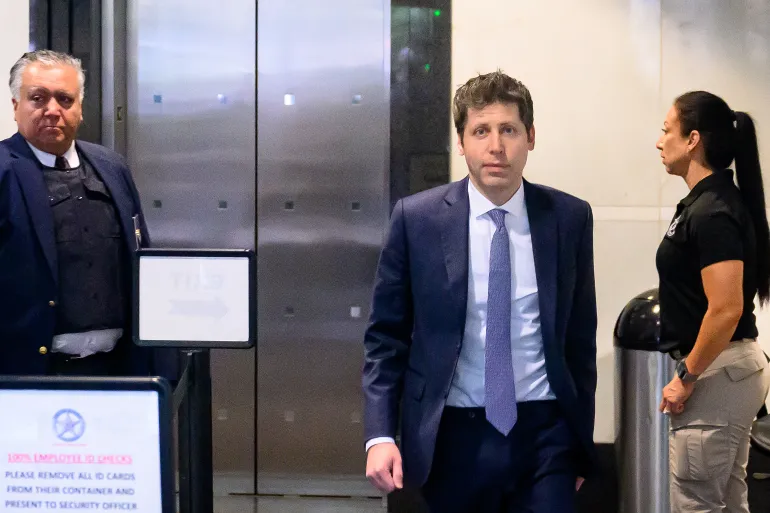
On Tuesday, Sam Altman took the witness stand in a federal court in Oakland, California, and directly challenged Elon Musk’s claim that OpenAI abandoned its founding mission.
Musk argues that OpenAI was created as a nonprofit focused on benefiting humanity and that Altman and OpenAI president Greg Brockman turned it into a commercial enterprise in violation of that original purpose. He is seeking $150bn in damages from OpenAI and Microsoft, one of the company’s biggest backers.
Altman used his testimony to reject the premise of the case.
“It does not fit with my conception of the words ‘stealing a charity’ to look at what has actually happened here,” Altman told the court.
The phrase goes to the heart of Musk’s argument. He alleges that he invested in OpenAI based on a mission-driven vision, only to watch the organization transform into one of the most valuable private companies in the world.
Altman countered that Musk was fully aware that OpenAI was considering a for-profit structure and, in fact, sought to dominate it.
“An early number that Mr Musk threw out was that he should have 90 percent of the equity to start,” Altman told the jury. “It then softened, but it always was a majority.”
That testimony reframes the dispute less as a battle over principle and more as a struggle over control.
The relationship between the two men has deteriorated for years. Musk left OpenAI’s board in 2018 and later launched xAI, which competes directly with OpenAI through its chatbot, Grok.
Altman questioned Musk’s ability to lead an AI research organization.
“I don’t think Mr Musk understood how to run a good research lab,” Altman said. “He had demotivated some of our most key researchers.”
Musk, for his part, has portrayed Altman as fundamentally untrustworthy.
“If you have someone who is not trustworthy in charge of AI, I think that’s a very big danger for the whole world,” Musk said during earlier testimony.
His attorney, Steven Molo, pressed that point in court.
“Have you misled people when you do business?” Molo asked Altman.
“I do not think so,” Altman replied.
The stakes extend far beyond personal rivalry. The outcome could reshape OpenAI’s leadership and corporate structure just as the company prepares for a possible initial public offering that could value it at $1 trillion. It would also influence how courts interpret the promises made by mission-driven technology organizations that later become commercial giants.
The case is unfolding at a moment when AI has become both a major business force and a political issue. Governments are debating regulation, investors are pouring in capital, and public skepticism remains high about whether the technology will improve daily life or deepen existing risks.


The latest news in your social feeds
Subscribe to our social media platforms to stay tuned