




Woman Sued By House Candidate Reid Rasner Urges Ban On Frivolous Lawsuits


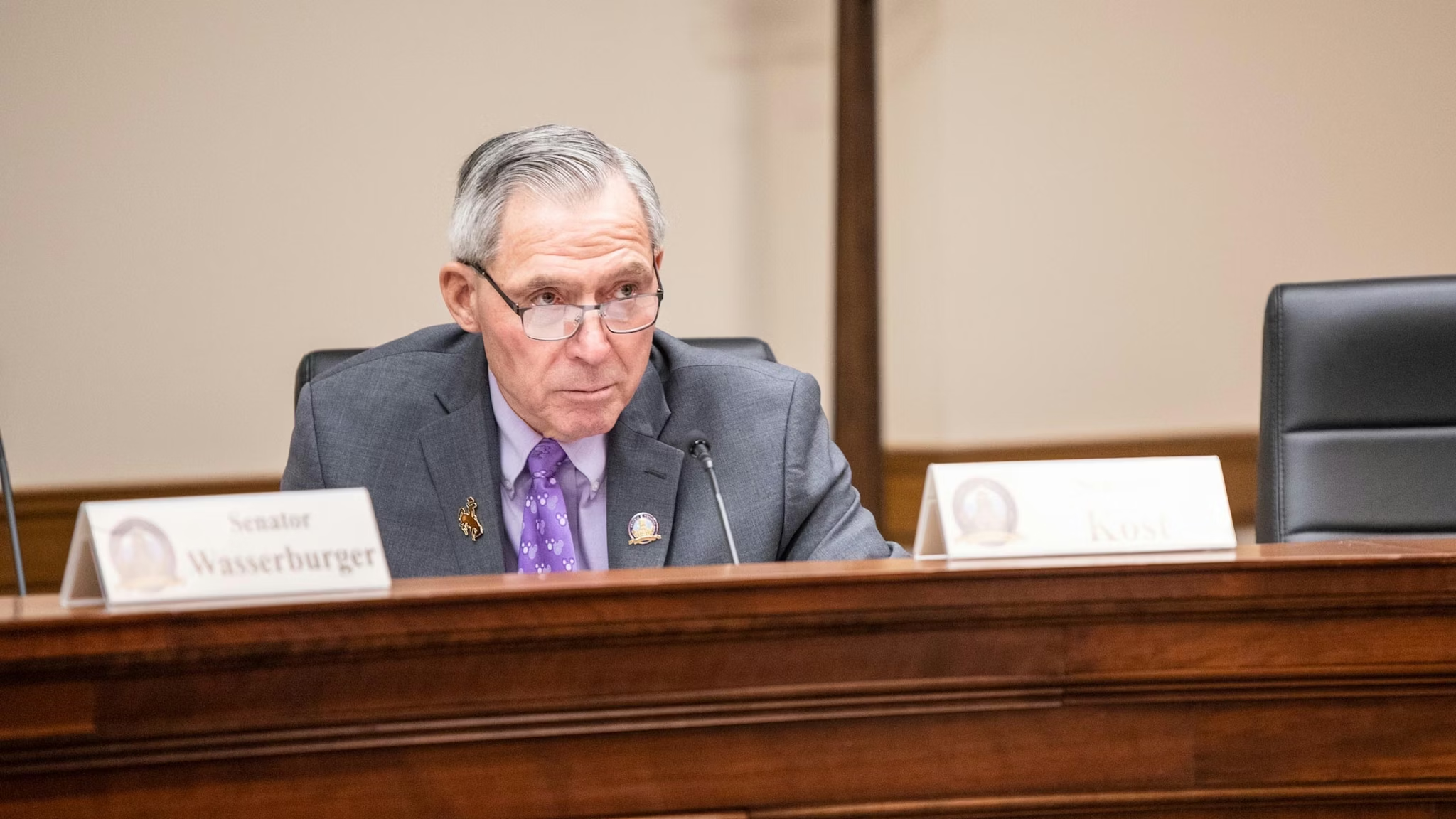
After hearing testimony Tuesday from a woman facing a defamation lawsuit by U.S. House candidate Reid Rasner, the Wyoming Joint Judiciary Committee voted to begin drafting a bill to deter frivolous lawsuits that intimidate people into silence. The proposed policy is known as anti-SLAPP legislation, where SLAPP stands for strategic lawsuits against public participation.
Michelle St. Louis, who is being sued for online comments she made about Rasner, told the committee that cases like hers are meant to silence people. “This issue is larger than any one individual case,” she said. “The question before this body is whether ordinary Wyoming citizens can realistically afford to participate in public discourse when the threat of prolonged litigation is hanging over them.”
St. Louis had called Rasner “creepy” and said a person should keep his son away from him, according to court documents. She believes the case is an attack on her religious faith, as Rasner’s complaint alleges that St. Louis said he “has blasphemed the name of God” due to his sexual orientation. She urged the committee to craft a bill that protects legitimate First Amendment activity while holding people accountable for “truly defamatory and knowingly false statements.”
Sen. Jared Olsen noted that no committee members wanted to ask questions of St. Louis given the pending litigation. Rep. Ken Chestek asked legislative staff to begin drafting the bill, and the committee approved via voice vote. The vote does not codify the law but begins the bill’s formation so the committee can tweak it before deciding whether to advance it to the full legislative session in January 2027.
Rep. Pepper Ottman has twice brought anti-SLAPP bills that passed the House but failed to clear the Senate Judiciary Committee, in 2025 and 2026. Her bills would have given people immunity for actions within certain First Amendment rights, including religious freedom, petition, assembly, and speech. A person sued for such activities would be entitled to immunity, and could appeal mid-case if a court denied that immunity. The bills included carveouts for knowingly false or defamatory statements, true threats, incitement to lawless action, obscenity, child pornography, and defamation against a private figure. A person who won an immunity dismissal would recover court costs and attorney’s fees, plus compensatory damages of between $5,000 and $100,000.
Colin Crossman of Cheyenne urged the committee to build a “substantive” anti-SLAPP law so federal courts would recognize it. Some federal courts have declined to apply state anti-SLAPP laws, finding them “procedural” rather than substantive. Betsy Anderson, general counsel for Gov. Mark Gordon, said the governor supports an anti-SLAPP law based on the Uniform Public Expression Act (UPEPA), which does not grant immunity but lays out an evidentiary process for dismissal. She said giving people immunity for the conduct that is the subject of a lawsuit gives her office “pause.”
The committee will continue refining the draft bill in future meetings.

The latest news in your social feeds
Subscribe to our social media platforms to stay tuned