



Chuck Gray Tells Fremont County To End Race-Based Districting Immediately


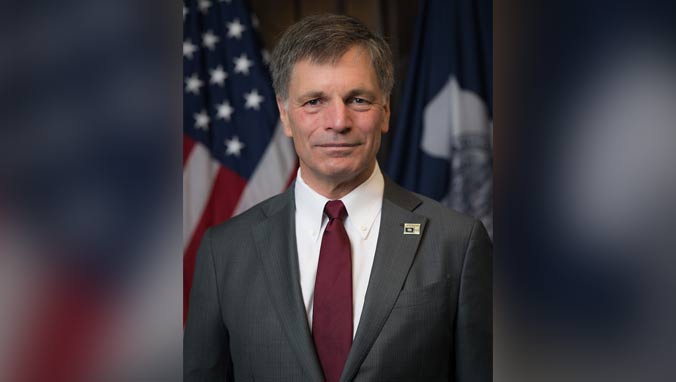
Secretary of State Chuck Gray told the Fremont County Commission on Tuesday to “take immediate action” to change its race-based system of commission districts back to the at-large system used by every other county in Wyoming. A federal court first ordered the county to draw its commission districts to prevent dilution of the Native American vote starting in 2010.
Gray’s letter came after the U.S. Supreme Court in Louisiana v. Callais tightened its review of potential racial gerrymandering and overturned a race-based district in Louisiana. “With the Supreme Court’s ruling, it is clear that drawing districts based on race is squarely unconstitutional, and a blatant violation of the Fourteenth Amendment,” Gray wrote. Fremont County contains the Wind River Indian Reservation, where the Northern Arapaho and Eastern Shoshone tribes are headquartered.
The commission sent the question to the Wyoming Attorney General’s Office for further guidance, Chairman Larry Allen told Cowboy State Daily. Commissioner Jennifer Wilson said she would prefer to put the question to a ballot vote. “No matter what we do there’s going to be a lawsuit,” she said, adding, “Chuck Gray can say well, ‘Do this’ and ‘Do that,’ but that’s ridiculous—because who’s paying for the lawsuit, Chuck? You?”
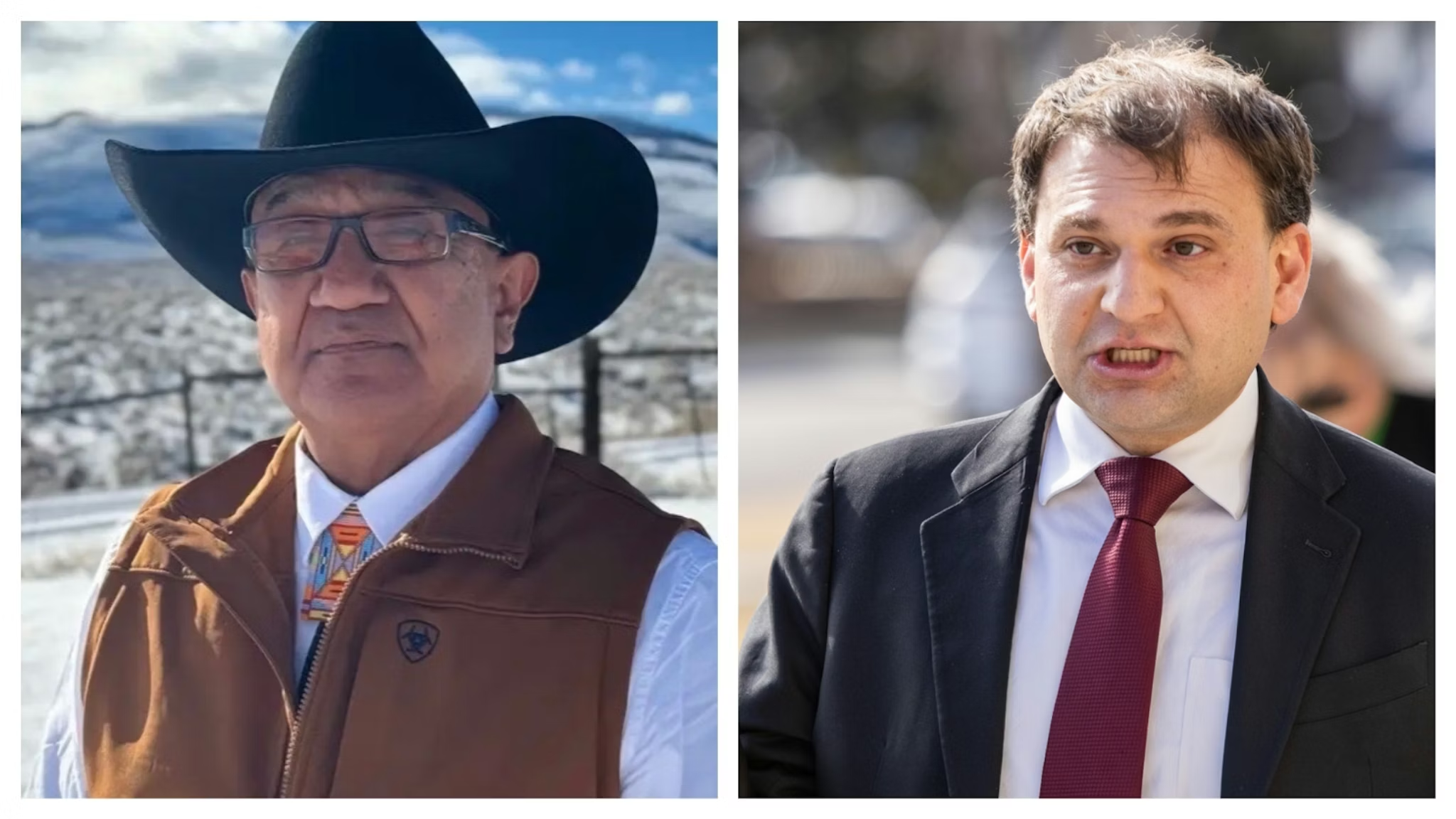
Commissioner Clarence Thomas, who represents the reservation area, voiced outright displeasure with the letter. He said the district system is not about race but about unique cultural divisions in Fremont County, pointing to how different Riverton is from Lander and how different the reservation is from other districts. “We are Wyoming. And we are different,” Thomas said. “So I disagree with his letter, and I’ll continue to disagree with his letter.”
Commissioner Ron Fabrizius said the county is in a “darned if you do, darned if you don’t” situation. He noted that at-large elections would be more expensive and time-consuming for candidates to campaign county-wide.
The history supports that Fremont County has commission districts because of race. In 2005, five tribal members from both tribes challenged the county’s at-large system. U.S. District Court Judge Alan B. Johnson ruled for the tribal members in 2010, finding that “discrimination is ongoing” and that at-large elections diluted Indian voting strength in violation of Section 2 of the Voting Rights Act. The 10th Circuit Court of Appeals upheld his decision in 2012.
The U.S. Supreme Court’s April 29 decision in Callais ruled 6-3 that a race-based congressional district in Louisiana was unconstitutional. The court did not overturn Section 2 of the Voting Rights Act but “updated” the framework, making it harder for governments to justify racial discrimination when drawing districts. Governments now face liability only when evidence supports “a strong inference that the state intentionally drew its districts to afford minority voters less opportunity because of their race.”
Rep. Ken Chestek, a retired law professor, said the ruling imposes a more rigorous test but does not automatically invalidate the 2010 decision. “Even then it’s not clear … and it’s very possible to me the (tribal members) would win again,” he said. “But I don’t think there’s a definitive answer we can come up with right now.”
William Perry Pendley, who helped defend Fremont County in the districting case, said he believes the political class argument—that tribes are political, not racial, entities—does not protect the race-based district. “The bottom line is, who’s voting? The tribe’s not voting. Individual American Indians are voting,” he said.
Meanwhile, the Wyoming House of Representatives also has a reservation-area district, House District 33, which Sen. Cale Case acknowledged was drawn to have “the maximum number of Native American people.” That could also invite legal action after the Callais ruling, Case said.
The latest news in your social feeds
Subscribe to our social media platforms to stay tuned