
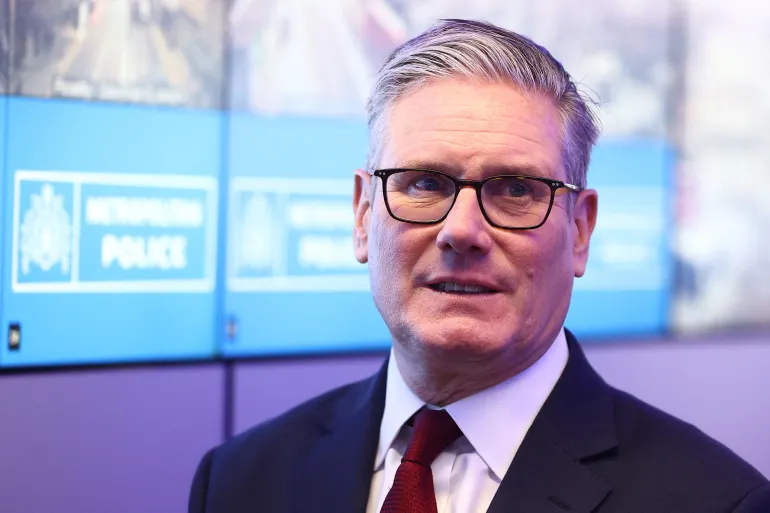



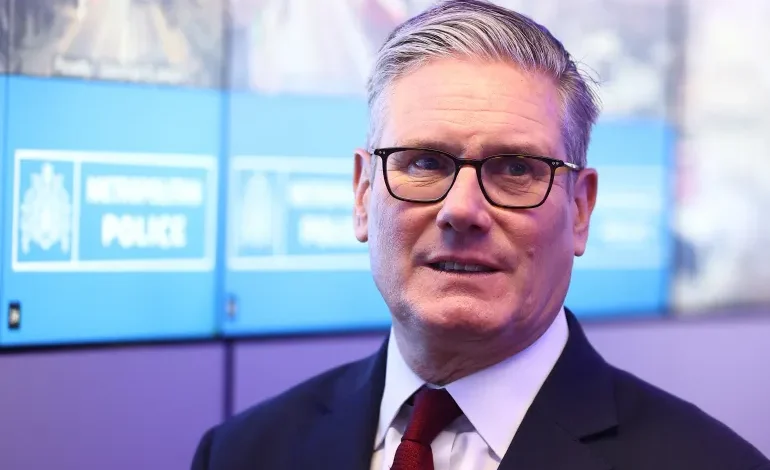

Britain’s Labour Party is deep in leadership drama, but the central fact is still easy to miss: Prime Minister Keir Starmer has not yet faced a formal challenge. What he is facing instead is something messier — a slow-motion coup, heavy on pressure and private manoeuvring, but still short of the decisive move that would force him out.
For now, Starmer remains in office. Whether he remains in power is another matter.
Conservative leader Kemi Badenoch sharpened the point last week, saying:
“The PM has shown he is in office but not in power.”
The line was not accidental. It echoed former Conservative chancellor Norman Lamont’s famous attack on John Major in 1993, during one of the many internal wars that have shaped modern Tory politics.
The comparison matters because the Conservatives have traditionally been quicker and more ruthless when it comes to removing wounded leaders. Margaret Thatcher was forced out in 1990 after dominating British politics for more than a decade. Major challenged his own critics in 1995 and survived. Theresa May and Boris Johnson both won confidence votes, but the scale of opposition inside their party made their premierships untenable.
Labour works differently. No sitting Labour prime minister has ever faced a formal leadership challenge. That is not because Labour is gentler. Tiny violin, please. It is because the party’s rules and culture make the process harder, slower and more politically risky.
For the Conservatives, 15 percent of MPs can trigger a confidence vote through anonymous letters. Labour requires 20 percent of MPs to publicly endorse a challenger, after which the leadership election goes to party members nationwide.
That difference changes the psychology of rebellion. In Labour, a leader can lose the confidence of MPs and still survive with members. Jeremy Corbyn proved that in 2016, when he faced a massive revolt by his parliamentary party but won the membership vote with 62 percent support.
It also creates hesitation. Nobody wants to be the first person seen holding the knife.
Michael Heseltine, Margaret Thatcher’s great internal rival, once put it bluntly:
“I knew that he who wields the knife never wears the crown”. The phrase has become almost a rule of British political coups. Challengers wait. Allies hesitate. Everyone wants the leader gone, but nobody wants to look too hungry.
The same dynamic haunted Labour under Tony Blair and Gordon Brown. In The End of the Party, political commentator Andrew Rawnsley wrote that Brown was “torn between his craving to bring down Blair and his fear of the consequences of being seen with the dagger in his hand.”
Later, when Brown himself became deeply unpopular as prime minister, repeated attempts to remove him failed despite widespread cabinet and parliamentary discontent.
“A central characteristic of New Labour had been its appetite for power, the burning conviction that there is nothing to be said for the impotence of Opposition. Historians will ask why the party chose to go into an election with an atrociously unpopular leader with severe deficiencies as a communicator whom every senior colleague thought was taking them to an awful defeat,” Rawnsley wrote.
“One explanation was the sheer incompetence of the regicides. All three attempted coups against Brown – in autumn 2008, spring 2009 and January 2010 – were botched. Key ministers did not organise with decisive ruthlessness from a mixture of cowardice, fear of a bloody split and a pessimistic assumption that defeat was unavoidable.”
Starmer is not Brown. He is seen as less intimidating and less tribal. But Labour MPs now appear trapped in a familiar problem: many want change, few want to trigger the fight.
The pressure intensified after Labour’s disastrous May 7 election results. The party lost 1,498 local council seats in England, mainly to Reform and the Greens, and lost control of the Welsh Senedd. For many MPs and cabinet ministers, the results reinforced the fear that Starmer cannot beat Reform at the next general election.
British newspapers have reported that at least three cabinet ministers, including Home Secretary Shabana Mahmood and Foreign Secretary Yvette Cooper, have privately urged Starmer to set out a timetable for leaving office.
Wes Streeting has gone further. The former health secretary resigned from the cabinet on May 14, telling Starmer:
“It is now clear that you will not lead the Labour Party into the next general election, and that Labour MPs and Labour unions want the debate about what comes next to be a battle of ideas, not of personalities or petty factionalism.”
Streeting has confirmed he would run in a leadership contest, saying Labour needs a proper race with the best candidates. But he has not formally launched a challenge.
That hesitation may have a simple explanation: the most likely successor is not yet in Parliament.
Andy Burnham, the mayor of Greater Manchester and the man British media like to call the “King of the North”, is widely viewed as Starmer’s strongest potential replacement. He left the House of Commons in 2017 and has since built a powerful regional base in northwest England.
Polling suggests he is far more popular than Starmer. A YouGov survey earlier this month gave Burnham a net favourability rating of +4, compared with -46 for Starmer and -28 for Streeting.
But Burnham cannot challenge for the Labour leadership unless he returns to Parliament. His earlier attempt to stand in the Gorton and Denton by-election was blocked by Labour’s National Executive Committee, reportedly at Starmer’s request. Labour then finished third in the seat, behind the Greens and Reform.
That changed after the local election collapse. On May 14, Makerfield MP Josh Simons said he was willing to resign to give Burnham a route back into Westminster. A day later, Labour’s NEC approved Burnham as a candidate — another sign that Starmer’s grip on the party is weakening.
The Makerfield by-election, expected on June 18, now carries huge weight. The seat has historically been safe Labour territory, but Reform is targeting it aggressively. Nigel Farage has said his party will “throw absolutely everything at the by-election”, and the Greens have so far resisted calls to stand aside.
If Reform wins, Burnham’s path to the leadership could be blocked, and Labour’s crisis would deepen sharply. If Burnham wins, the pressure on Starmer may become impossible to contain.
One cabinet minister reportedly summed up the mood: “If Andy wins Makerfield he will be carried aloft into the Westminster tearooms on the shoulders of Labour MPs.”
“There is simply not a world in which he doesn’t win the leadership so it must be a coronation – because the last thing we need is a damaging leadership battle.”
That may be the hope among some Labour figures. But British politics has a gift for turning neat succession plans into mud wrestling in formalwear.
If Burnham cannot return to Parliament, the race could open up to Streeting, Angela Rayner and perhaps others. Starmer has given no sign that he would step aside voluntarily or refuse to contest a leadership election.
For now, the party remains suspended between rebellion and resolution.
ITV political editor Robert Peston captured the state of things on Substack, writing that Starmer’s authority has drained away:
“The timing and manner of his exit are now at the mercy of events, which makes him a lame duck prime minister whose utterances about policy will barely be heard above the racket of speculation about how and when he will go.”


The latest news in your social feeds
Subscribe to our social media platforms to stay tuned