

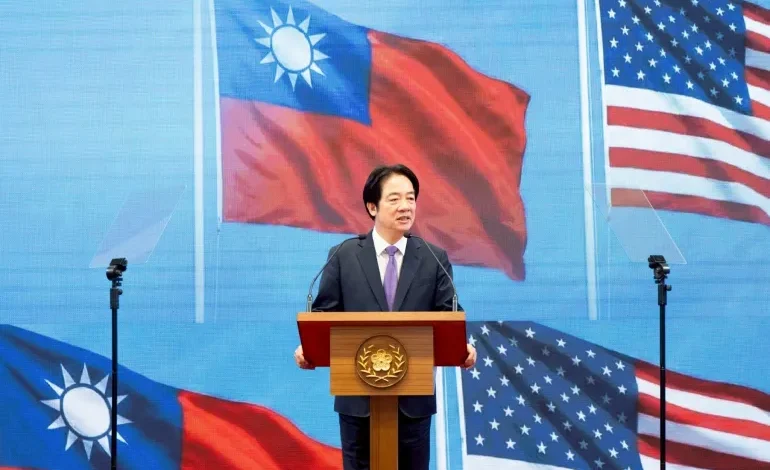

Taiwan’s president has moved to steady the message after Donald Trump’s Beijing summit with Xi Jinping put the island’s future back at the centre of US-China tensions.
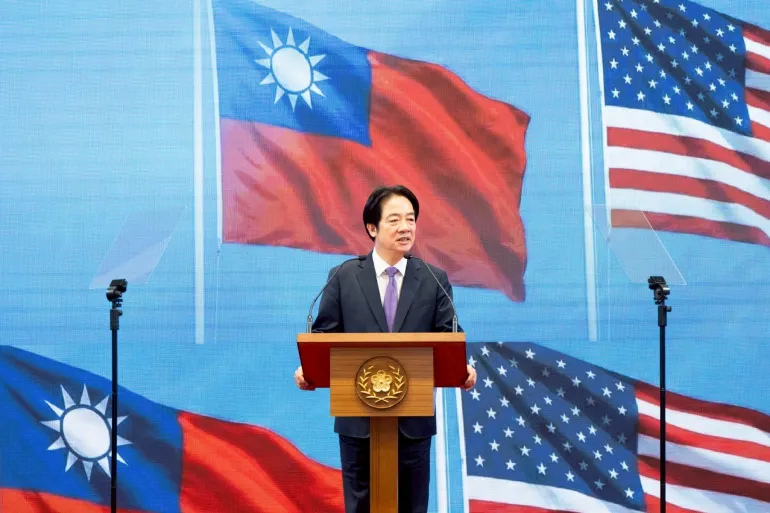
In a statement on Sunday, William Lai Ching-te said Taiwan would not be pushed into surrendering either its democracy or its sovereignty, while also stressing that Taipei is not trying to change the current balance across the Taiwan Strait.
“Taiwan will not provoke or escalate conflict, but it will also not relinquish its national sovereignty and dignity, or its democratic and free way of life, under pressure,” Lai wrote on social media.
“Taiwan has always been a staunch maintainer of the status quo across the Taiwan Strait, not a party seeking to change it,” he said, adding that China was the “root cause of regional instability”.
The statement came days after Trump told Fox News that he was not “looking to have somebody go independent”, referring to Taiwan. The remark followed his meeting with Xi in Beijing, where Taiwan was one of the most sensitive issues on the table.
According to Chinese state media, Xi told Trump that Taiwan was the “most important issue in China-US relations”.
“If mishandled, the two nations could collide or even come into conflict, pushing the entire China-US relationship into a highly perilous situation,” Xi reportedly said.
For Beijing, Taiwan remains part of China, and Chinese leaders have repeatedly said reunification may be pursued by force if necessary. For Taipei, the island is already self-governed, democratic and unwilling to accept Chinese rule.
The United States sits in the middle with its familiar policy of strategic ambiguity. Washington does not formally recognise Taiwan as an independent state, but it continues to provide the island with defensive weapons and has long maintained that any change to Taiwan’s status should be peaceful.
Trump’s comments added a more cautious note to that position. Speaking after the summit, he said Xi “feels very strongly” about opposing Taiwanese independence and added that he had “made no commitment either way”.
The US president also left open whether he would approve a new $11bn arms package for Taiwan, already cleared by Congress.
“I haven’t approved it yet. We’re going to see what happens,” Trump told Fox News. “I may do it. I may not do it.”
That uncertainty is exactly what Taipei is trying to manage. Lai used his statement to underline that US-Taiwan security cooperation remains central to deterrence in the region.
“This is not only a US security commitment to Taiwan, but also the most important deterrent force against undermining regional peace and stability,” Lai said.
The exchange shows how carefully Taiwan is trying to hold its position: rejecting pressure from Beijing, avoiding steps that could be framed as escalation, and reminding Washington that arms sales are not just symbolic but part of the security architecture keeping the strait from tipping into open conflict.

The latest news in your social feeds
Subscribe to our social media platforms to stay tuned