



Senate Rebukes Trump With Iran War Powers Vote


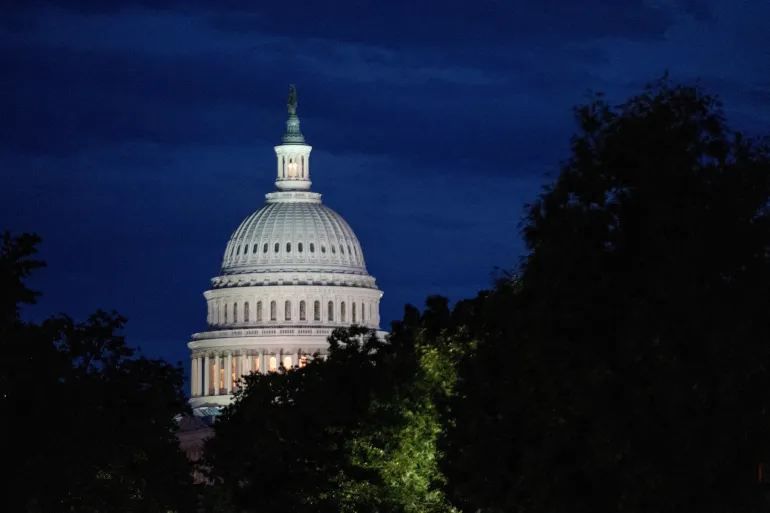
The United States Senate has advanced a resolution that could limit Donald Trump’s ability to use military force against Iran without congressional approval, delivering a rare — though still procedural — rebuke to the president as the war continues to strain US politics and global energy markets.
The measure passed on Tuesday by 50 votes to 47, with several Republicans joining Democrats to move the War Powers Resolution forward.
The vote does not yet end or restrict US military operations. But it does show that unease over the conflict is spreading beyond Democrats, even inside a Republican Party that has mostly stood behind Trump’s handling of the war.
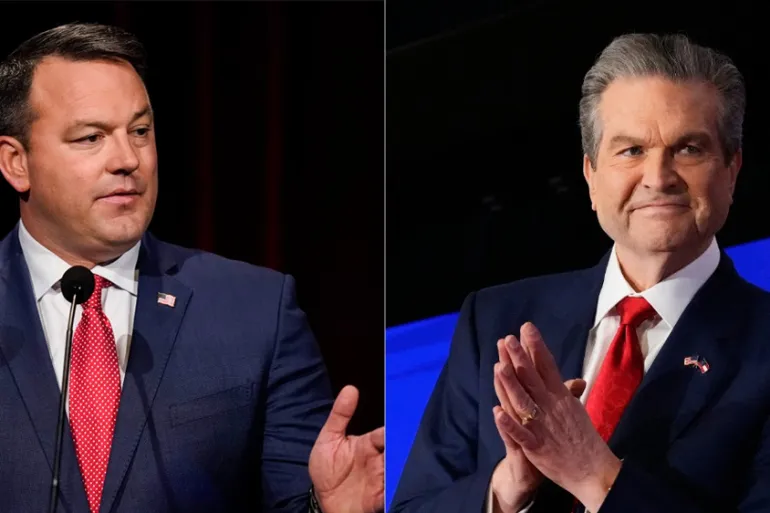
“This president is like a toddler playing with a loaded gun,” Democratic Senate Minority Leader Chuck Schumer said before the vote.
“If there was ever a time to support our war powers resolution to withdraw troops from hostilities with Iran, it’s now,” he said.
The resolution reflects a broader argument that Congress, not the president alone, has the constitutional authority to decide when the country goes to war.
Still, the path ahead is steep. Tuesday’s vote was only procedural. Three Republicans were absent, and if they return and vote against the measure, they could block it from advancing further. Even if the resolution passes the Senate, it would still need to clear the Republican-led House of Representatives.
And then comes the hardest part: surviving a likely Trump veto. That would require two-thirds support in both chambers, a threshold that remains highly unlikely.
Trump’s allies have already blocked seven similar Senate efforts this year, along with three war powers measures in the House by narrow margins.
Even so, this vote matters because it comes at a moment when the war is becoming harder for the White House to contain politically.
The US and Israel launched the war against Iran in late February. Since then, the conflict has disrupted global energy markets, pushed up living costs and sharpened questions over whether Trump has drawn the country into an open-ended military campaign without a clear exit strategy.
Democrats and a small number of Republicans have called on Trump to seek formal congressional authorisation. The administration insists the president is acting legally as commander in chief and has the authority to order limited military operations to protect the United States.
The legal issue is complicated by the 1973 War Powers Resolution, passed after the Vietnam War. Under that law, a president can conduct military action for 60 days before ending it, seeking congressional authorisation or requesting a 30-day extension because of “unavoidable military necessity regarding the safety of United States Armed Forces” during withdrawal.
Trump has argued that the clock no longer applies. On May 1, he declared that a ceasefire with Tehran had “terminated” hostilities, meaning, in the administration’s view, that the US had not exceeded the 60-day limit.
But the situation on the ground is not so clean. US forces continue to blockade Iranian ports and strike Iranian shipping, while Iran is blocking access to the Strait of Hormuz and has attacked US vessels.
That gap between legal framing and military reality is exactly what has made the Senate vote more than a symbolic exercise.
Opinion polls suggest that many Americans oppose the war, and legal experts have widely described the conflict as a violation of international law. At home, the economic consequences are also becoming harder to ignore, as energy disruptions feed into inflation and cost-of-living pressure.
For now, Trump still has the upper hand. The resolution faces major procedural, political and constitutional hurdles before it could actually restrain the president.


The latest news in your social feeds
Subscribe to our social media platforms to stay tuned