


Trump’s Iran Deal Push Reframes Debate Around Israel Normalisation
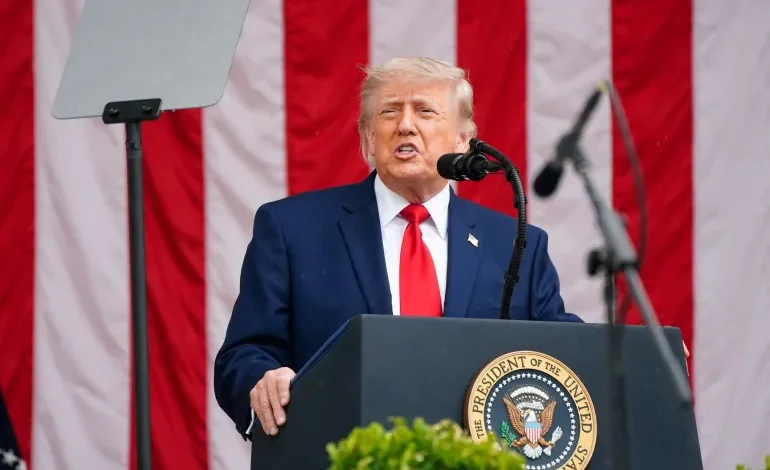

As reports of a possible US-Iran agreement continue to circulate, some of the loudest pro-Israel voices in Washington appear to be recalibrating their opposition — not because concerns about Iran have disappeared, but because President Donald Trump has started linking any future deal to a wider expansion of diplomatic ties with Israel.
In recent weeks, hawkish Republicans and pro-Israel commentators had warned against any agreement that would leave Iran’s political leadership or military capabilities largely intact. Critics argued that ending the conflict without significantly weakening Tehran would ultimately benefit Iran strategically.
US Senator Lindsey Graham was among the most vocal. On Saturday, Graham criticized the idea of ending the war simply to reopen the Strait of Hormuz, calling such an outcome a “nightmare” for Israel.
“It is important we get this right,” Graham wrote in a social media post shared by AIPAC.
But the tone shifted quickly after Trump publicly floated the idea that several Muslim-majority countries should formally normalize relations with Israel as part of any settlement involving Iran.
On Monday, Trump said it “should be mandatory” for countries including Saudi Arabia, Qatar and Pakistan to establish diplomatic ties with Israel under a future agreement.
Two days after warning against a weak deal, Graham praised the proposal enthusiastically.
“With Saudi Arabia and others like Pakistan making peace with Israel, the region will know a level of stability never dreamed of before President Trump,” the senator wrote on X.
Normalisation with Israel, Graham added, “will eventually lead to regional integration, making the Middle East a powerhouse for economic opportunity and good instead of a powder keg”.
The shift was not isolated. Conservative commentator Mark Levin, who had also criticized the possibility of a deal with Iran over the weekend, praised Trump’s diplomatic framing on Monday.
“This would be a truly massive accomplishment!” Levin wrote.
Trump’s comments revived attention around the Abraham Accords, the normalization agreements brokered during his first term between Israel and several Arab states, including the United Arab Emirates, Bahrain and Morocco.
“It should be mandatory that all of these Countries, at a minimum, simultaneously, sign onto the Abraham Accords,” Trump wrote on Truth Social, listing countries that included Turkiye and Egypt — despite both already maintaining formal diplomatic relations with Israel.
None of the governments Trump mentioned publicly responded to the proposal.
The renewed push comes at a politically delicate moment. The Trump administration is still trying to negotiate an end to the war that began after the US and Israel launched attacks against Iran on February 28. Over time, Washington’s stated goals have appeared to shift — from regime change and dismantling Iran’s nuclear programme to securing regional stability and reopening the Strait of Hormuz, through which more than 20 percent of global oil shipments pass.
Trump now appears to be trying to fold broader regional diplomacy into those negotiations, presenting normalization with Israel as part of a larger strategic settlement.
But analysts say the idea faces serious resistance in the Gulf.
Saudi Arabia has repeatedly maintained that it remains committed to the 2002 Arab Peace Initiative, which conditions normalization with Israel on the establishment of a Palestinian state based on the 1967 borders with East Jerusalem as its capital.
For many Arab governments, the war in Gaza has further complicated public and diplomatic support for closer ties with Israel.
Dania Thafer, executive director of Gulf International Forum, said Trump is attempting to frame the outcome of the war as a geopolitical success despite mounting regional tensions.
She told Al Jazeera that Gulf states — particularly Saudi Arabia and Qatar — are currently “not interested” in normalization.
Beyond support for the Palestinian cause, Thafer argued that Gulf countries do not want to “tip the balance in favour of Israeli-led regional order”, especially after experiencing Iranian attacks during the conflict.
She also warned that insisting on normalization as part of negotiations with Tehran could ultimately complicate the chances of securing a broader agreement.


The latest news in your social feeds
Subscribe to our social media platforms to stay tuned