





Hurricane Milton Raises Concerns Over EV Battery Fire Risks: Safety Measures Recommended
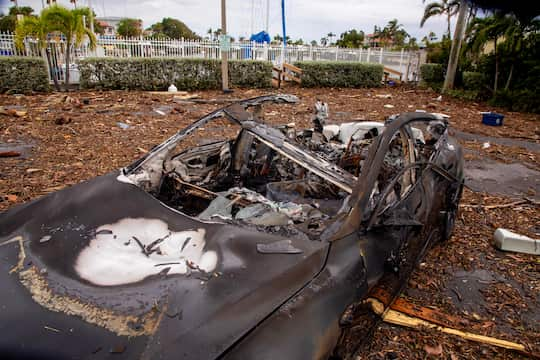

As Hurricane Milton approaches Florida’s west coast, local authorities are issuing urgent warnings to electric vehicle (EV) owners regarding the potential fire hazards posed by saltwater exposure.
The storm, expected to make landfall Wednesday night or early Thursday, could generate devastating storm surges reaching up to 15 feet, leading to significant flooding in coastal areas.
Cathie Perkins, the emergency management director for Pinellas County, emphasized the importance of relocating EVs to higher ground.
“Anything with those lithium-ion batteries needs to be moved out of the surge zones where it could be exposed to saltwater,” Perkins stated.
The corrosive nature of saltwater can lead to lithium-ion batteries short-circuiting and potentially catching fire. Perkins noted previous incidents of explosions and fires associated with such batteries, underscoring the urgency of the situation.
Florida’s State Fire Marshal, Jimmy Patronis, echoed these warnings, citing recent experiences with battery fires related to storm surge from Hurricane Helene, which occurred two weeks prior. According to Patronis, there were 48 lithium-ion battery fires from that storm, with 11 involving electric vehicles.
Albert Gore, executive director of the Zero Emission Transportation Association (ZETA), highlighted the need for accurate information about the risks associated with EVs during hurricanes. ZETA has published an online guide to help EV owners prepare for such events, advising them on the unique challenges posed by flooding.
While lithium-ion batteries are rigorously tested for water and dust resistance, prolonged submersion in saltwater can lead to corrosion and damage. This could result in battery short circuits and, in severe cases, fires. Although gas-powered vehicles also contain batteries that may be affected by flooding, EV batteries typically operate at a higher voltage, which increases the risk of fire if compromised.
To mitigate the risk of battery fires during storms, ZETA recommends that EV owners include the following safety measures in their hurricane preparedness plans:
- Relocate Vehicles: Move electric vehicles away from areas prone to flooding and storm surge. Aim to position them at least 50 feet from buildings and other combustible materials.
- Avoid Charging: Do not leave EVs plugged in during a storm, as this can increase fire risks.
- Monitor Battery Levels: If possible, reduce the battery charge to below 30% to lessen the risk of fire if the battery is damaged.
In the event that an electric vehicle is submerged, it is crucial for owners to have the vehicle inspected by a professional before attempting to drive it. Even if the car appears undamaged, there may still be underlying issues with the battery. ZETA recommends treating a flooded vehicle as if it were in an accident and contacting the insurance provider promptly.
Patronis referred to compromised EVs as “ticking time bombs” if left near homes or garages after flooding. He urged residents to remove any flooded EVs from their properties to prevent potential fire hazards.
As Hurricane Milton continues to pose threats to Florida, the National Hurricane Center has advised residents to complete their preparations and evacuations as necessary. Authorities are focused on ensuring public safety and minimizing risks associated with flooding and storm-related fire hazards.
With input from the Washington Post, CBS News, and FOX Business.



The latest news in your social feeds
Subscribe to our social media platforms to stay tuned