





The New York Times, CNBC, Axios, Bloomberg, the Verge, and Forbes contributed to this report.
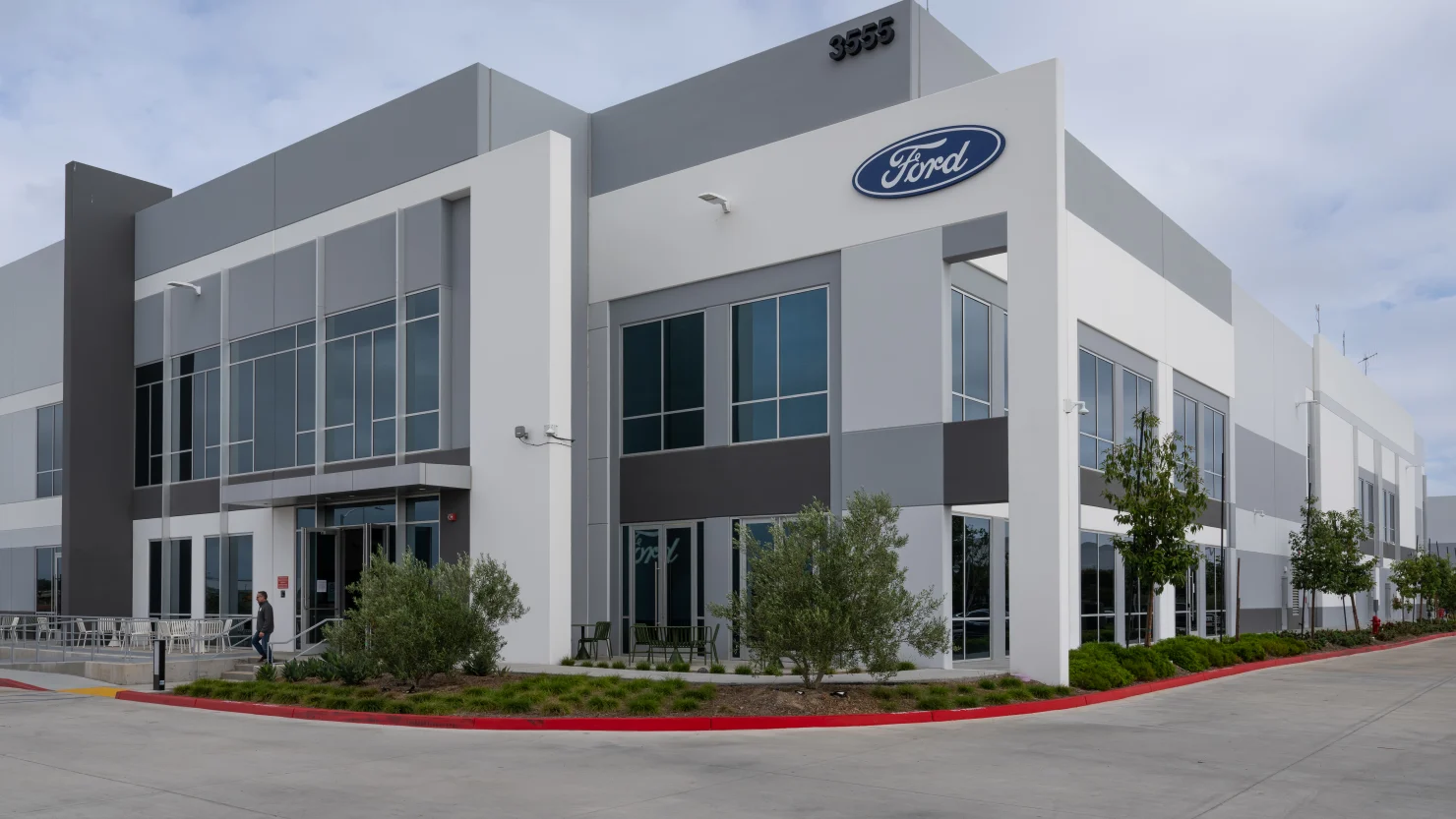
Ford’s once-under-the-radar EV operation in California isn’t hiding anymore – and it’s making a pretty bold bet on what comes next.
Inside a growing complex in Long Beach, a small, tightly focused team has been reworking how the company builds electric vehicles from the ground up. Their big idea: a new “Universal Electric Vehicle” platform, designed to crank out cheaper, simpler EVs – and, eventually, help turn Ford’s money-losing EV division into something that at least breaks even.
That’s the plan by 2029. It’s ambitious, especially given where things stand now.
The EV business has been rough across the industry. Demand has cooled, costs are still high, and Ford alone has racked up billions in losses tied to electric vehicles. Add in policy shifts, fewer consumer incentives, and the recent exit of a top EV executive, and it’s not exactly smooth driving.
Still, Ford is pressing on.
At the center of it all is a midsize electric pickup expected to land around the $30,000 mark. That price point is doing a lot of heavy lifting. Executives think it could hit a sweet spot most rivals haven’t cracked – affordable enough for mainstream buyers, but still practical.
The pitch goes beyond just one truck. This new platform is supposed to underpin an entire lineup, from compact cars to larger work vehicles, all built faster and with fewer parts. Engineers have stripped things down aggressively – fewer components, fewer steps on the assembly line, less wiring, less weight. Even the design philosophy sounds blunt: if a part isn’t necessary, get rid of it. If it can do more than one job, even better.
Speed is another obsession. Traditional car development can drag on for years. This team is trying to cut that timeline down by relying heavily on in-house prototyping, digital simulations, and rapid iteration. Build, test, tweak, repeat – quickly.
That urgency isn’t random. Chinese automakers are pumping out new EVs at a pace that’s making legacy players uncomfortable. Some are developing vehicles in nearly half the time it takes traditional manufacturers. Ford knows it’s behind on that front and is trying to close the gap.
The Long Beach team – a mix of Ford veterans and talent pulled from places like Tesla and aerospace – was intentionally kept separate from the company’s usual bureaucracy. For years, it operated almost like a startup inside a giant corporation. Now its work is starting to bleed into the rest of Ford.
Executives say this isn’t just about building one successful EV. It’s about rewriting how the company designs and manufactures cars altogether.
There’s also a bit of history hanging over this effort. Ford has made big promises about EVs before – and not all of them landed. The electric F-150 Lightning didn’t hit expectations. A planned three-row electric SUV got scrapped. So there’s some skepticism baked in this time around.
What’s different now, according to the company, is focus. Smaller vehicles. Lower costs. Less complexity.
Whether that’s enough is another question.
For now, Ford is sticking with the bet. The first truck is coming soon. If it works, the company thinks it can scale the system globally and finally get its EV business on solid ground.
If it doesn’t, well – the stakes are pretty clear.
As one executive put it, sitting still isn’t really an option.



The latest news in your social feeds
Subscribe to our social media platforms to stay tuned