



Oil Prices Stabilize After Previous Decline Amid Israel-Hezbollah Ceasefire Speculation
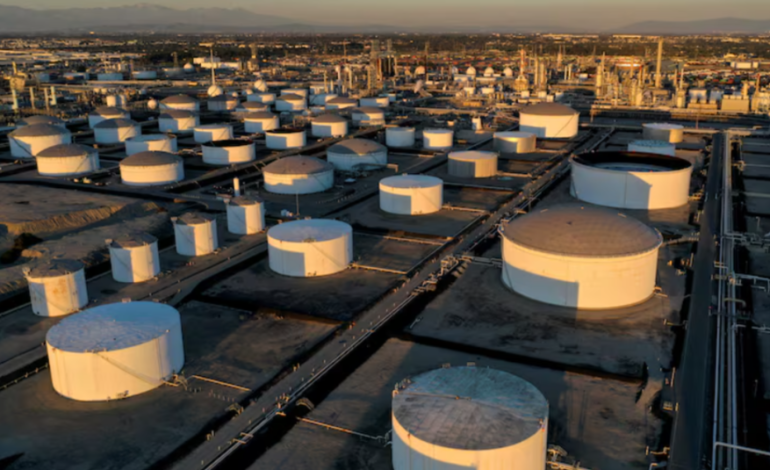

Oil prices remained steady during Asian trading on Wednesday as investors assessed the latest developments in the ongoing Middle East conflict while also considering persistent bearish expectations for demand, Reuters reports.
Brent crude futures increased by 22 cents, or 0.3%, reaching $77.40 per barrel by 0349 GMT, while US West Texas Intermediate (WTI) futures rose 14 cents to $73.71 per barrel.
The market experienced a sharp decline of over 4% in the previous session, driven by potential ceasefire discussions between Hezbollah and Israel. However, caution persists regarding a possible Israeli attack on Iran’s oil infrastructure.
“The everyday dilemma of ‘Middle Eastern headlines’ moving like a pendulum between ‘ceasefire talks’ and ‘further escalation in attacks’ has been distracting investors from reality. Oil markets are twirled in sentiments of ‘buying the rumor’ and sidelining the real fundamentals that should matter,” Phillip Nova’s senior market analyst, Priyanka Sachdeva, noted in an email.
The sell-off on Tuesday followed a notable rally that began after Iran launched a missile barrage at Israel on October 1, resulting in an 8% weekly gain, the largest increase in over a year. However, Hezbollah officials appeared to retract their stance on a truce in Gaza as a prerequisite for a ceasefire in Lebanon. In a televised speech, Hezbollah’s deputy leader Naim Qassem expressed support for efforts to secure a truce, marking the first time the end of the war in Gaza was not cited as a condition.
On the demand side, data revealed that US crude oil stocks surged by nearly 11 million barrels last week, significantly surpassing analysts’ expectations, according to sources citing figures from the American Petroleum Institute on Tuesday. However, fuel stockpiles experienced a decline, highlighting ongoing concerns regarding weak demand. The US Energy Information Administration (EIA) also lowered its 2024 forecast for global oil demand growth by 20,000 barrels per day to 103.1 million barrels per day, citing weaker industrial production and manufacturing growth in the US and China.
Additionally, concerns about the lack of further stimulus measures from Beijing to support China’s economy have tempered gains in the oil market. Market participants were left disappointed after officials provided limited new details at a press conference on Tuesday.
“China has a part to play as well, with a lack of new stimulus bringing some disappointment. Many market participants were hoping that its fiscal policies would follow the financial ‘bazooka’ delivered in late September, but there was clearly a step-down in yesterday’s announcement,” IG market strategist Yeap Jun Rong remarked.



The latest news in your social feeds
Subscribe to our social media platforms to stay tuned