




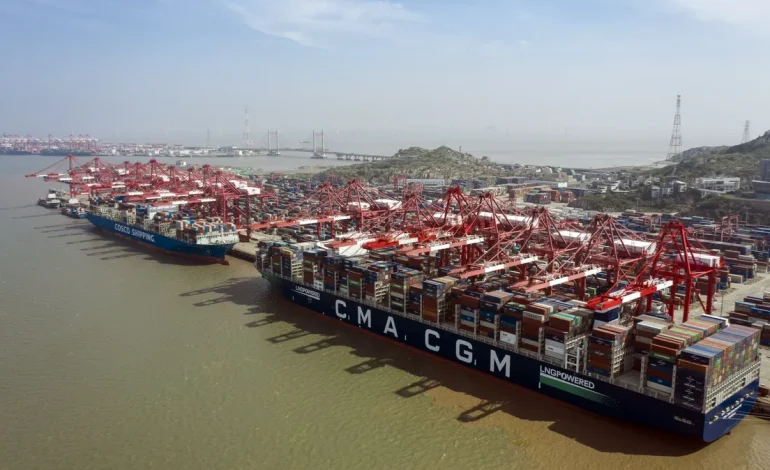

China’s trade surplus is on course to reach nearly $1 trillion this year, as exports to close to 170 countries outpace what it imports from them, Bloomberg reports.
With the trade gap widening, some of the world’s largest economies, including the United States, European Union, and ASEAN nations, are raising concerns over trade imbalances, leading to fears of escalating trade tensions.
China’s goods trade surplus soared to a historic high of $785 billion over the first ten months of 2024, marking an almost 16% increase from the same period last year, based on recent data. This rise, if maintained through the end of the year, would lead to the largest annual trade surplus China has ever recorded. Analysts point out that this trend is largely fueled by China’s reliance on export growth to support its economy, as domestic consumption remains relatively weak. In response, Chinese authorities have taken steps to bolster industries supporting foreign trade and economic stability.
Economist Brad Setser from the Council on Foreign Relations noted that the increase in China’s export volume has been significant, even amid decreasing export prices.
“The overall story is of an economy that is again growing off exports,” he observed.
This signaled that export reliance has been a critical part of China’s strategy to counteract slowing domestic demand.
However, this expanding trade surplus has prompted a reaction from other countries, some of which have introduced new tariffs on Chinese goods, particularly in sectors like steel and electric vehicles. Such moves reflect concerns that China’s rising trade surplus could destabilize global commerce and intensify competition, especially with a newly elected US administration that may introduce additional tariffs targeting Chinese exports.
The trade imbalance also coincides with an economic shift within China. Foreign direct investment in the country has seen a decline, with net FDI outflows potentially marking the first annual drop since 1990. At the same time, Chinese companies have been ramping up exports, while domestic economic challenges, such as slower growth, increased electrification, and a shift to domestically sourced goods, have curbed import demand.
China’s surplus with the United States has grown by 4.4% year-to-date, while trade surpluses with the European Union and ASEAN countries have increased by 9.6% and nearly 36%, respectively. As more countries seek to balance their trade relationships with China, the global economic landscape could be increasingly impacted by rising tariffs and trade barriers.
Amid these shifts, a potential currency impact could emerge. For example, India’s central bank has indicated it may consider weakening the rupee if China devalues the yuan in response to any new tariffs from the US, a move that would make Chinese exports more competitive globally. The trade surplus with India currently stands at $85 billion, a 3% rise from last year and more than double what it was five years ago.



The latest news in your social feeds
Subscribe to our social media platforms to stay tuned