





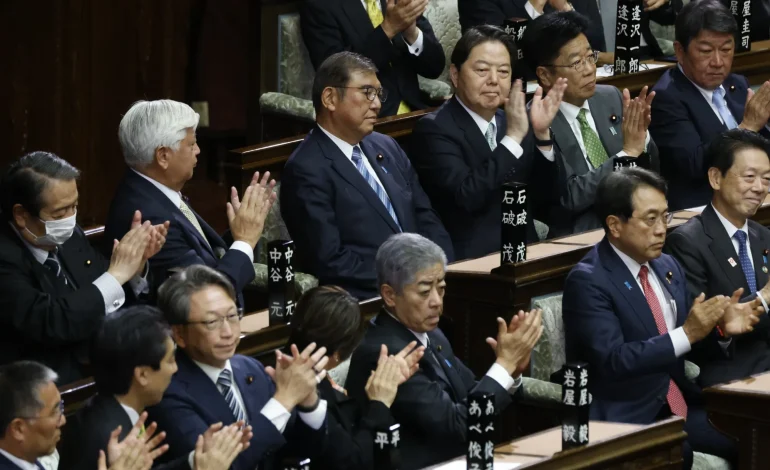

Japanese Prime Minister Shigeru Ishiba’s government has unveiled a new economic stimulus package aimed at addressing public discontent over soaring inflation and bolstering disaster preparedness, Bloomberg reports.
The package, expected to exceed last year’s ¥13 trillion ($85 billion), will include direct cash handouts for low-income households, increased funding for disaster relief efforts, and potential support for the nation’s burgeoning semiconductor sector.
According to public broadcaster NHK, the package will prioritize helping low-income households cope with the highest inflation in decades. The amount of cash handouts will be adjusted based on the number of children in eligible households, reflecting the government’s commitment to supporting families struggling with rising costs.
In addition to inflation relief measures, the stimulus package will also focus on disaster preparedness, streamlining the registration process for trailer houses and toilets, and accelerating the installation of air conditioning in school gymnasiums that serve as emergency shelters.
The package has been met with mixed reactions. While largely in line with expectations, some opposition parties, notably the Democratic Party for the People (DPP), are pushing for additional measures, including expanded tax allowances and reductions in gasoline and electricity prices.
Further fueling the debate is the government’s potential inclusion of a new funding framework for the semiconductor sector. The Nikkei newspaper reports that the government plans to issue bonds backed by its assets, including NTT shares, to provide subsidies to semiconductor companies like Rapidus Corp., which aims to mass produce advanced logic chips by 2027.
This move signifies a long-term commitment to supporting the chip industry, vital for Japan’s economic growth and technological advancement.
However, the government’s reliance on supplementary budgets to prop up the economy has raised concerns about Japan’s mounting debt. The nation’s debt load reached 255% of its gross domestic product in 2024, according to the International Monetary Fund, with debt servicing costs already consuming a quarter of the annual budget. As interest rates rise, these costs are expected to increase further, adding pressure on the government to manage its finances effectively.



The latest news in your social feeds
Subscribe to our social media platforms to stay tuned