



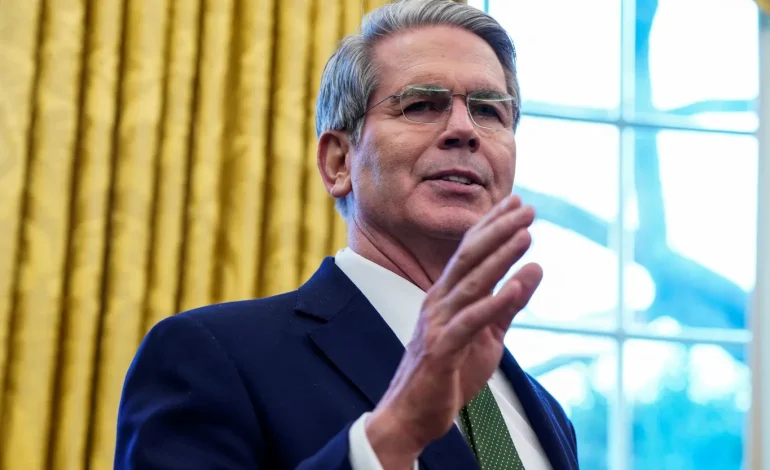

Treasury Secretary Scott Bessent stated Sunday that President Donald Trump’s proposed tariffs are not expected to raise inflation, arguing that China will absorb the costs rather than passing them on to consumers.
Bessent’s comments come ahead of the scheduled implementation of the tariffs on Tuesday. Under the plan, the US will impose 25% tariffs on imports from Mexico and Canada and an additional 10% duty on Chinese imports, following a previous 10% tariff imposed in February.
Some economists have raised concerns that the tariffs could drive up costs for businesses and consumers, potentially keeping interest rates high into 2026. However, Bessent dismissed these fears during an interview on CBS’ Face the Nation, stating that China’s economic strategy would prevent inflationary effects in the US.
“Well, we don’t know yet because it’s path-dependent,” Bessent said, “but what I can tell you is that I’m not worried about China. China will pay for the tariffs because their business model is exporting their way out of this inflation.”
“They will eat any tariffs that go on,” he added.
Despite Bessent’s confidence, China’s Ministry of Commerce strongly opposed the tariff increases, vowing to take retaliatory measures if necessary. Following the February tariff hike, China responded by increasing duties on US energy imports and adding two American companies to its “unreliable entities” list. Trade experts suggest that similar countermeasures may follow.
“If the US insists on its own way, China will take all necessary countermeasures to defend its legitimate rights and interests,” a Chinese Ministry of Commerce spokesperson previously told CNBC.
In addition to discussing China, Bessent addressed the US’s trade relationships with North American partners. He revealed that Mexico has offered to match US tariffs on Chinese imports, potentially reducing the impact of the new duties on Mexico’s exports to the US.
However, when asked whether Canada would follow suit, Bessent said no commitment had been made yet.
“We’ll see. The Mexican leadership has offered to do that,” he said. “We haven’t heard from the Canadians, but I think that would be a very good start.”
Bessent suggested that formal announcements from both countries could come on Tuesday, when the tariffs are set to take effect.
While the administration maintains that tariffs will not fuel inflation, many American businesses are bracing for increased costs.
Entrepreneurs who rely on Chinese manufacturing for their products—ranging from Catholic goods and silk sleepwear to kitchen appliances—say they are already feeling the strain. Some report that Chinese suppliers are not absorbing costs and that their businesses are forced to either increase prices or accept lower profit margins.
For example, Julianna Rae, a Massachusetts-based luxury sleepwear company, said that while China remains the best location for silk production, the new tariffs may force them to raise prices on their $300 silk pajamas.
“We don’t have an alternative,” said co-owner Bill Keefe. “The best machinery and expertise are in China.”
Similarly, small business owners like Erica Campbell, who imports religious-themed baby blankets and other goods, worry about long-term unpredictability.
“I can’t figure out what is going to happen,” Campbell said. “I am on high alert.”
The New York Times and CNBC contributed to this report.


The latest news in your social feeds
Subscribe to our social media platforms to stay tuned