




The snap election follows the implosion of a four-party right-wing coalition formed after the 2023 election, when Wilders’ PVV led the vote and joined forces with the Farmer-Citizen Movement (BBB), New Social Contract (NSC), and the People’s Party for Freedom and Democracy (VVD).
That alliance unraveled in June, after Wilders pulled out over immigration policy disputes. The PVV had demanded border closures for new asylum seekers and automatic deportation of dual nationals convicted of crimes, measures the other partners refused to endorse.
“He chooses his own ego and his own interests,” VVD leader Dilan Yesilgoz said at the time. “He throws away the chance for a right-wing policy.”
After the PVV’s exit, independent Prime Minister Dick Schoof resigned, prompting new elections. The chaos deepened in August, when NSC’s foreign minister Caspar Veldkamp quit after losing cabinet support for proposed sanctions on Israel over Gaza, leading more NSC members to walk away.
According to an EenVandaag poll from October 14, the PVV is projected to win 31 of the 150 seats in parliament, ahead of the centre-left Green–Labour alliance (GroenLinks–PvdA) at 25 seats, and the Christian Democratic Appeal (CDA) at 23.
The VVD is expected to tumble to 14 seats, and the agrarian BBB to just four. The NSC, once a rising force, may fail to enter parliament entirely.
Forming a governing majority requires 76 seats, meaning another coalition is inevitable.
Immigration has become the defining issue of the campaign. In a recent poll of over 27,000 respondents, half said immigration would be their top voting concern, followed by housing (46%) and “Dutch identity” (37%).
The PVV has capitalised on this sentiment with calls for stricter asylum laws and tighter border controls, while GroenLinks–PvdA proposes a moderate intake of 40,000–60,000 migrants per year.
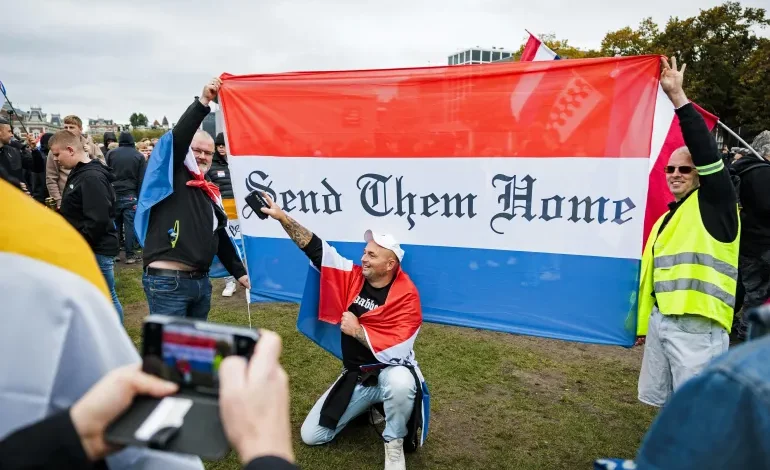
Tensions have spilled into the streets. Last month in The Hague, an anti-migration protest organised by right-wing influencer “Els Rechts” turned violent, with protesters throwing stones, burning a police car, and smashing the offices of the liberal Democrats 66 (D66) party.
“They’ve managed to construct this idea of a ‘migration crisis’, and that distracts attention away from populism, arms trades, and the erosion of social services,” said Esme Smithson Swain of MiGreat, a migrant-rights NGO.

The latest news in your social feeds
Subscribe to our social media platforms to stay tuned