



Wyoming’s Race to Stop Cheatgrass from Turning Sagebrush Country into a Tinderbox
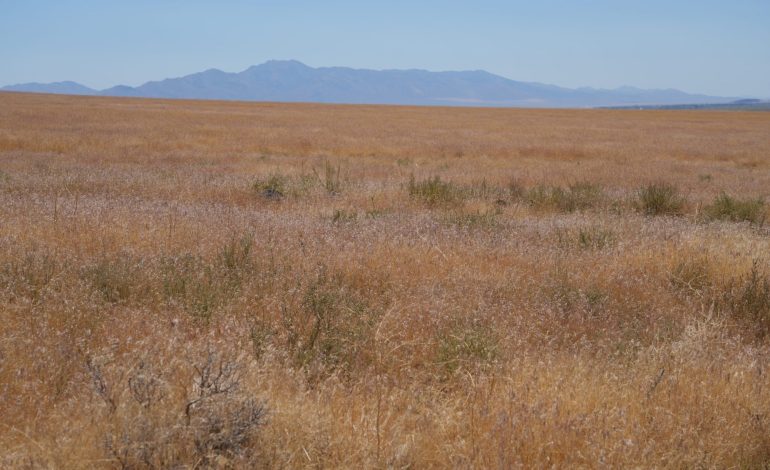


Brian Mealor was standing on the prairie east of Buffalo, but his mind was 600 miles away — in a burned-out corner of northern Nevada that still haunts him, Oil City News reports.
In the scar of the Roosters Comb Fire, he’d walked through a landscape where almost nothing remained but one plant.
“Literally everything you see is cheatgrass,” he remembered. “I just stood there, depressed.”
Mealor, who runs the University of Wyoming’s Institute for Managing Annual Grasses Invading Natural Ecosystems, already knew how destructive the Eurasian grass could be. But seeing 220,000 charred acres taken over by a solid carpet of cheatgrass — no wildflowers, no shrubs, barely even other weeds — was like looking at Wyoming’s possible future.
“The mule deer and other wildlife there? They’ll just die, because there’s nothing there,” he said. “That’s why we have to do stuff. Because we could turn into that.”
Across Wyoming, scientists, ranchers, county weed districts and state officials are throwing everything they’ve got at cheatgrass and its fellow invaders: Japanese brome, medusahead and ventenata.
They’ve got some serious tools:
- A breakthrough herbicide that can knock cheatgrass back for several years.
- Tens of millions of dollars in state and federal funding to spray and restore land.
- A growing network of local restoration teams, like the Johnson County Natural Habitat Restoration Team.
And yet, even with all that, they’ll tell you straight: Wyoming is still losing.
“Let’s not kid ourselves,” said Bob Budd, head of the Wyoming Wildlife and Natural Resource Trust. “The magnitude of the need is utterly staggering. We’re talking hundreds of millions of dollars over the next decade. That’s daunting.”
Cheatgrass and other annuals already affect roughly a quarter of Wyoming’s landmass — more than 16 million acres. And the clock is ticking on some of the best wildlife habitat left in North America.
A recent study co-authored by Mealor found that cheatgrass, which is only really edible in the spring, could cost northeast Wyoming’s struggling mule deer half their habitat within a couple of decades.
On a November field trip, Mealor and a group of biologists and volunteers walked through the scar of the House Draw Fire near Buffalo. Just 18 months earlier, this was some of the best remaining sagebrush in northeast Wyoming.
Then, in August 2024, a lightning storm ignited a blaze that tore a 10-mile-wide, nearly 60-mile-long swath across the Powder River Basin. In two days, more than 100,000 acres of core sage grouse habitat — including 18 active leks — went up in flames.
Now, instead of a sagebrush sea, much of the area is golden grassland. Some of it is native grass. Too much of it is cheatgrass and Japanese brome.
“It’s not like you have a fire and all of a sudden you’re completely covered with cheatgrass,” Mealor said. “There’s a lag.”
The Johnson County restoration team is trying to use that lag to their advantage. With $12 million in state funding, they’re:
- Aerially spraying about 120,000 acres with a cheatgrass-killing herbicide;
- Aerial-seeding sagebrush on 3,000 acres of key sage grouse nesting habitat;
- Building hundreds of simple erosion-control structures to protect wet meadows inside the burn.
But zoom out and the challenge is enormous. About 500,000 acres burned in northeast Wyoming in 2024 — the state’s second-biggest fire year on record. Lawmakers put up $49 million for wildfire recovery grants statewide, less than half what Gov. Mark Gordon asked for.
“It sounds like a lot of money, and it is,” Mealor said. “But if you think about it from a statewide level, it’s not a lot. Cheatgrass is spreading almost everywhere in a state that’s 62 million acres.”
Gordon, a rancher himself, warned legislators that Wyoming is “losing the battle” against invasive annual grasses. He asked for $20 million just for cheatgrass spraying; the final budget gave him less than half.
The stakes go far beyond one burned basin.
Wyoming sits at the heart of the sagebrush-steppe, an iconic 13-state ecosystem that’s disappearing at more than 1.3 million acres a year.
“Half of the best of the best is in Wyoming,” said Corinna Riginos, science director for The Nature Conservancy in Wyoming.
She’s leading a project aimed at protecting the Greater Yellowstone Ecosystem from cheatgrass, especially the “Golden Triangle” southwest of the Wind River Range — home to:
- Some of the largest unbroken sagebrush tracts left on Earth;
- The world’s biggest sage grouse lek;
- The longest known mule deer migration.
Her strategy: defend the core. Focus on catching and killing cheatgrass while it’s still at low levels in pristine areas, rather than sinking massive resources into extremely degraded landscapes.
“Maybe we live with what they are, we cope with it, rather than trying to recover from it,” she said of heavily cheatgrass-dominated places.
In other words: some areas may already be too far gone to bring back to historical sagebrush. The priority now is keeping the best of what’s left from sliding into that same fate.
Cheatgrass isn’t just another weed; it’s almost perfectly designed to hijack western rangelands.
- It germinates in the fall, grows through chilly weather and gets a head start on native grasses and flowers.
- By early summer it’s already dropped huge amounts of seed and died.
- Its dry stems and seedheads create a thick carpet of fine fuel that burns hot and often.
When these cheatgrass-infested areas burn, they tend to come back with even more cheatgrass. That makes them more likely to burn again — a vicious feedback loop that slowly replaces sagebrush and perennial grasses with a flammable monoculture.
Climate change is stacking the deck further in its favor. Warmer temperatures and more disturbance mean cheatgrass seeds are getting into places that used to be too cold, too high or too harsh.
Areas like the Bighorn Basin, the edges of the Red Desert and the transition zones between salt desert and sagebrush are now seeing cheatgrass move in.
“I feel that this is the most existential, sweeping threat to our western ecosystems,” Riginos said. “I don’t want to see the West become a wasteland of cheatgrass. It really concerns me.”
Not all the news is bad.
In some places, especially in western Wyoming, the tide has actually turned — thanks in large part to a new herbicide called Indaziflam, sold under the trade name Rejuvra.
Sublette County Weed and Pest District used it aggressively along the western front of the Wind River Range and around Boulder Lake, where cheatgrass had started creeping into classic sagebrush country. In 2018, they sprayed about 30,000 acres from the air.
By 2020, District Supervisor Julie Kraft said, they weren’t detecting cheatgrass at Boulder Lake at all.
“With this new tool, especially with the influx of federal money, we were able to do so much more,” she said. “A couple of years ago, I might not have felt this optimistic.”
Indaziflam works differently than older herbicides:
- It targets the seedbank and shallow roots of cheatgrass.
- It doesn’t penetrate deep enough to kill most perennial natives, like sagebrush and bunchgrasses.
- Over a few years, it can almost wipe out the cheatgrass seed reserve in treated areas.
“We’ve seen that on our sites,” Kraft said. “Year one, you can grab handfuls of cheatgrass seeds off the soil. Year two, you can’t. By year three, you can’t dig them out from the bottoms of sagebrush.”
On the Wind River Reservation’s Washakie Park, strips sprayed nearly four years ago still stand out: untreated bands glow purple with cheatgrass, while treated strips are dominated by native green grasses.
“It’s holding still,” said Aaron Foster, Fremont County’s weed and pest supervisor. “Four growing seasons now. Pretty impressive.”
The catch? Cost.
At roughly $40+ per acre in product alone, Rejuvra is far more expensive than the helicopter time used to apply it. Districts are forced to be ruthless about where it goes:
- High-value, low-infestation areas — like foothills of the Absarokas and Winds, or intact sagebrush near the Red Desert — are top priority.
- Heavily invaded, disturbed landscapes often slip down the list.
“I think you have to kind of accept that we’re going to have cheatgrass forever,” Foster said. “And some areas are going to be hit hardest forever, too.”
Out on the House Draw Fire scar, the plan isn’t just to spray and walk away.
Before dropping millions of dollars of Indaziflam on the blackened hills, restoration crews paused. They wanted to see what came back on its own — and where cheatgrass and Japanese brome were really taking over.
“If we’d sprayed everything immediately, without knowing what perennial vegetation survived, we could’ve just had bare ground for four or five years,” said Jaycie Arndt, a UW researcher.
Now, they’re seeing cheatgrass and brome in plenty of spots, but also healthy patches of native grasses like western wheatgrass and blue grama — key allies in the fight. Strong perennial grasses can help resist reinvasion.
“Sometimes the focus needs to be more on maintaining and increasing our perennial grasses and forbs as competitors,” said longtime cheatgrass researcher Jeanne Chambers.
She calls cheatgrass “naturalized” in many western landscapes: it’s not going away completely, but native plants can still hold the line.
The state is also trying something new and risky: aerial seeding of sagebrush over the burn — a technique never tried at this scale in Wyoming. Roughly $2.5 million has gone into spreading sagebrush seed from aircraft across key parts of the fire scar.
Results so far? Humbling.
Monitoring plots show only about one sagebrush seedling per acre after the first year.
“This whole thing was an experiment,” said Wyoming Game and Fish habitat biologist Todd Caltrider. “There just wasn’t any playbook for aerial seeding sagebrush up here.”
Even in perfect conditions, sagebrush is slow. Individual plants can take decades to mature. Research suggests dense stands of Wyoming big sagebrush might take 200–350 years to fully return after a major fire.
“If that’s the case, of course we’re not seeing much yet,” Mealor said.
Standing in what used to be some of the finest sagebrush in the Powder River Basin, he knows the area may function as grassland for the rest of his life. The hope is simply that it won’t become a solid sheet of cheatgrass.
Wyoming has launched an all-hands effort against a plant that germinates quietly in the fall and changes whole ecosystems in a decade.
There’s:
- A powerful new herbicide slowing the invasion.
- State and federal money backing aerial spraying and restoration.
- Local teams hustling to defend the best remaining sagebrush and heal burned ground.
But the grass keeps coming. Fires keep burning. Budgets fall short.
For people like Mealor, Riginos, Budd and county weed supervisors across the state, the mission is clear, even if the odds are long: keep Wyoming from turning into Nevada’s cheatgrass moonscape.
“We’re not going to eradicate it,” Riginos said. “But we can still decide what the West looks like in 50 years — if we move fast enough and put our resources where they matter most.”



The latest news in your social feeds
Subscribe to our social media platforms to stay tuned