





Set Your Alarms, Wyoming: A Blood Red Lunar Eclipse Arrives at 4 a.m. Tuesday
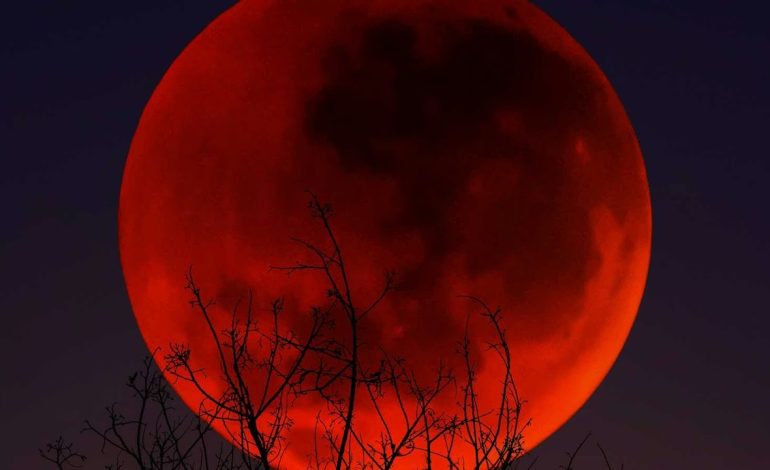

The only total lunar eclipse of 2026 will paint the moon blood-red early Tuesday morning—but only for Wyomingites willing to drag themselves out of bed by 4 a.m. Sleep in, and you’ll miss it entirely.
The March full moon—traditionally called the worm moon—will slip completely into Earth’s shadow a few hours before sunrise on March 3. It’s almost exactly one year since the last total lunar eclipse visible in Wyoming.
“If you’re in eastern Wyoming, sunrise is around 6:15 a.m.,” said Max Gilbraith, planetarium coordinator at the University of Wyoming. “The moon will set before then, which means it’ll set before the eclipse is even finished.”
The penumbral eclipse—the partial shadow—begins around 3 a.m. Totality, when the moon is fully covered by Earth’s darkest shadow, arrives at 4:04 a.m. MST and lasts until 5:03 a.m. That gives early risers nearly an hour to watch the “blood moon” before it sets.
The red color comes from sunlight filtering through Earth’s atmosphere. High-wavelength colors like blue and green scatter before reaching the moon, leaving only deep red behind. Unlike solar eclipses, lunar eclipses are safe to view with the naked eye and can last for hours.
At totality, the moon will be about 30 degrees above the horizon—high enough for a good view, Gilbraith said. “I’m sure many proud ranchers will catch the tail end of it.”
If you miss this one, you’ll wait. Wyoming won’t see another total lunar eclipse until February 2027, when the snow moon will be fully covered.
“Spring is just around the corner,” Gilbraith said, “but the moon actually gets quite high at this time of year.”
The March full moon’s “worm moon” nickname comes from indigenous traditions—it was the last full moon of winter, a sign that worm trails would soon appear in the thawing ground. Less poetic names from history include the “chaste moon,” the “crust coon,” and the “death moon.”
None of that will matter at 4 a.m. Tuesday. What matters is setting the alarm.
“If you don’t want to wait another 13 months for the next lunar eclipse,” Gilbraith said, “set your alarms for this one.”



The latest news in your social feeds
Subscribe to our social media platforms to stay tuned