



Venezuela moves to withdraw from ICC as lawmakers denounce ‘subservient’ court
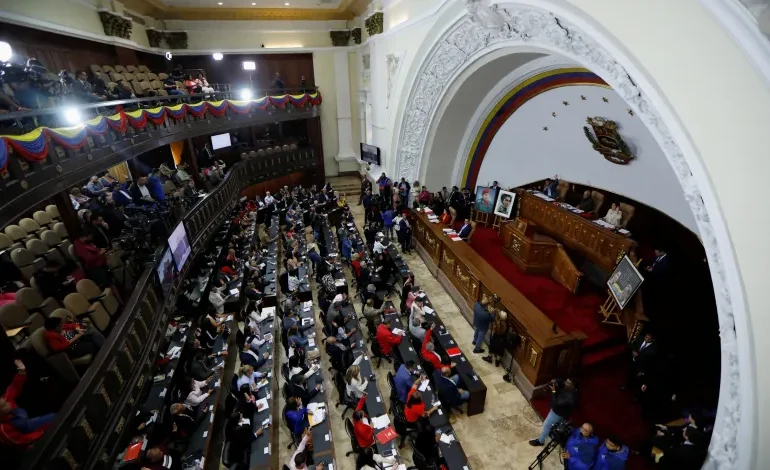

Venezuela’s National Assembly has voted to roll back the country’s commitment to the Rome Statute, the treaty that established the International Criminal Court, in a move that sharply escalates Caracas’s confrontation with international human rights mechanisms.
On Thursday, pro-government lawmakers framed the decision as a rebuke of what they described as a politicised and obsolete institution that has spent years scrutinising alleged abuses under President Nicolas Maduro’s rule.
“It is to demonstrate and denounce to the world the uselessness and subservience of an institution that should serve to protect the people,” National Assembly President Jorge Rodriguez said in a statement released by the government.
Rodriguez, a close Maduro ally and brother of Vice President Delcy Rodriguez, accused the ICC of serving foreign interests.
“It only serves the designs of American imperialism,” he said.
That claim sits awkwardly with reality: the United States is not a party to the Rome Statute and has itself long rejected the ICC’s authority. This year alone, the administration of US President Donald Trump imposed multiple rounds of sanctions on ICC officials, accusing the court of taking “illegitimate and baseless actions”.
Venezuela signed the Rome Statute in 1998 and ratified it in 2000. Maduro is now expected to formally revoke that ratification by signing the legislation approved on Thursday.
The vote comes against the backdrop of a long-running ICC investigation into alleged crimes against humanity in Venezuela. In November 2021, the court opened a probe into claims that Venezuelan authorities committed abuses including torture, sexual violence and other inhumane acts, particularly during the violent suppression of antigovernment protests in 2017.
Although the ICC temporarily paused the investigation to allow Venezuelan authorities to pursue domestic accountability, judges ruled in June 2023 that those efforts were insufficient and allowed the probe to move forward. Venezuela has consistently rejected the allegations, arguing that “there was no systematic attack on the civilian population, and that no crimes were committed”.
Human rights groups dispute that account, accusing the Maduro government of extrajudicial killings, arbitrary detention and violent crackdowns on political opponents. They also question whether Venezuela’s National Assembly can act independently, given the ruling party’s dominance over the legislature.
The withdrawal vote also follows the ICC’s recent decision to shut down its Caracas office, which had been opened in 2024 to support the investigation. On December 1, prosecutor Mame Mandiaye Niang said that achieving “real progress” had proven difficult.
“Being aware of the need to manage our limited resources effectively, we have decided to close our office in Caracas,” Niang told an assembly of state parties. Venezuela’s foreign ministry swiftly denounced the move.
The Rome Statute currently has 125 member states and gives the ICC jurisdiction over war crimes, crimes against humanity, genocide and aggression. But the court has long been criticised for its limited enforcement power. Major global players, including the US, China and Russia, are not members.
Israel is also not a party, despite arrest warrants issued for Prime Minister Benjamin Netanyahu and former Defence Minister Yoav Gallant over alleged war crimes against Palestinians, warrants that remain unenforced.
In its 23-year history, the ICC has issued 61 arrest warrants, detained 22 suspects and secured 13 convictions, with four acquittals. Dozens of suspects have evaded arrest or died before facing trial.


The latest news in your social feeds
Subscribe to our social media platforms to stay tuned