





France’s fragile government cleared another parliamentary hurdle this week after Prime Minister Sebastien Lecornu survived two no-confidence votes, buying time but not stability as a bruising budget fight approaches.
The motions, filed by the far-right National Rally and the hard-left France Unbowed, were aimed at protesting the European Union’s long-delayed trade agreement with the South American bloc Mercosur. Both parties accused the government of failing to block the deal, despite vocal opposition from Paris.
Last week, EU member states approved the signing of the agreement with Argentina, Bolivia, Brazil, Paraguay and Uruguay, ending more than two decades of negotiations. France opposed the pact but was ultimately outvoted, a defeat seized upon by both political extremes at home.
“Inside the country, you are a government of vassals serving the rich. Outside, you are humiliating our nation before the European Commission and the US empire,” said Mathilde Panot, addressing lawmakers ahead of Wednesday’s votes.
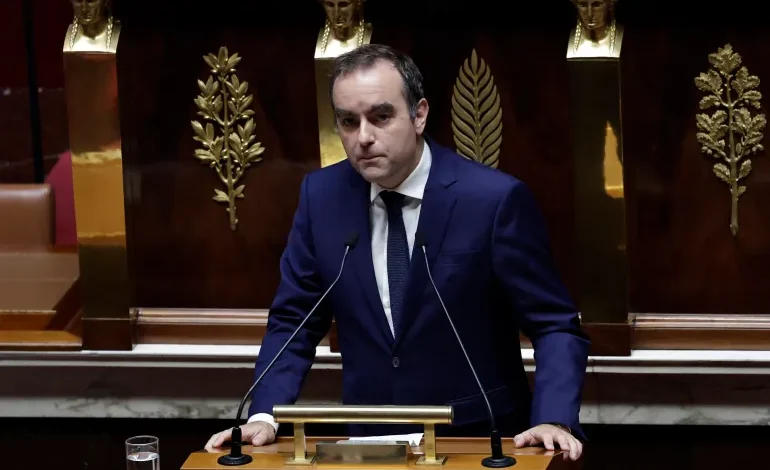
Lecornu pushed back forcefully, accusing his opponents of political sabotage at a moment of economic vulnerability.
“You are acting like snipers lying in wait, firing into the executive’s back at the very moment when we must confront international disruptions,” he told parliament, arguing that the no-confidence motions were distracting from urgent negotiations over France’s 2026 budget.
In the end, neither motion came close to success. The one introduced by France Unbowed secured 256 votes, falling 32 short of the threshold required to bring down the government. The National Rally’s motion fared far worse, drawing just 142 votes.
Crucially, the Socialist Party had already ruled out supporting either motion, while the conservative The Republicans also declined to back a censure vote over the Mercosur deal.
With the immediate threat neutralised, attention now shifts to the budget, where the real danger lies. Government sources say Lecornu is preparing for tough negotiations and has not ruled out invoking Article 49.3 of the Constitution, a controversial mechanism that allows the government to pass legislation without a parliamentary vote.
That option would almost certainly trigger fresh no-confidence motions, but lawmakers across the political spectrum are showing signs of exhaustion after weeks of budget paralysis. Some appear willing to tolerate a deficit hovering near five percent if it brings an end to the standoff.
Government spokeswoman Maud Bregeon said earlier this week that “nothing is excluded” when it comes to passing the budget.
France, the eurozone’s second-largest economy, is under mounting pressure to rein in its public finances. But political instability has repeatedly derailed those efforts since President Emmanuel Macron’s snap election in 2024 produced a hung parliament.



The latest news in your social feeds
Subscribe to our social media platforms to stay tuned