






NBC Sports, Axios, and CBS News contributed to this report.
The fight over who controls the fast-growing world of prediction markets just escalated – straight into federal court.
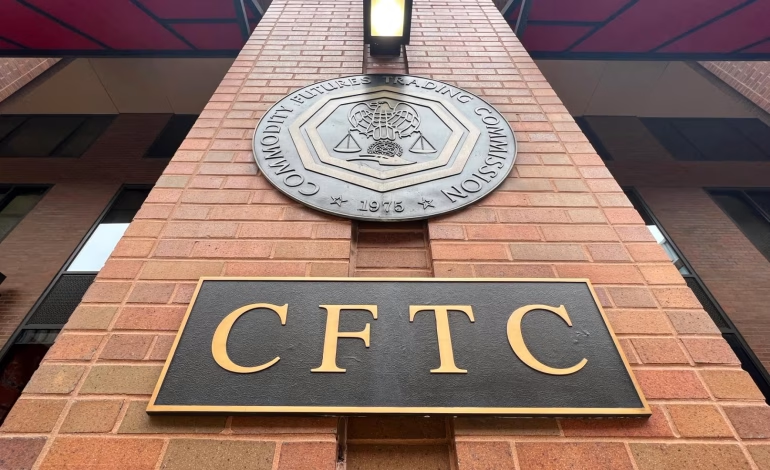
The Commodity Futures Trading Commission is suing Arizona, Connecticut, and Illinois, accusing them of overstepping their authority by trying to regulate platforms like Kalshi and Polymarket. The agency’s stance is blunt: these markets fall under federal jurisdiction, and states need to back off.
This clash has been building for a while. Prediction markets – where users bet on outcomes ranging from elections to sports to global events – have exploded in popularity, blurring the line between finance and gambling. Think sports betting, but broader, faster, and wrapped in financial jargon.
States see something else. To them, it looks a lot like unlicensed gambling.
All three states had already moved against these platforms. They issued cease-and-desist orders, and Arizona even filed criminal charges against Kalshi, arguing the company violated state gambling laws, including bans on betting tied to elections.
The CFTC isn’t having it.
Chairman Michael Selig said Congress deliberately avoided a state-by-state system for these kinds of markets, warning that a patchwork approach could open the door to fraud and inconsistent consumer protections. In other words, one rulebook – not fifty.
State officials aren’t backing down either. Connecticut’s attorney general pushed back hard, calling the federal position a recycled industry argument and insisting the platforms clearly fall under existing gambling laws.
Behind the legal language is a much bigger question: who gets to regulate this new corner of the betting economy?
The stakes are high. Companies like Kalshi and Polymarket have pulled in serious investment, and their reach is growing – especially in states where traditional sports betting apps from giants like FanDuel and DraftKings still face restrictions. Prediction markets offer a workaround, and that hasn’t gone unnoticed.
At the same time, lawmakers in Washington are eyeing tighter rules, including potential bans on bets tied to elections, wars, and even sports. That adds another layer of uncertainty to an already messy situation.
For now, the industry feels a bit like the early days of online sports betting – fast growth, fuzzy rules, and everyone trying to stake their claim before the dust settles.
The courts will likely decide where the lines get drawn. Until then, the tug-of-war between states and the federal government is only getting more intense.



The latest news in your social feeds
Subscribe to our social media platforms to stay tuned