





With input from Bloomberg and Reuters.
Siemens is sending a blunt message to Brussels: tighten the screws too much on AI, and the money will go somewhere else.
The German industrial giant is warning that Europe’s current approach to regulating artificial intelligence could push companies to shift spending outside the region, just as the global race for AI dominance heats up. The concern isn’t abstract – executives are already weighing whether future investments make more sense in places with fewer restrictions.
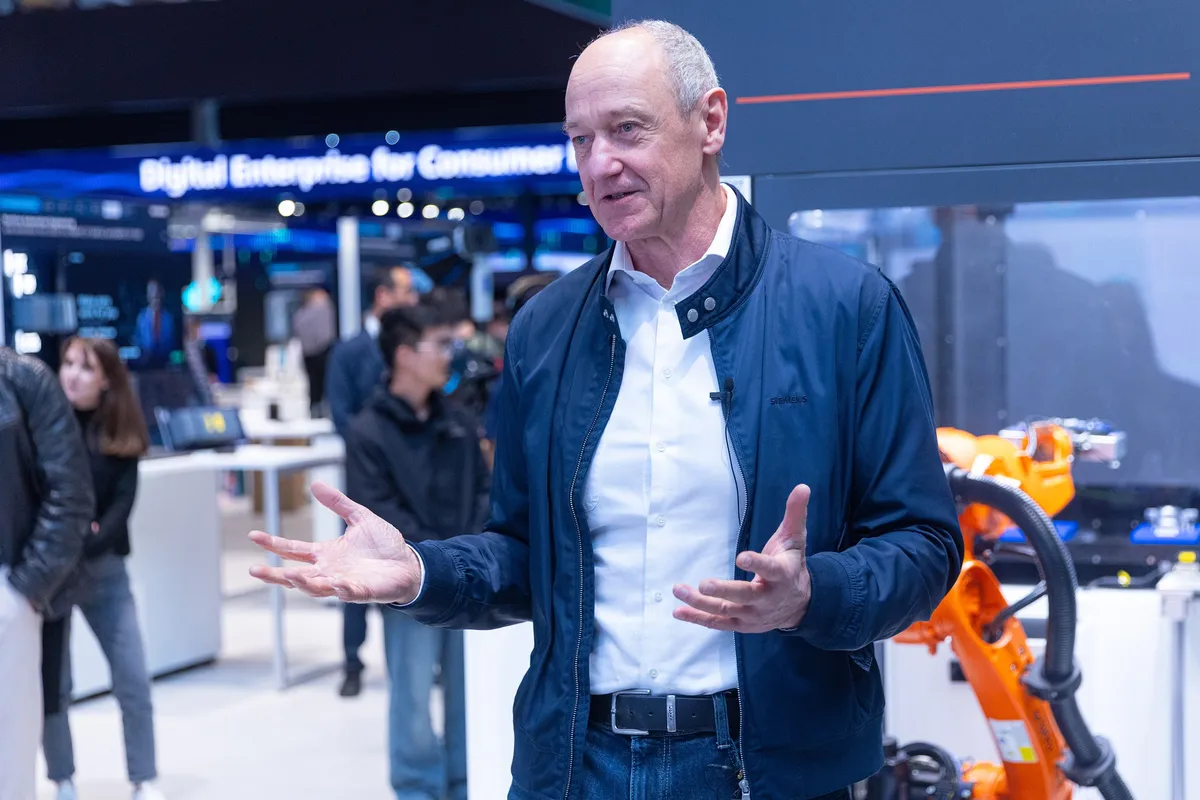
Pressure is building from Berlin as well. Friedrich Merz made it clear over the weekend that he wants breathing room for industrial AI, arguing that the same rules shouldn’t apply across the board. Speaking at Hannover Messe, he called the EU framework a “straightjacket” that risks slowing innovation where it matters most: factories, supply chains, and heavy industry.
His pitch is straightforward. Let companies use AI more freely in industrial settings, where the focus is efficiency – cutting costs, improving productivity, squeezing more out of existing resources. That’s where Europe could still compete.
The timing isn’t accidental. The European Union is trying to carve out its own path on AI, but it’s doing so while the US and China pull ahead with massive investment and looser regulatory environments. Germany, in particular, is eager to close that gap and keep high-value tech jobs at home.
Berlin has already outlined plans to ramp up AI computing capacity sharply by 2030. But ambition alone won’t be enough if companies decide the regulatory costs are too high.
For Siemens and others, the calculation is getting simpler: build where the rules allow you to move fast. Europe now has to decide how much friction it’s willing to tolerate before that investment starts slipping away.



The latest news in your social feeds
Subscribe to our social media platforms to stay tuned