



UAE Walks Away from OPEC as Oil Turmoil Rocks Gulf Alliances

With input from the Washington Post, CNN, CNBC, FOX Business, and Reuters.
The United Arab Emirates is breaking ranks. In a move that’s been rumored for years but still lands with force, the country said it will leave Organization of the Petroleum Exporting Countries and the wider OPEC+ group starting May 1 – right as global oil markets are on edge.
Officials framed the decision as strategic, not reactive. Energy minister Suhail Al Mazrouei described it as a “sovereign” choice tied to long-term priorities. Behind that language sits a simple reality: the UAE wants more freedom to pump, trade, and expand its energy footprint without being tied to production quotas set largely by Saudi Arabia.
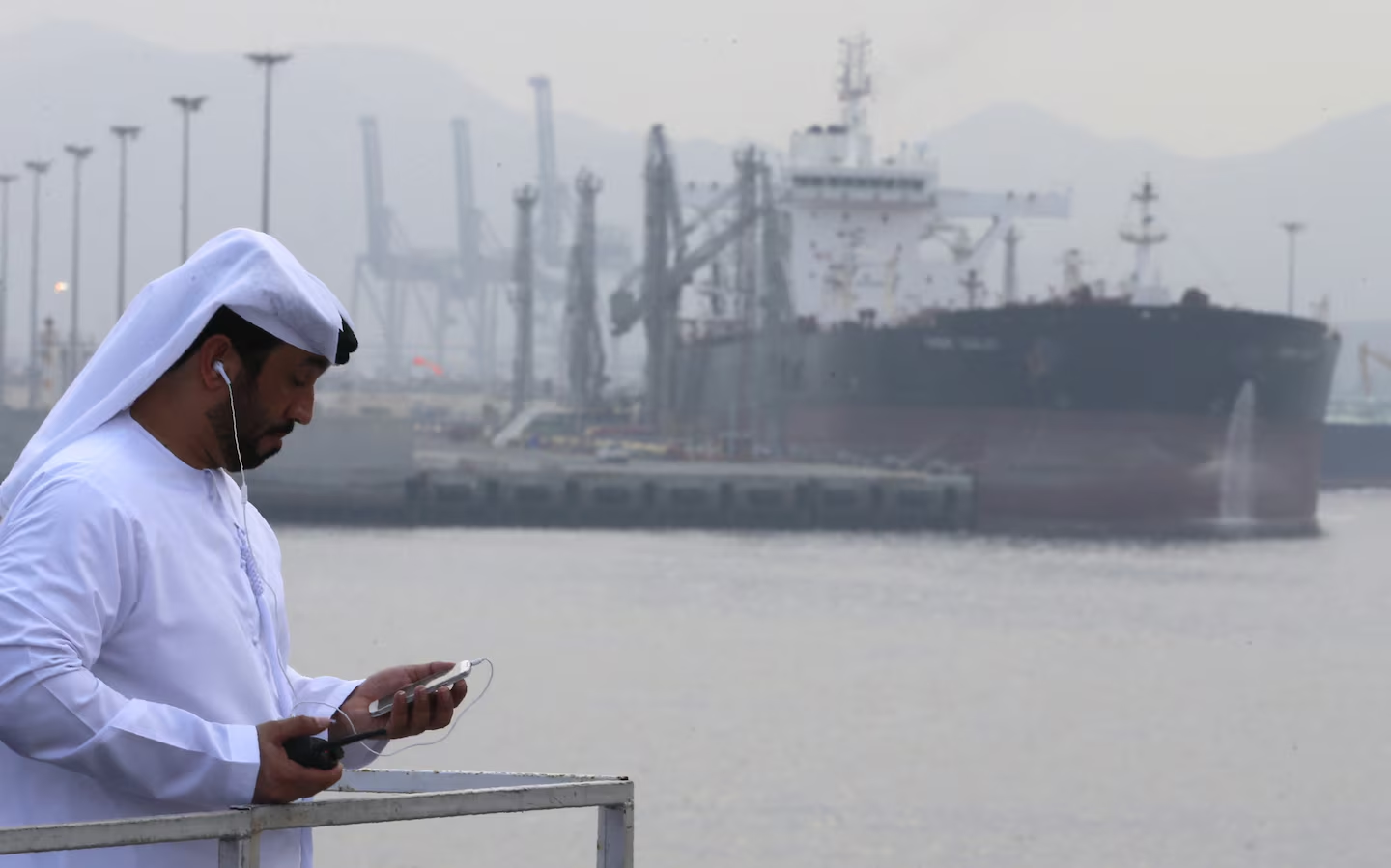
Timing, though, is everything. The exit lands in the middle of a supply shock triggered by the Iran war, with the Strait of Hormuz repeatedly disrupted. That narrow waterway usually carries about a fifth of the world’s oil and gas. When it clogs up, prices jump – and suddenly OPEC’s ability to manage supply looks a lot shakier.
That’s part of the problem for the group. OPEC has long relied on coordinated production cuts to steer prices. Lose a heavyweight producer like the UAE – one of its top three – and that coordination gets harder. The cartel doesn’t collapse overnight, but the cracks widen.
For Washington, the shift carries a bit of irony. Donald Trump has spent years blasting OPEC as a price-fixing “monopoly.” Now, as global markets reel from war-driven volatility, one of the group’s key members is stepping away, potentially loosening its grip on prices.
The UAE’s calculus looks different from some of its neighbors. Oil still matters, a lot. But the country isn’t as dependent on high prices to balance its books. Over the past decade, it has poured money into sectors like logistics, tourism, and increasingly, artificial intelligence. That diversification gives it breathing room – and a reason to prioritize flexibility over coordination.
There’s also friction inside the Gulf. Tensions between Abu Dhabi and Riyadh have been simmering, especially over production targets and regional politics. Disagreements spilled into the open earlier this year, including competing interests in Yemen. None of that disappears overnight, and the OPEC exit only sharpens the divide.
Leaving the group also means fewer constraints. Without quotas, the UAE can ramp up output when it wants, chase market share, and respond faster to shifts in demand. That’s appealing at a time when supply routes are unpredictable and countries are scrambling to secure energy flows.
Still, the risks are real. OPEC’s power has always come from unity. Each departure chips away at that. Qatar left in 2019. Now the UAE follows. If others start questioning the benefits of membership, the group’s influence could erode further.
For now, the UAE is betting on independence. Oil markets are volatile, alliances are shifting, and the old playbook isn’t holding up the way it used to. Walking away from OPEC doesn’t solve those problems – but it does give Abu Dhabi more control over how it navigates them.



The latest news in your social feeds
Subscribe to our social media platforms to stay tuned