
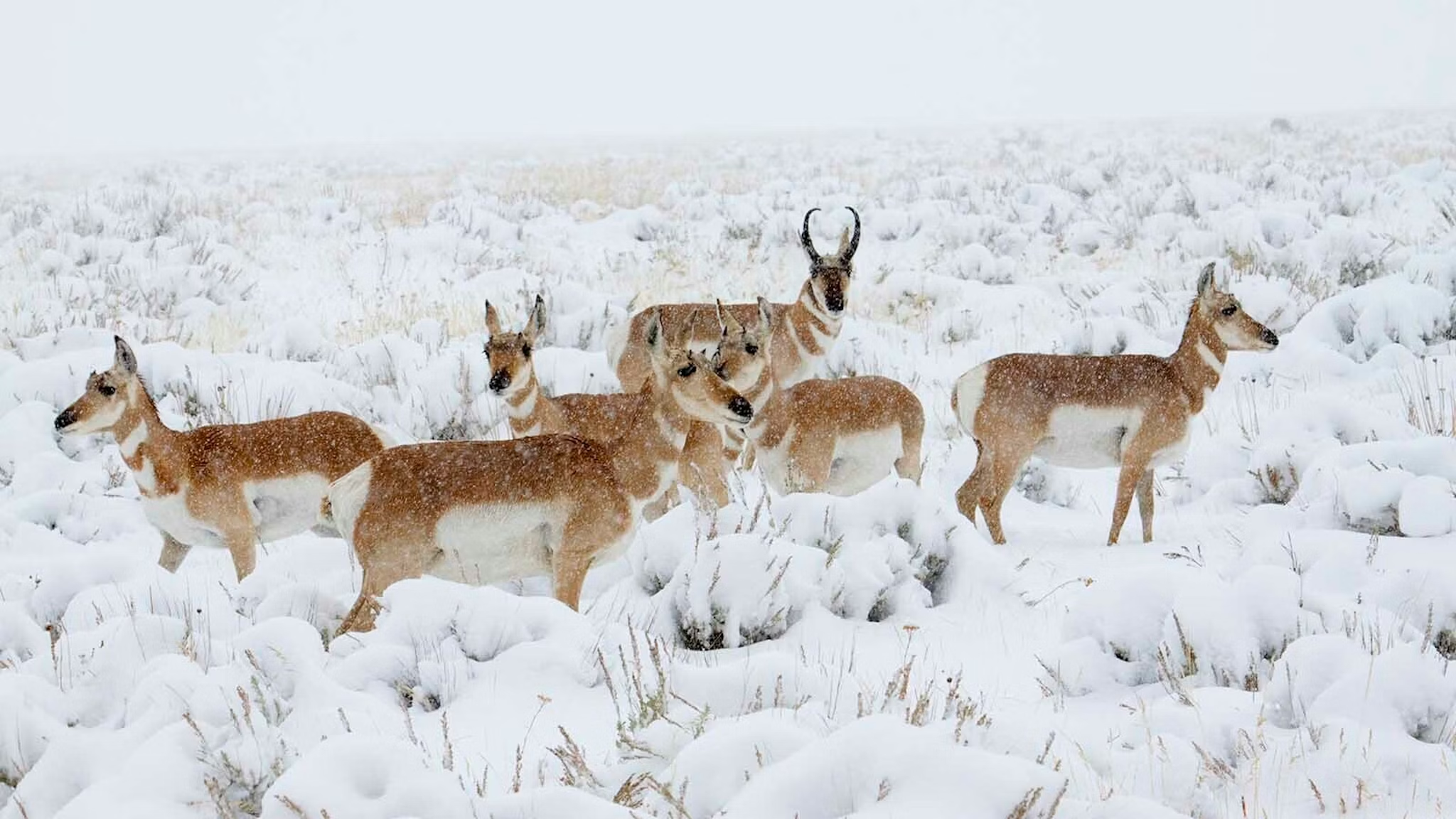
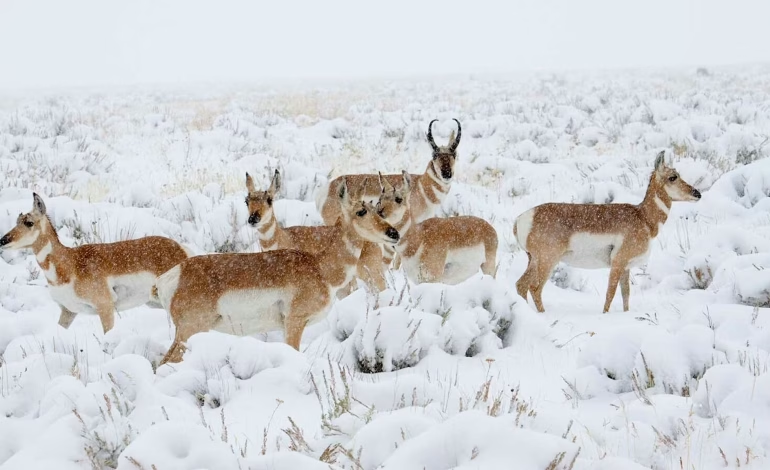

The winter of 2022-2023 was a massacre. Tens of thousands of deer, pronghorn, and elk perished across Wyoming. The prized Wyoming Range mule deer herd was practically wiped out. For two men who watched the disaster unfold from their own backyards, the loss was unbearable—and it demanded action.
Zach Key of LaBarge and Vance McGahey of near Kemmerer have now co-founded a new sportsman-driven conservation group. At its first fundraising event last month in Big Piney, 496 people showed up and raised roughly $250,000. “It really lit a fire in me,” Key says. McGahey recalls, “I didn’t feed my cattle, I fed the elk. I kept those cow elk alive through that winter.”
The group, called the Wyoming Hunting and Fishing Expo, operates on a strict 90-10 principle. It is entirely volunteer-run, with no paid employees allowed. Ninety percent of all money raised goes directly to on-the-ground conservation projects in Wyoming; the remaining 10% covers operating expenses. Key and McGahey, both energy industry workers, deliberately aim for blue-collar hunters and anglers—not wealthy benefactors. “Those guys who are making maybe 125K a year, working their asses off,” Key says.
Their model is not new but proven. The Gillette-based Wyoming Sportsman’s Group has used the same all-volunteer, 90-10 approach for 11 years, growing from a small banquet to events drawing 1,200 people. Founding member Holly Tate says the key to avoiding burnout is simple: “We believe in our cause.”
Established groups like the Wyoming Wildlife Federation (WWF) welcome the newcomers. Executive director Craig Benjamin calls the quarter-million-dollar launch “impressive” and says, “The more the merrier.” WWF focuses on political lobbying; other groups handle habitat work. Benjamin notes that conservation today demands more than just buying a license. Hunters and anglers should expect to put in time, sweat equity, or direct donations.
The need is endless: old fences blocking migration routes need removal, winter range needs protection, and herds need time to recover. Key is blunt about the challenge of volunteer labor: “Everybody wants things fixed, but nobody wants to do the work. We’ll show up to a project, and it’s the same five or six dudes every time.”
Still, the success of the first event suggests that after the brutal winterkill, Wyoming’s sportsmen are ready to move beyond grief and into action. As Key puts it, the goal is simple: “Put as much money on the ground as possible.” For the deer, elk, and antelope that survived, that ground cannot be reclaimed soon enough.


The latest news in your social feeds
Subscribe to our social media platforms to stay tuned