



UK fights to uphold ban on Palestine Action after court setback

The UK government is moving to overturn a High Court ruling that found its ban on Palestine Action unlawful, escalating a legal battle that now sits at the intersection of national security law and protest rights.
A two-day hearing at the Court of Appeal in London begins Tuesday, following a February decision in which judges described the government’s move to classify the activist group as a terrorist organisation as “disproportionate”. That ruling dealt a significant blow to the state’s case, but did not lift the ban. For now, supporting Palestine Action remains illegal while the appeals process plays out.
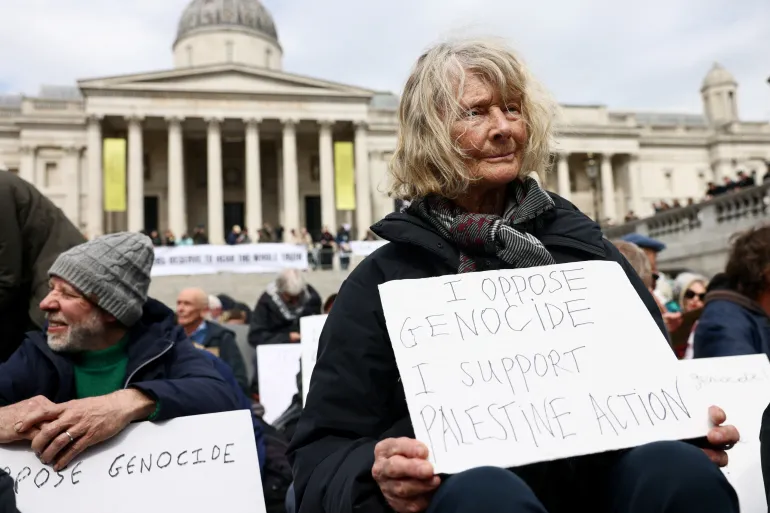
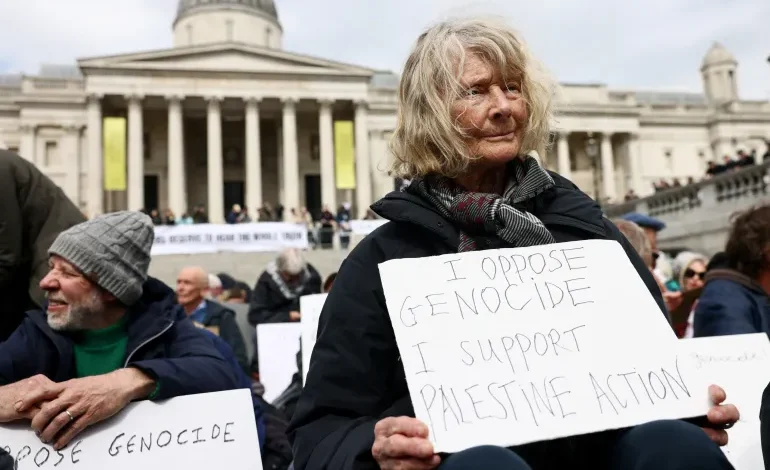
The case is the latest chapter in a broader confrontation between authorities and a network known for targeting companies linked to the Israeli military. Since the ban was introduced last summer, the response on the ground has been both sustained and highly visible. Thousands of people across the UK have taken part in coordinated civil disobedience, with more than 2,700 arrests made under terrorism legislation, often tied to simple acts such as displaying signs reading, “I oppose genocide. I support Palestine Action.”
That gap — between the legal classification of the group and the nature of many of the protests — has become central to the controversy.
Even after the High Court ruling, enforcement has remained fluid. London’s Metropolitan Police initially signalled that it was unlikely to arrest supporters in the immediate aftermath of the decision, before reversing course weeks later. Earlier this month, more than 200 protesters were detained in central London.
Support has also extended beyond street protests. A public letter signed by figures including Sally Rooney, Greta Thunberg and Ilan Pappe openly declared backing for the group, stating:
“We oppose genocide, we support Palestine Action.” That position, under current law, carries legal risk.
Palestine Action itself was founded in 2020 by Huda Ammori and Richard Barnard, positioning itself as a direct-action campaign focused on disrupting companies it links to Israel’s military operations. Since the ban, some detained activists — including individuals held on remand and others released on bail — have argued that their treatment amounts to a violation of basic rights, a claim rejected by the Ministry of Justice.
Rights organisations have been particularly critical of the government’s approach. Amnesty International said the UK “continued to use counterterror laws to restrict peaceful protests against the genocide in Gaza and ban the organisation Palestine Action [as] arms exports to Israel continued.” Human Rights Watch framed the issue more broadly, warning: “When the state blurs the line between activism and terrorism, it is not defending security, it is undermining freedom.”
The government, however, has maintained that its actions are justified. In a statement, the Home Office said:
“There are many lawful ways to support the Palestinian cause without being a member or supporter of this harmful organisation.”
At stake in the appeal is not only the legal status of one activist group, but a wider question about how far counterterrorism powers can be extended into the realm of protest. The court’s decision could set a precedent that shapes how similar movements are treated in the future.


The latest news in your social feeds
Subscribe to our social media platforms to stay tuned