





China has formally told its companies and citizens not to comply with US sanctions targeting Chinese refineries accused of processing Iranian oil, marking the first time Beijing has activated its anti-sanctions law in this way.
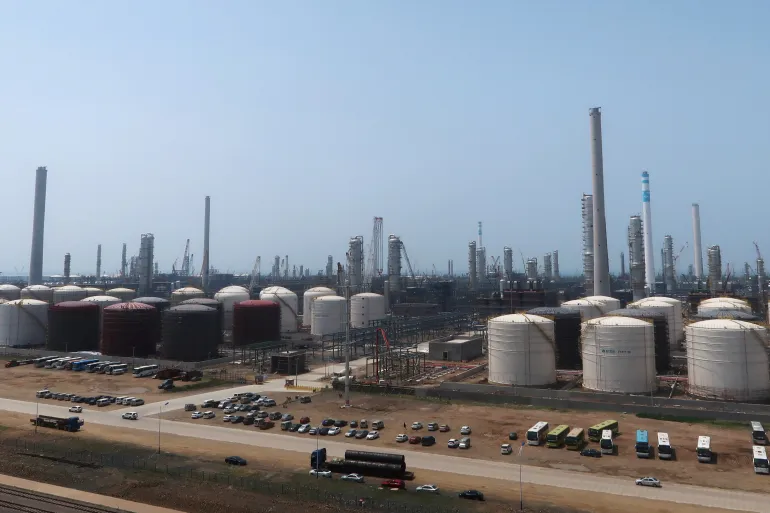
The order, issued by the Ministry of Commerce of China, follows sanctions announced last month by the US Department of the Treasury against several facilities, including Hengli Petrochemical in Dalian — one of China’s largest privately run “teapot” refineries.
In its directive, Beijing said the US measures “shall not be recognised, enforced or complied with”, arguing they improperly restrict normal trade and violate international law. The ministry said the move was necessary to protect China’s “national sovereignty, security, and development interests” as well as the “lawful rights and interests of Chinese citizens”.
“The Chinese government has consistently opposed unilateral sanctions that lack authorisation from the United Nations and a basis in international law,” the statement said.
The US sanctions were framed differently in Washington. The Treasury accused Hengli of generating hundreds of millions of dollars in revenue for Iran’s military through crude purchases, calling it “one of Tehran’s most valued customers”.
The dispute highlights a deeper structural clash. China is Iran’s largest trading partner and its biggest oil buyer, accounting for more than 80 percent of Iranian shipments in 2025, according to Kpler. That makes enforcement of US sanctions — which rely on global compliance — particularly difficult when major economies refuse to participate.
Beijing’s legal mechanism is designed to formalise that resistance. Under the anti-sanctions framework introduced in 2021, Chinese entities affected by foreign restrictions must report them within 30 days. Authorities can then review the case and, if they determine the measures amount to an “unjustified extra-territorial application”, issue an order prohibiting compliance.
The law also creates legal consequences inside China. Companies that follow foreign sanctions and cause losses to others can face lawsuits for compensation, while those that fail to report sanctions exposure risk penalties including fines.
For years, China’s response to US sanctions largely took the form of diplomatic protests and informal pressure. Analysts see this latest move as a shift toward a more institutionalised approach.


The latest news in your social feeds
Subscribe to our social media platforms to stay tuned