


Nikol Pashinyan and the Developing LGBTQ+ Community in Armenia

Two weeks ago, European Commission President Ursula von der Leyen stepped off a plane in the Armenian capital to inaugurate the first-ever EU–Armenia summit. Outside the Karen Demirchyan Sports Complex, protesters pressed against police barricades. The atmosphere was tense, not just because of the political prisoners or the Karabakh question that demonstrators had come to raise. A quieter fault line was running through the whole affair: the fate of Armenia’s LGBTQ+ community in a country that is rushing westward in geopolitics but barely moving on the values that the West claims as its own.
Armenia is living through one of its most dramatic realignments since independence. Prime Minister Nikol Pashinyan has bet his political future on pivoting the country away from Russia and toward the European Union. A Strategic Agenda for the EU–Armenia Partnership was adopted in December 2025. A visa liberalization action plan is underway. The European Peace Facility has channelled €30 million to Yerevan. And Pashinyan has promised that, if re-elected in June, he will call a nationwide referendum on an entirely new constitution.
That constitution is where the trouble starts. The current one, amended in 2015, defines marriage in heterosexual terms only. A new constitution could, in theory, unshackle same-sex couples from that prohibition. The Constitutional Court has never actually confirmed that the existing text bans same-sex marriage, leaving an ambiguity that a fresh document could resolve in either direction. Pashinyan has said nothing publicly about which way he would lean. His silence is a policy.
“Armenia is the only country currently engaged in a visa liberalization action plan with the EU,” the Cypriot presidency of the Council told the European Parliament in late April.
The subtext was clear: Brussels expects reforms, and those reforms include human rights. Yet the government that flies EU flags at state events could not even protect a film screening. In October 2025, the EU Delegation and the German Embassy cancelled public showings of Parada, a Serbian comedy about a gay man, after the Congress Hotel abruptly withdrew its venue. The hotel cited “unidentified pressure.” The EU Delegation called it a symptom of a need for “further awareness on tolerance.”
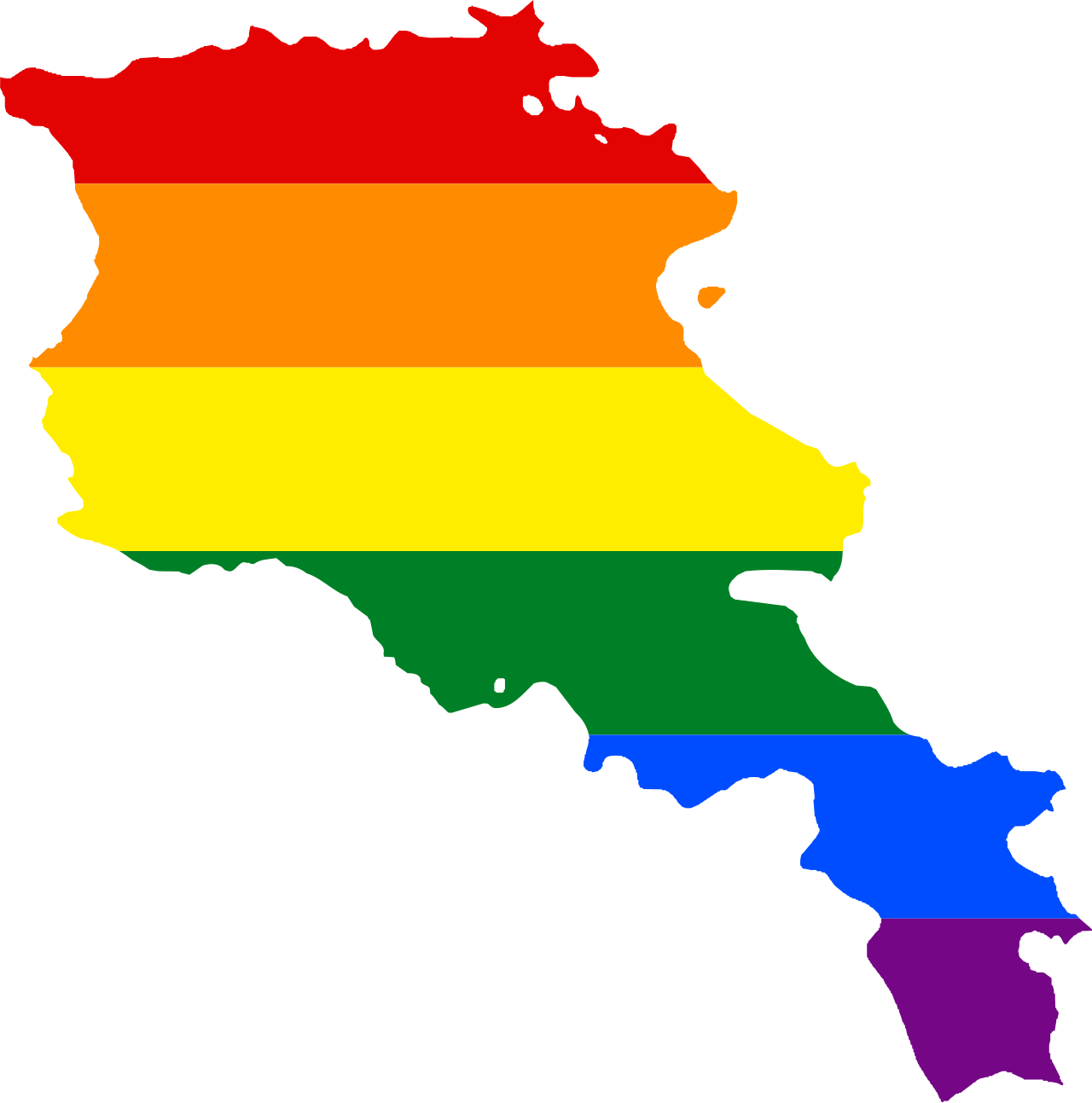
The numbers explain why. Only 3 % of Armenians say their local area is a good place for gay or lesbian people to live, according to a 2024 Gallup survey. A World Values Survey found that nearly 93 % of Armenians consider homosexuality “not justifiable.” And 82 % would not want a homosexual as a neighbour. Armenia sat dead last in ILGA-Europe’s 2026 Rainbow Map, alongside Belarus, Turkey, Azerbaijan, and Russia.
This is the electorate Pashinyan faces. His core voters are not the cosmopolitan youth of Yerevan’s Cascade district. They are families in the regions who depend on the social support his government provides, who watch the news on pro-government channels, and who regard the Armenian Apostolic Church as the guardian of national identity. The Church, led by Catholicos Karekin II, has been unambiguous: it sees any concession to LGBTQ+ activism as a betrayal of Armenian morality. Pashinyan has already clashed with Karekin over ecclesiastical authority – but on this issue, the Catholicos speaks for a vast swath of public opinion.
So Pashinyan dodges. In February, rumors swept Armenian social media that the prime minister had approved an LGBT pride parade for April 7. His spokesperson, Nazeli Baghdasaryan, rushed out a denial, calling the story a foreign disinformation operation designed to “provoke public polarization and undermine trust in state institutions ahead of electoral processes.” The message was calibrated: dismiss the parade rumor without being seen to attack the community itself. Left unasked was why the mere suggestion of a march could be weaponized so easily.
Pashinyan’s silence, however, is becoming harder to maintain because the community is no longer staying invisible. Pink Armenia, founded in 2007 and now the country’s leading LGBTQ+ human rights organisation, has spent nearly two decades moving the public conversation from “there are no LGBT people here” to “there are LGBT people, but they shouldn’t have rights.” The next step, its chairperson Karine Aghajanyan says, is acceptance.
The organisation’s work has grown steadily more ambitious: the 11th Rainbow Forum will take place in Yerevan on May 15–16, 2026, gathering activists and human rights defenders from across the region. Meanwhile, the Right Side NGO, led by trans activist Lilit Martirosyan, has secured a seat at Council of Europe steering committee meetings and is pushing openly for anti-discrimination legislation that explicitly covers gender identity.
Trans visibility in Armenia is, paradoxically, rising at the exact moment it is under attack. A joint statement issued on Trans Day of Visibility 2026, signed by Right Side and the National Trans Coalition, described a “marked increase in organized anti-trans and anti-gender movements” that use disinformation, politicized rhetoric, and coordinated online harassment to “legitimize discriminatory practices.” The statement detailed structural gaps that remain entirely unaddressed: no comprehensive anti-discrimination law, no legal gender recognition procedure, and a criminal code that does not recognize sexual orientation or gender identity as aggravating factors in hate crimes.
Those are not abstract gaps. According to monitoring by Pink Armenia, 56 violations were documented in 2025. Human Rights Watch’s 2026 report concluded that police inaction and abuse continue to deter many LGBT individuals from reporting crimes, and that investigations are “often ineffective or superficial.”
The dissonance is striking. Armenia is deepening its institutional embrace of Europe at record speed. Von der Leyen stood in Yerevan and declared the two sides “closer than ever.” A new constitution is on the horizon. An anti-discrimination law has been recommended directly to Pashinyan by the Council of Europe Commissioner for Human Rights. And yet the prime minister’s office swats away rumors of a pride march as though they were accusations of treason.
What explains the gap is not ideology but arithmetic. Pashinyan’s government has concluded, perhaps correctly, that pushing LGBTQ+ rights openly before the June 2026 parliamentary elections would cost more votes than it would win. The regional base that sustains his majority finds the EU’s secular, liberal social agenda deeply alienating – a dynamic that opposition figures are happy to exploit. In April, a former MP from the Prosperous Armenia party held a press conference declaring that “by permitting same-sex marriages, Europe propagandizes immoral values,” and several journalists in the room endorsed the criticism.
This is the tightrope. Pashinyan will likely continue to sign EU association documents and accept European money. He will probably let activist groups operate without state interference, as he has done so far. He might even, eventually, allow the constitutional referendum to produce a text that does not explicitly ban same-sex unions, framing it as a question of legal neutrality rather than a values revolution. But he will not lead a public campaign for LGBTQ+ equality. Not now. Not with an election weeks away and the Church thundering from the pulpit.
The result is a strange, suspended reality. Yerevan has a growing number of openly transgender people, a network of queer-friendly bars that operate just below the radar, and an activist ecosystem that has outlasted nearly two decades of state indifference. The city’s nickname, the “Pink City,” originally referred to the rose-colored tuff stone of its buildings. These days it means something else to the people who know where to look.
But the gap between the lived reality of queer Armenians and the political courage of their prime minister is widening. You can fly the EU flag at the airport and still be terrified to hold your partner’s hand on the street. You can host a summit on democratic resilience and barricade the protesters who want to know why that resilience does not extend to them.

The latest news in your social feeds
Subscribe to our social media platforms to stay tuned